
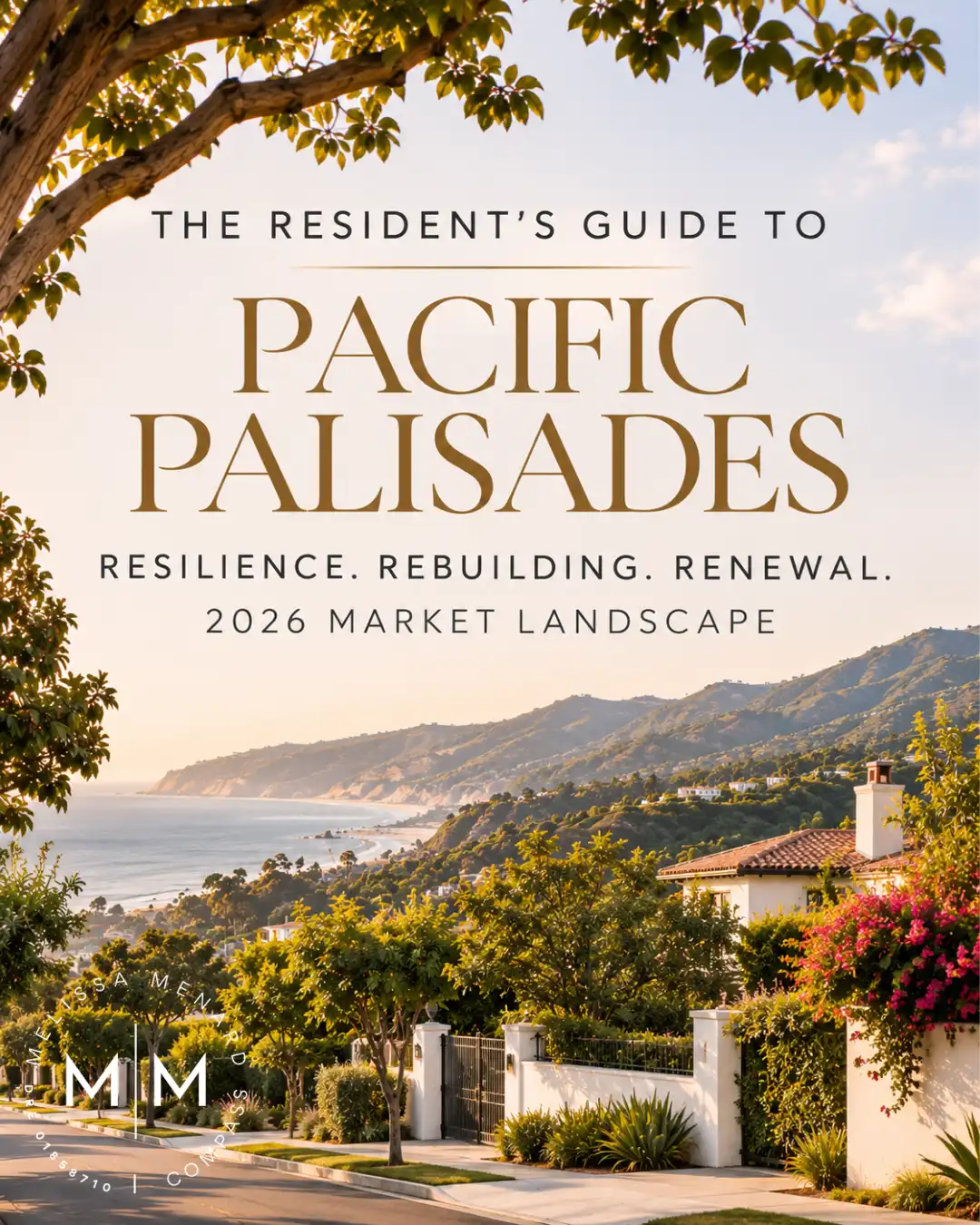

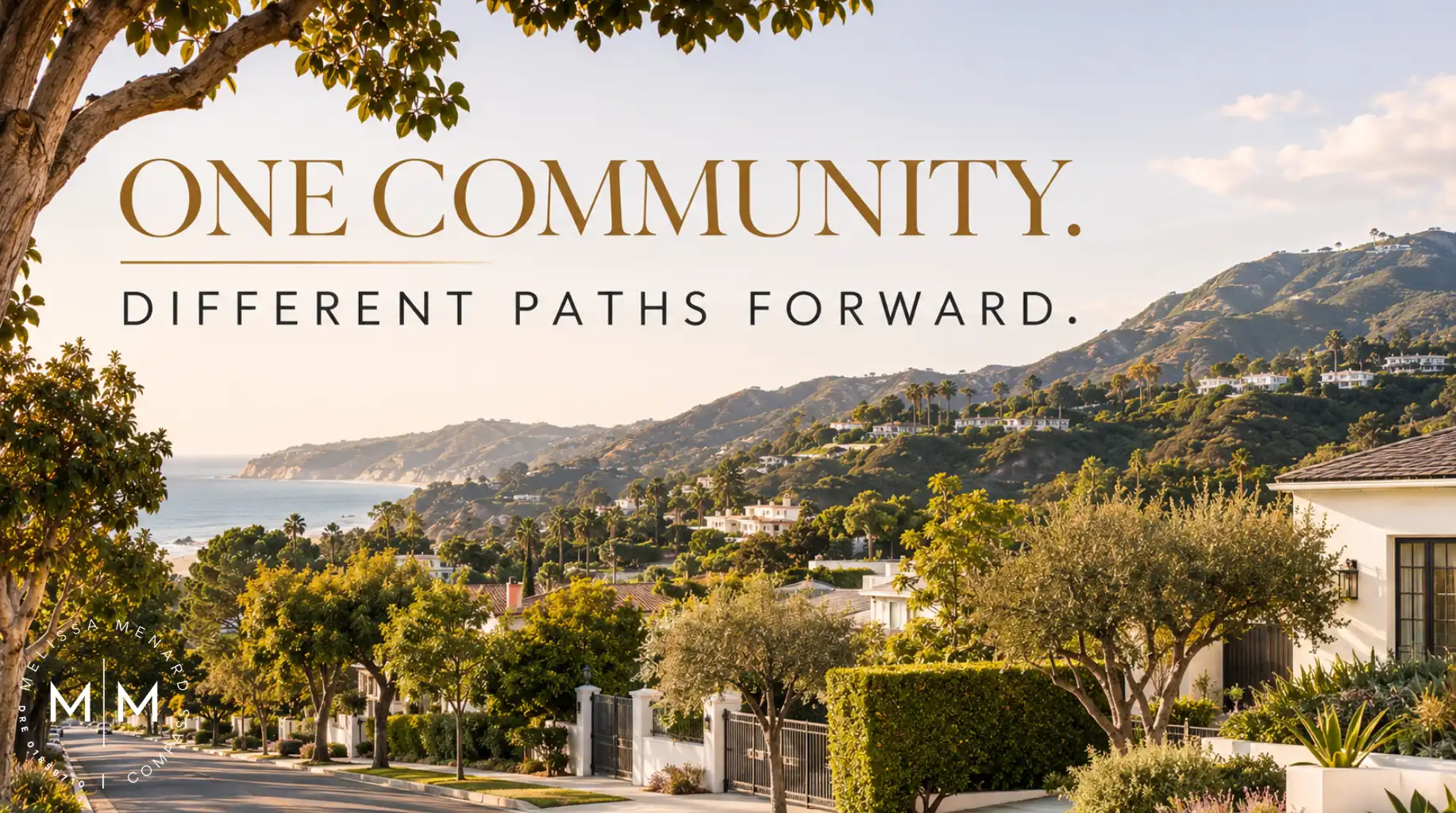
If you drive through Pacific Palisades today, the narrative isn’t just about luxury coastal living—it’s about profound resilience. The January 2025 Palisades Fire changed the physical and emotional landscape of the 90272 zip code overnight. As we navigate late 2026, the community is deeply immersed in a complex rebuilding phase. While broader Los Angeles real estate data might show fluctuating median prices, the reality on these streets is a neighborhood in transition: cleared lots where generational homes once stood, the steady hum of new construction, and the powerful milestone of Palisades Village finally reopening its doors after a massive $100 million restoration.
Understanding the Pacific Palisades market today requires far more than traditional property valuation. It requires an intimate grasp of fire-resilient construction codes, LADBS permitting timelines, insurance navigation, and the distinct micro-markets that dictate where rebuilding is accelerating. Whether you’re a displaced resident navigating the return home, a buyer looking to invest in a community on the rise, or a seller weighing your options, this guide is designed to provide clarity during a pivotal chapter in the Palisades’ history.
For ongoing updates on regional recovery efforts, explore the City of Los Angeles Palisades Fire Recovery Resources.
Fast Facts: Pacific Palisades 2026 Recovery & Real Estate Overview
- The 2025 Fire Impact: The January 2025 wildfires devastated the coastal foothills. As of late 2026, over 1,400 rebuilding permits have been issued in the area, though occupancy clearances remain low as construction catches up.
- The 2026 Market Bifurcation: The market is strictly divided between Surviving Intact Homes (which trade at unprecedented premiums due to immediate livability) and Cleared Rebuild Lots (parcels that have completed Phase 2 Army Corps debris removal and are ready for foundation work).
- Commercial Rebirth: Palisades Village, the community’s primary pedestrian retail anchor, officially reopened in August 2026, serving as a critical emotional and economic milestone for returning residents.
- Fire-Resilient Building Mandates: New construction throughout the canyons and foothills strictly adheres to upgraded fire codes, emphasizing non-combustible materials (stucco, fiber cement, metal roofs), tempered glass, and enhanced defensible space.
- Expedited City Planning: The City of Los Angeles implemented fast-track procedures for eligible rebuilding projects in the Palisades, expediting initial reviews to help displaced families rebuild faster.
- Insurance Reality: Securing fire insurance remains a primary hurdle. Many buyers and rebuilding owners are relying on the California FAIR Plan paired with supplemental wrap-around policies to secure financing and protect their assets.
The Story of the Street: From Ground Zero to New Foundations
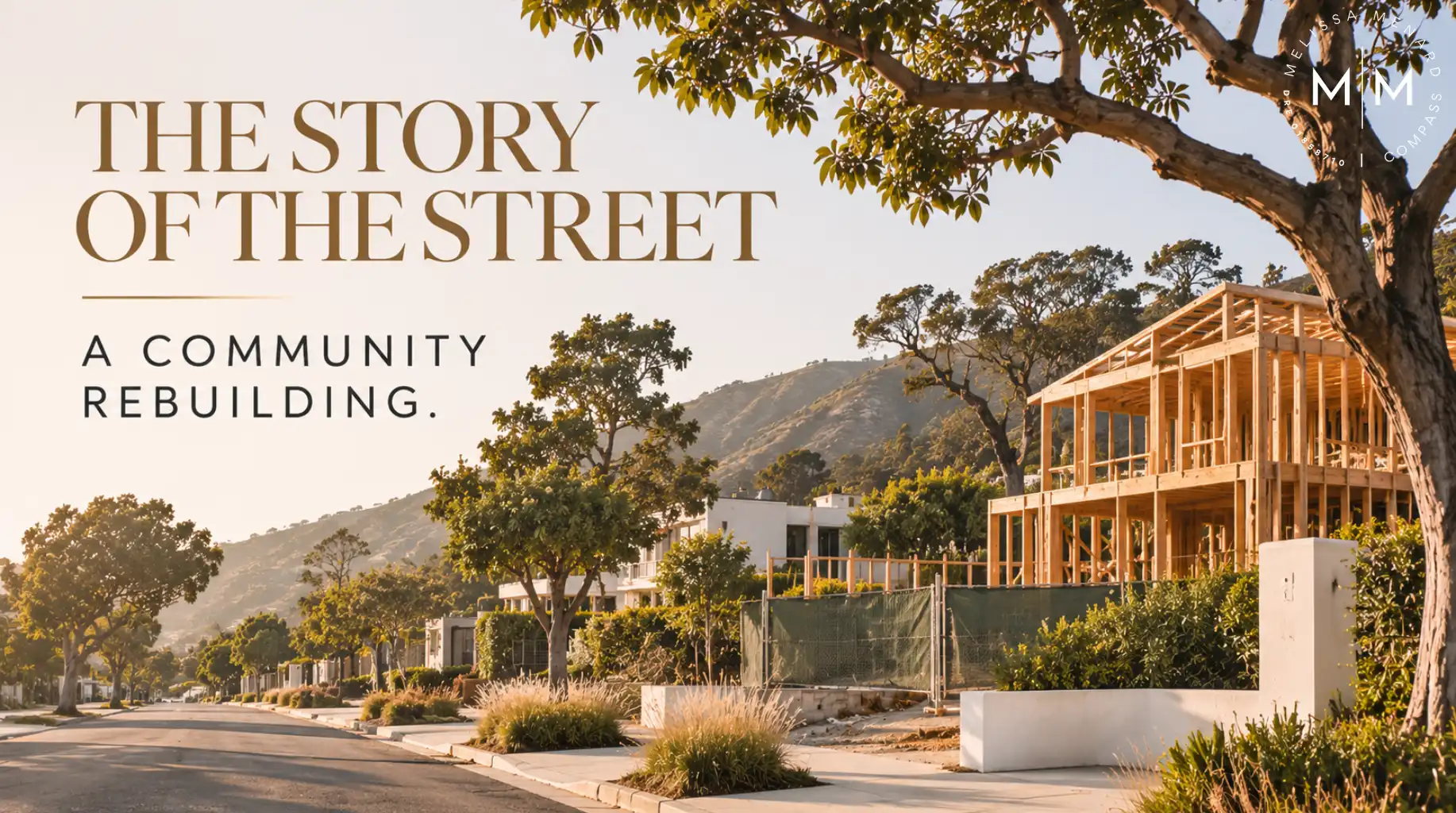
Every neighborhood in Los Angeles tells a story, but in the Palisades, that story is currently being rewritten from the ground up. The geography of this coastal foothill sanctuary—which traditionally offered intentional isolation—became its biggest vulnerability during the 2025 fires. Today, the varied topography dictates the pace and complexity of the rebuild.
The Alphabet Streets: The “Americana” Revival
Directly north of Sunset Boulevard, the Alphabet Streets (named from A to Monoco) took significant hits, but they are also seeing some of the fastest recovery. Because these are standard urban-coastal lots (typically 5,200 to 6,500 square feet) on a flat grid, debris removal and site prep were more straightforward than in the steep canyons. Today, builders like Thomas James Homes are completing new models here, signaling a return to the neighborhood’s family-focused, pedestrian-friendly roots. The sight of framing going up and local children returning to the reopened playground represents the earliest waves of sustained recovery.
The Canyons (Temescal, Chautauqua, Santa Ynez): The Complex Ascent
Higher up, the canyon networks offer unblockable whitewater views and maximum privacy, but they present the greatest rebuilding challenges. Clearing toxic debris from steep, cantilevered hillside lots required extensive coordination with the EPA and the U.S. Army Corps of Engineers. Rebuilding here isn’t just about architecture; it’s an exercise in complex geotechnical engineering, managing the Los Angeles Baseline Hillside Ordinance (BHO), and strictly adhering to Coastal Commission mandates. Progress here is slower, with many lots remaining vacant as owners navigate the lengthy permitting and design phases for modern, fire-hardened hillside retreats.
The Riviera and The Huntington: Preserving the Legacy
The sprawling estate tracts of the Riviera (winding around the Riviera Country Club) and the wide, stately flatlands of The Huntington experienced varying degrees of impact. Where legacy estates survived, they have become some of the most fiercely protected and highly valued assets in Southern California. Where homes were lost, we are seeing property owners double down—sometimes purchasing adjacent cleared lots to create generational, fire-resilient compounds equipped with state-of-the-art exterior sprinkler systems and massive defensible setbacks.
Underwriting the 2026 Asset Split: Surviving Luxury vs. Cleared Earth
You can’t look at aggregate median prices in the Palisades right now; the data is deeply skewed by the condition of the asset. We are operating in a market defined by absolute scarcity and the premium of time.
- Surviving Turn-Key Inventory: If a high-design, move-in-ready home survived the fires—especially in prime pockets like the Alphabet Streets or the Riviera—it is operating in a hyper-competitive micro-market. Buyers are willing to pay massive premiums for immediate livability. They are bypassing the 2-to-3-year headache of architects, Coastal Commission reviews, and supply chain delays to secure a finished home today.
- Cleared Development Parcels: On the other side of the spectrum are the cleared lots. Phase 1 (hazardous waste) and Phase 2 (structural debris) cleanups have largely been completed by state and federal agencies. These “clean dirt” parcels are trading dynamically. Some displaced homeowners are selling their lots to developers or new families, unable to stomach the emotional and logistical toll of rebuilding. These lots represent a profound opportunity to build modern, hyper-safe, fire-resistant architecture in one of the world’s most desirable zip codes.
The Heartbeat Returns: Palisades Village and the Daily Cadence
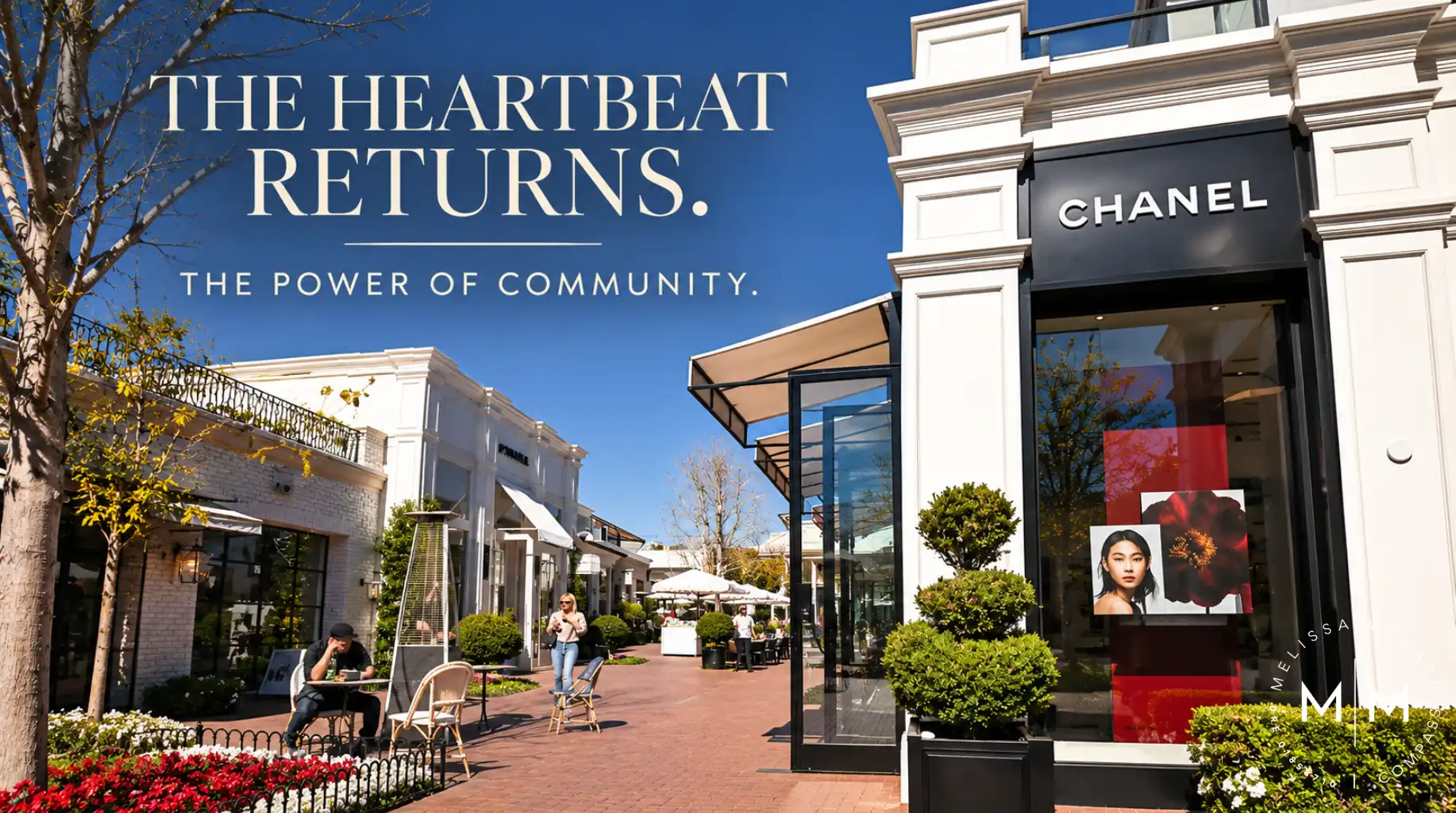
When Palisades Village reopened in August 2026, it was more than just a retail ribbon-cutting; it was a psychological turning point for the community. Developed by Caruso, this three-acre open-air pedestrian downtown center is the social anchor of the Palisades.
While the surrounding residential streets remain a patchwork of construction zones and returning families, the Village provides a flawless, fully restored community square. It offers a glimpse of the normalcy that residents are fighting to reclaim.
- Morning Routines: Displaced residents commuting in to check on their construction sites gather over handcrafted espresso at Caffe Luxxe or iced matchas at Alfred Coffee, trading updates on permit approvals and contractor timelines.
- Afternoon Momentum: The sun-drenched outdoor patios at Porta Via are filled with local developers, architects, and homeowners collaborating on blueprints and rebuilding strategies.
- Evening Connection: As the construction crews pack up for the day, neighbors reconnect over elevated craft cocktails at the newly opened Alphabet Bar & Grill or twilight dinners at The Draycott, reinforcing the tight-knit support network that has kept this community together over the last 18 months.
Comparative Analysis: Palisades Rebuilding Options
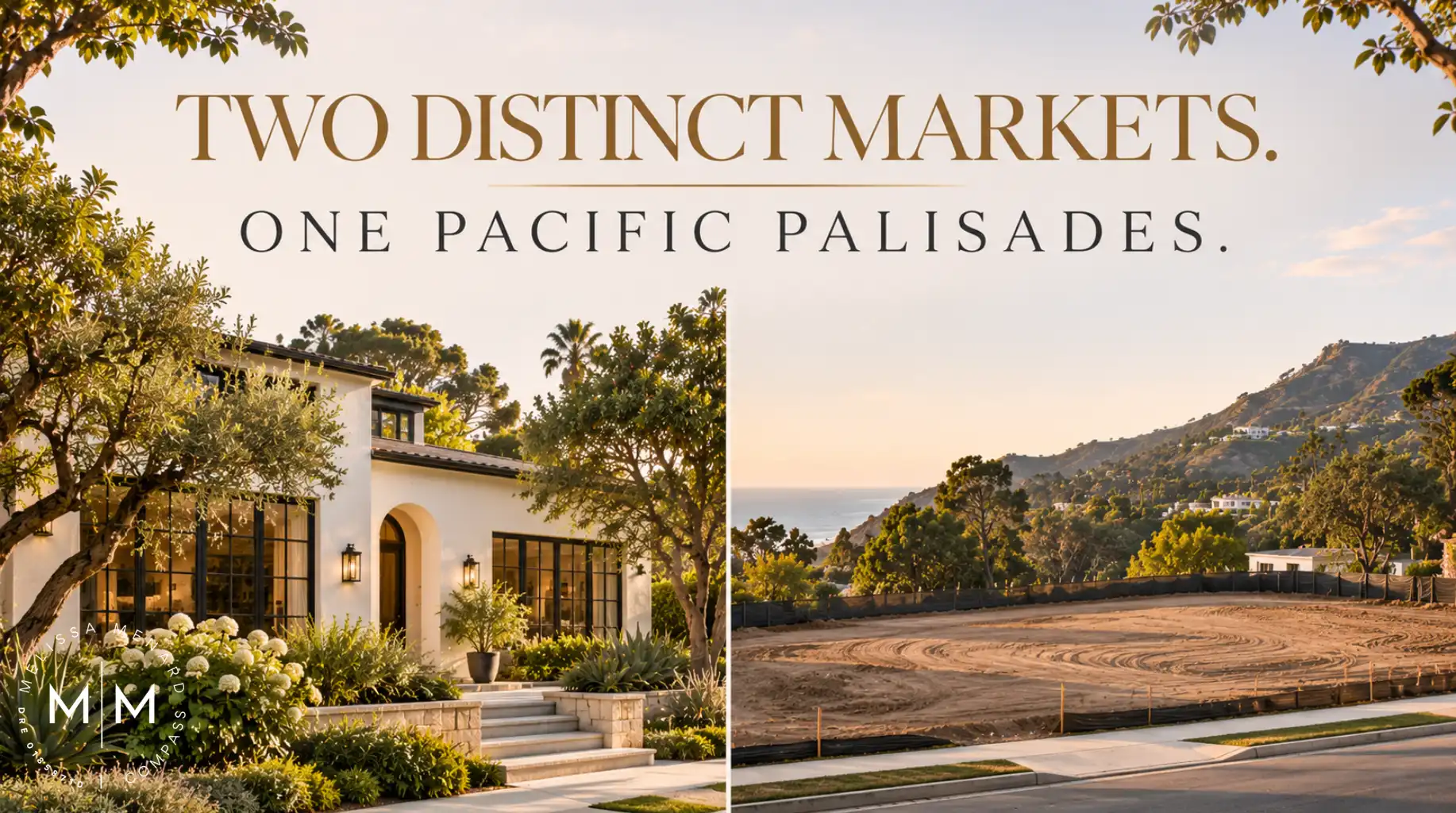
For families looking to establish a footprint in the Palisades in 2026, the decision ultimately comes down to time, capital, and risk tolerance.
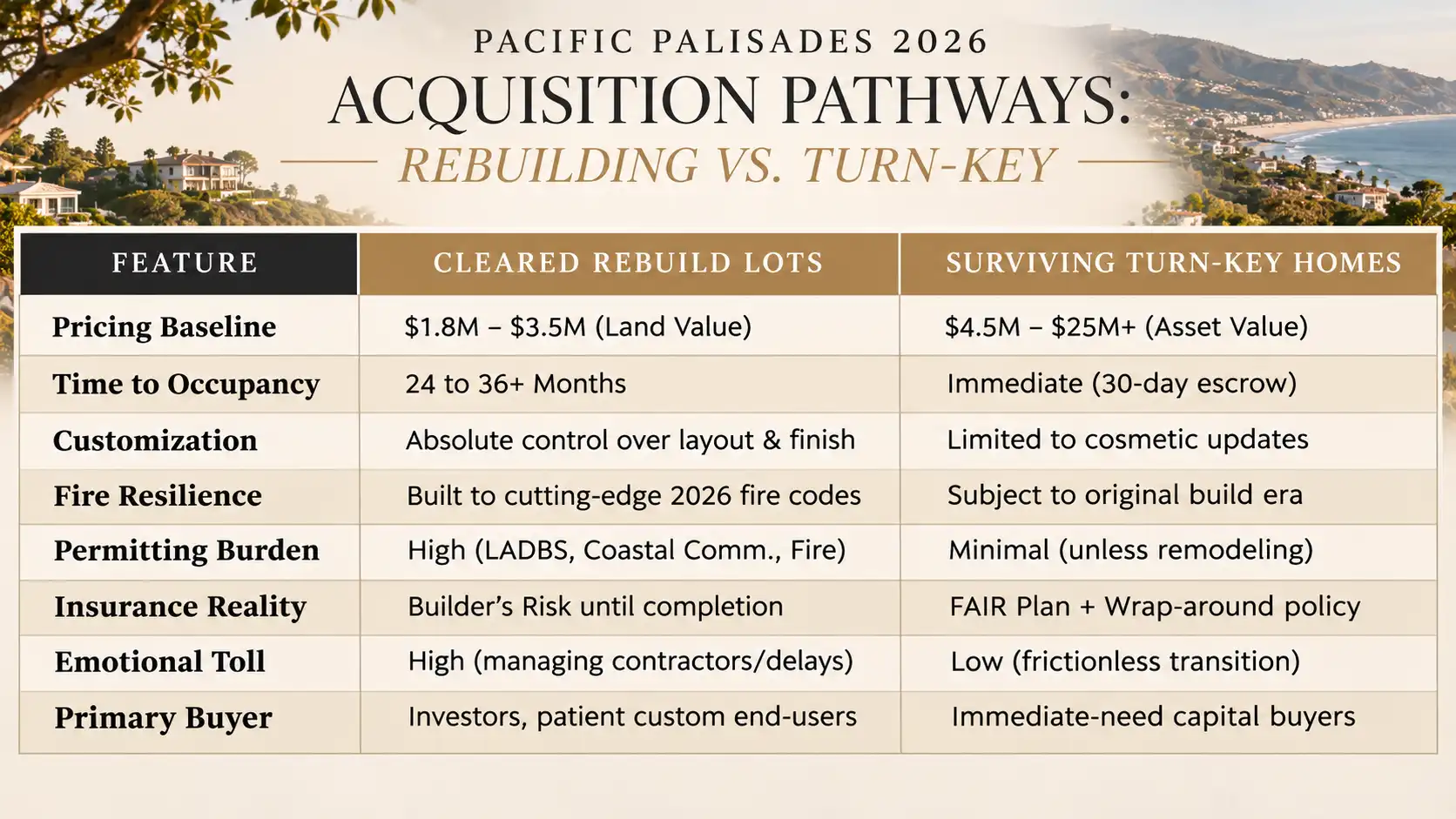
The Strategic Takeaway: If your primary goal is to curate a highly specific, fire-hardened legacy property and you have the capital to float alternative housing for two years, acquiring a cleared lot in the Riviera or Canyons offers massive long-term equity upside. If your family requires immediate stability, paying the premium for a surviving turn-key home in the Alphabet Streets or Huntington is the only viable path.
Buyer & Seller Considerations in a Recovery Market
For Discerning Buyers
- Verify Debris Clearance Certificates: If you are purchasing a lot where a home was lost, ensure that the property has received final sign-off from the U.S. Army Corps of Engineers (Phase 2 completion) and the local health department. You do not want to inherit a hazardous waste liability.
- Prioritize Fire-Hardened Materials: When rebuilding, look beyond aesthetics. Demand Class A fire-rated roofing, fiber-cement or stucco siding, tempered dual-pane windows, and ember-resistant attic vents. These choices not only protect your family but significantly lower future insurance premiums.
- Understand the Expedited Permitting Process: The City of Los Angeles has fast-tracked eligible rebuild projects. Work with local architects who understand how to navigate this specific recovery pipeline to shave months off your timeline.

For Capital-Conscious Sellers
- Selling “Clean Dirt”: If you have decided not to rebuild, your cleared lot is a highly liquid asset. Developers and incoming families are actively hunting for Phase 2-cleared parcels. Price the land based on current topographical realities, retaining wall integrity, and neighborhood construction momentum.
- Selling Surviving Homes: If your home survived intact, you are holding the rarest asset on the Westside. Market your property’s immediate livability, but also highlight any defensive upgrades you’ve made (e.g., brush clearance, upgraded vents, modern sprinkler systems) to assure anxious buyers.
- Emotional Grace: Real estate transactions are always stressful, but selling in a post-fire recovery zone carries heavy emotional weight. Partner with an advisor who provides analytical clarity while respecting the deep personal history tied to your property.
Frequently Asked Questions: Navigating the Palisades Recovery
1. Is it safe to move back to Pacific Palisades right now?
Yes. Air and water quality have been fully restored and verified by the EPA and LADWP. The primary day-to-day challenge is navigating ongoing construction traffic and noise as the neighborhood rebuilds.
2. How long is it taking to get a rebuilding permit in 2026?
The City of LA implemented an expedited review process for fire victims. On average, single-family home applications in the recovery program are seeing initial agency reviews within 17 to 45 days, though complex hillside lots require more time for geotechnical approvals.
3. What does “Phase 2 Debris Removal Complete” mean?
It means the U.S. Army Corps of Engineers has safely cleared all structural debris and contaminated soil from the property, and the lot has been returned to the owner, ready for new foundation work.
4. Are property taxes reassessed if I rebuild exactly what I lost?
Under California law (Prop 50/Prop 171), if you rebuild a structure of similar size and utility on the same site after a declared disaster, you generally retain your original Prop 13 base year value.
5. Can I transfer my property tax base if I sell my lot and move elsewhere?
Yes, under California Prop 19, victims of wildfires can transfer their property’s original taxable value to a replacement home anywhere in California, subject to specific conditions.
6. Why are intact homes selling for such a premium?
Absolute scarcity. With thousands of homes lost regionally, the supply of move-in-ready luxury homes plummeted, driving up demand from high-net-worth buyers who refuse to wait years for new construction to be completed.
7. How are people getting fire insurance in the Palisades now?
Most homeowners are relying on the California FAIR Plan (the state’s insurer of last resort) to cover fire risk, paired with a supplemental “Difference in Conditions” (DIC) policy to cover standard perils like water damage, theft, and liability.
8. What are the new building codes requiring for fire safety?
New codes mandate ignition-resistant construction, including Class A roofs, non-combustible siding, enclosed eaves, ember-resistant vents, and strict defensible space landscaping perimeters.
9. Are the public schools operating?
Yes, while some physical campuses were damaged, local government coordinated efforts to resume instruction. The community is actively rallying around the rebuilding of local charter and public school facilities.
10. Has Palisades Village fully recovered?
Yes. Caruso completed a $100 million restoration, and the Village officially reopened in August 2026. It is fully operational and serves as the central gathering point for the community.
11. What is happening in the Alphabet Streets?
The Alphabet Streets are seeing rapid rebuilding due to their flat, accessible lots. Developers like Thomas James Homes are completing new models, bringing young families back to the neighborhood.
12. Are the canyons taking longer to rebuild?
Yes. Rebuilding in steep terrain like Temescal or Chautauqua Canyons involves stringent Baseline Hillside Ordinance (BHO) reviews, rigorous soil testing, and complex retaining wall engineering, extending the timeline significantly.
13. Do I still need Coastal Commission approval to rebuild?
If your property is in the designated Coastal Zone, you may still need Coastal Development clearance, although emergency waivers and expedited pathways have been created for exact footprint rebuilds.
14. Are commercial properties being rebuilt?
Yes, commercial lots along Via de la Paz and other corridors have been cleared, and many commercial property owners have shown a strong commitment to remaining and rebuilding.
15. What if my retaining walls were damaged in the fire?
Damaged retaining walls must be re-engineered and permitted. This is a critical first step for hillside lots, as foundation work cannot begin until slope stability is secured.
16. Are there community resources for displaced residents?
Yes. Groups like the Pacific Palisades Community Council, alongside platforms like Pali Builds, continue to host town halls, track recovery efforts, and provide support networks for residents navigating the rebuild.
17. Is it a good idea to build an ADU during the rebuild?
Absolutely. Many homeowners are taking advantage of state ADU laws to add accessory dwelling units while they have open permits and construction crews on-site, adding immediate flexible living space or rental income.
18. How is the water infrastructure holding up?
LADWP has fully restored water quality and infrastructure. Santa Ynez Reservoir returned to service in mid-2025, and all “Do Not Drink” notices were lifted long ago.
19. What should I look for when buying a cleared lot?
Focus on the topography, the condition of the street access for heavy machinery, the status of surviving utility connections, and the neighborhood context (e.g., are your immediate neighbors already rebuilding?).
20. Will Pacific Palisades retain its luxury status?
Without question. The Palisades is rebuilding smarter, safer, and with cutting-edge architectural design. The inherent geographic beauty—where the mountains meet the ocean—remains unchanged, ensuring its long-term status as a premier global asset class.
Perspective: The Strength of a Community
A neighborhood is not defined by its zip code, but by the people who refuse to give up on it. The Pacific Palisades of late 2026 is a landscape of profound transition, marked by the scars of 2025 but defined entirely by the determination to rebuild. Walking past the construction sites in the Alphabet Streets or seeing neighbors embrace at the reopening of Palisades Village, you realize that true luxury isn’t just about privacy or ocean views—it’s about the enduring resilience of a community.
Navigating this recovery market requires patience, empathy, and absolute strategic clarity. Whether you’re a displaced family ready to lay a new foundation, or a buyer looking to invest in the future of the Palisades, I’d welcome the opportunity to guide you through this complex landscape.
Schedule a Strategy Consultation
If you’re mapping out a lot acquisition, assessing the land equity of a cleared parcel, or looking for an intact home within the next 12 months, let’s sit down and tailor a strategy that aligns with your timeline and goals.
Melissa Menard REALTOR® | Compass
Pacific Palisades & Surrounding Los Angeles Areas
📞 310.729.9726 | DRE# 01858710
📧 melissa@melissamenardhomes.com
🌐 www.MelissaMenardHomes.com
Disclaimer: The information provided in this post is intended for educational purposes only and should not be considered financial, legal, tax, or investment advice. Real estate laws, market conditions, and regulations change over time. Please consult the appropriate licensed professionals regarding your specific situation. All content should comply with applicable Fair Housing laws and regulations.