
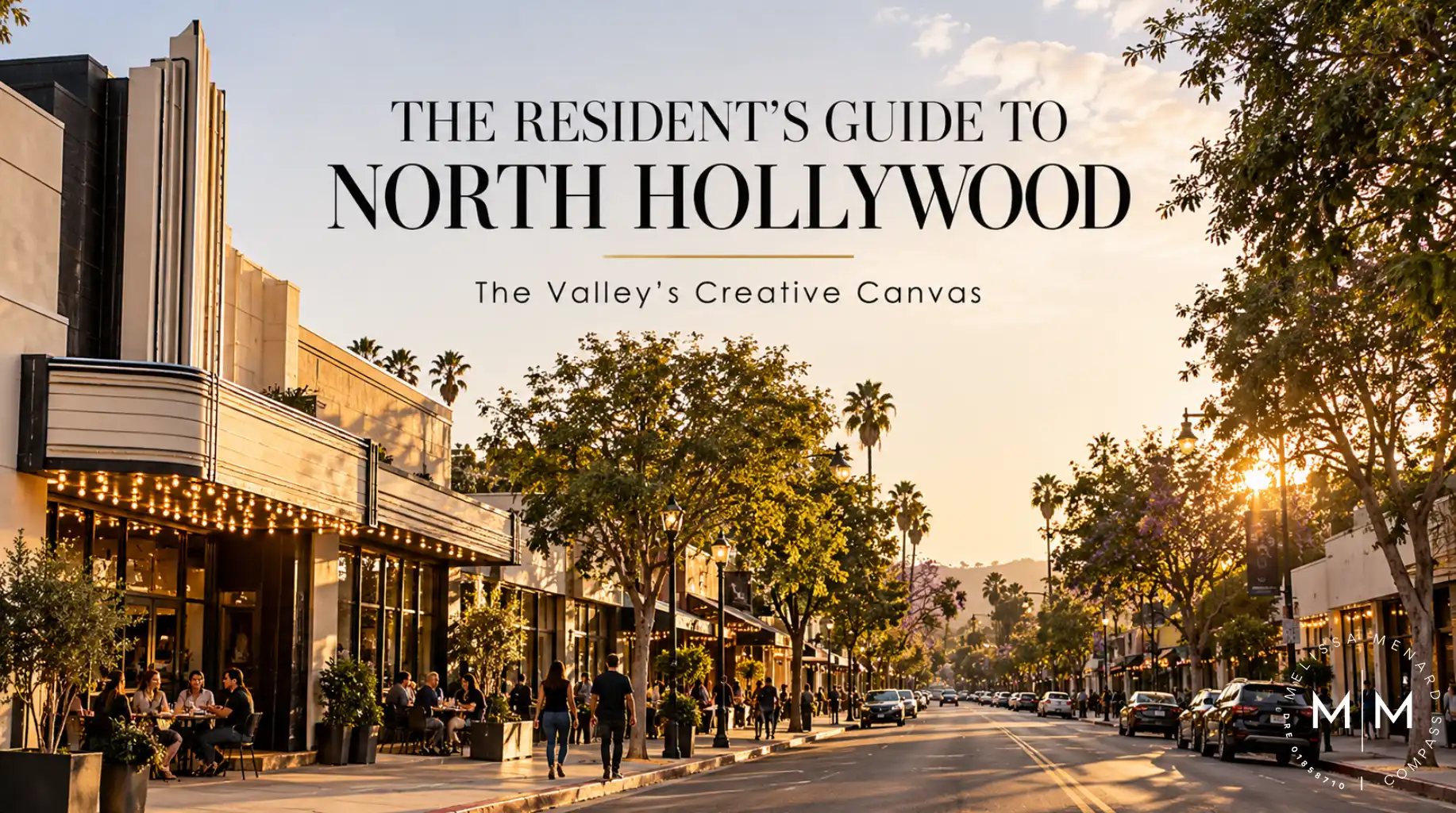
Where Los Angeles creativity, neighborhood character, and real estate opportunity intersect.
I’ve often noticed that when buyers first begin exploring the San Fernando Valley, they brace themselves for the stereotypical endless suburban sprawl and heavy car reliance.
It’s a common misconception, and honestly, one I love correcting.
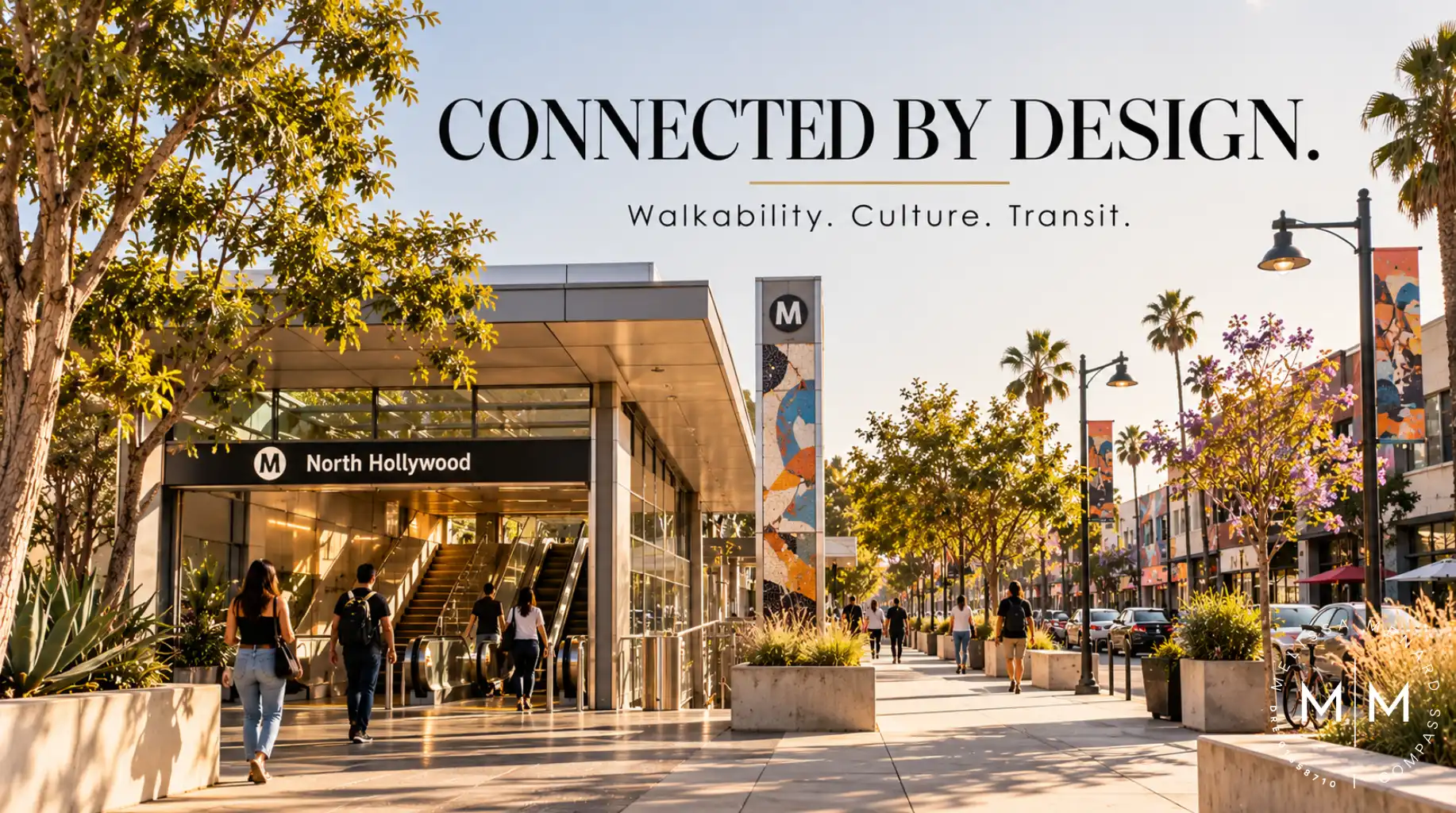
The moment we step off the platform at the North Hollywood Metro station and walk down Lankershim Boulevard, that preconceived notion starts to disappear.
North Hollywood—or “NoHo,” as it’s affectionately known—is entirely its own ecosystem.
Here, independent theaters share the neighborhood with coffee shops, recording studios, neighborhood restaurants, and residential streets filled with homes that have been standing for generations.
What makes North Hollywood particularly interesting is that it doesn’t offer just one version of Los Angeles living.
You might find a contemporary condominium within walking distance of the Arts District, a traditional California ranch home with a generous backyard, or a property with the potential to accommodate an accessory dwelling unit (ADU).
And depending on which street you’re standing on, the neighborhood can feel remarkably different.
That’s part of what I love about exploring Los Angeles real estate. Two properties can be just a few blocks apart and offer completely different lifestyles, ownership considerations, and long-term possibilities.
North Hollywood is a perfect example of why understanding the neighborhood matters just as much as understanding the property.
Whether you’re considering buying your first home, relocating to Los Angeles, evaluating an investment property, or wondering what your longtime North Hollywood home might be worth, there’s more to this neighborhood than initially meets the eye.
Let’s explore what makes it special.
North Hollywood Real Estate & Lifestyle: Fast Facts
Location: Eastern San Fernando Valley, Los Angeles, California.
Neighborhood Identity: A creative and culturally active community anchored by the NoHo Arts District.
Housing Options: Contemporary condominiums, apartments, creative lofts, traditional single-family residences, mid-century homes, and properties with potential for additional dwelling units.
Transportation: The North Hollywood Metro station connects the B Line subway and G Line busway, providing access to Hollywood, Downtown Los Angeles, and communities throughout the Valley.
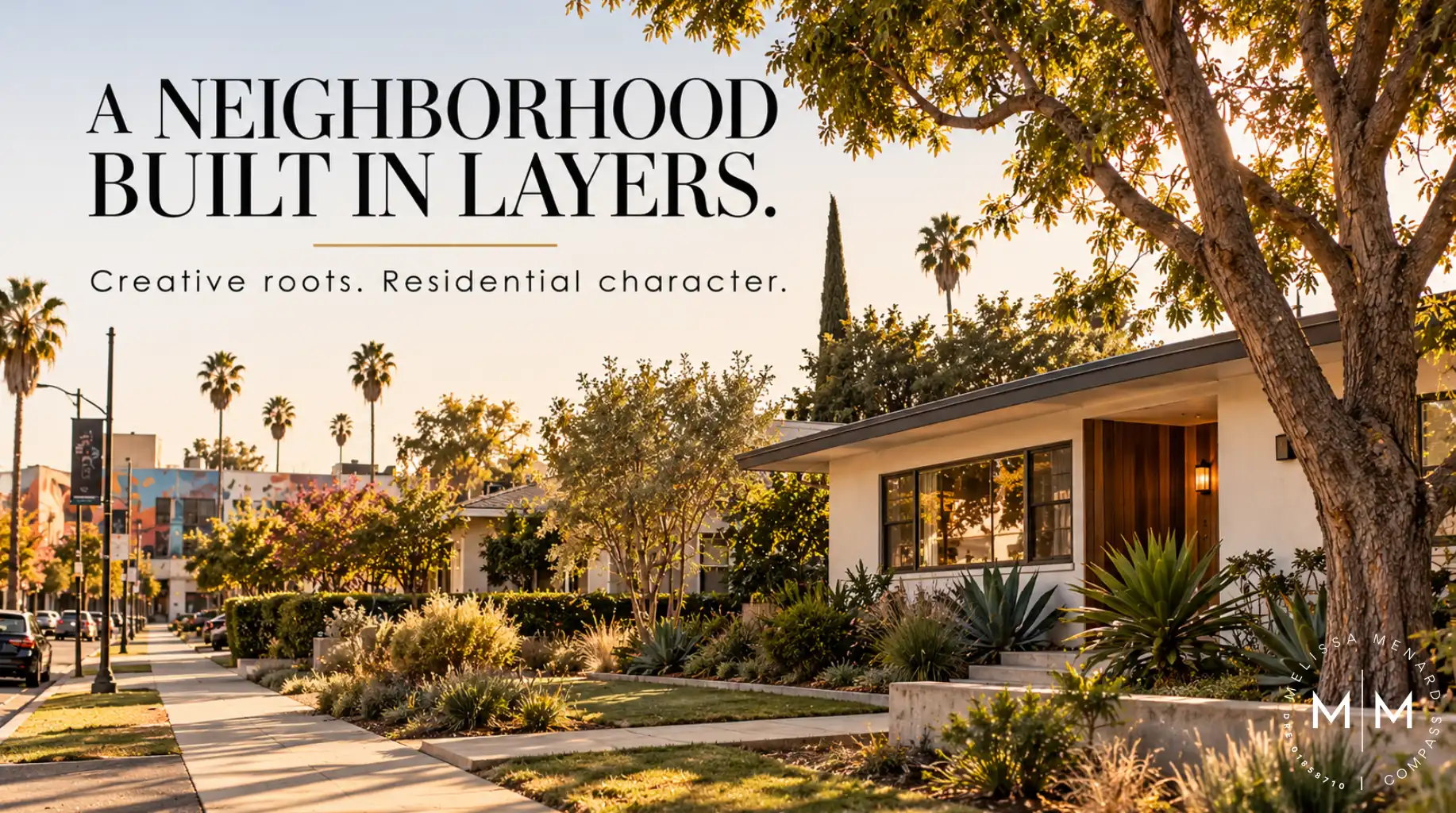
Architectural Character: A mix of 1940s–1960s traditional and ranch-style homes, mid-century properties, contemporary residences, and newer multifamily developments.
Lifestyle Highlights: Independent theaters, dance studios, neighborhood coffee shops, diverse restaurants, public art, and accessible recreational spaces.
Real Estate Considerations: Walkability, transit access, lot characteristics, property condition, condominium ownership costs, potential ADU opportunities, and neighborhood-specific pricing.
Nearby Communities: Studio City, Toluca Lake, Valley Village, Burbank, and Universal City.
What Makes It Different: North Hollywood offers an unusual combination of urban energy and traditional residential living within the same broader neighborhood.
The Story of the Street: The Valley’s Creative Industrial Canvas
North Hollywood has never been a neighborhood that fits neatly into one category.
Its history reflects the evolution of the San Fernando Valley itself—from agricultural land and early suburban development to a community shaped by the entertainment industry, independent businesses, and a growing creative economy.
Much of North Hollywood’s residential development occurred during the decades following World War II, when Los Angeles expanded rapidly and families sought homes beyond the city’s established urban core.
That period left behind something buyers still appreciate today: established residential streets, mature landscaping, traditional floor plans, and single-family properties with yards that offer flexibility for modern living.
Meanwhile, commercial corridors developed around the needs of a growing community.
Over time, North Hollywood’s proximity to the entertainment industry helped establish a concentration of rehearsal spaces, acting studios, recording facilities, and small theaters.
The neighborhood’s creative identity wasn’t manufactured overnight.
It evolved.
Today, the NoHo Arts District is recognized as one of Los Angeles’ distinctive performing arts communities. Its concentration of independent theaters, arts organizations, studios, restaurants, and creative businesses gives the area a personality that feels noticeably different from many surrounding Valley neighborhoods.
The intersection of Lankershim and Magnolia Boulevards serves as a recognizable center of activity, with the broader Arts District extending into surrounding streets.
But here’s what I find particularly interesting from a real estate perspective.
North Hollywood’s evolution hasn’t erased its residential history.
Instead, the neighborhood has developed in layers.
You’ll find newer mixed-use buildings and contemporary condominiums near established commercial corridors, while nearby streets still feature homes built decades ago.
That combination creates opportunities for buyers with very different priorities.
Some want convenience and a low-maintenance lifestyle. Others want land, privacy, outdoor space, or the ability to customize a property over time.
North Hollywood offers both, but knowing where to look makes all the difference.
Walkability & a Transit-Oriented Village Lifestyle

Los Angeles isn’t generally known as a city where you can leave your car parked for days at a time.
North Hollywood challenges that reputation—at least in certain pockets.
The NoHo Arts District offers a concentration of restaurants, coffee shops, entertainment venues, neighborhood services, and transportation options that can make everyday errands considerably more convenient.
For someone relocating from New York, Chicago, San Francisco, or another urban environment, that accessibility can be especially appealing.
You can grab coffee, meet a friend for lunch, catch a theater performance, and access public transportation without necessarily getting behind the wheel.
Of course, not every part of North Hollywood offers the same level of walkability.
A home located several blocks from the Arts District may provide a much quieter residential experience, but daily errands could require a car.
That’s why I always encourage buyers to think beyond a neighborhood’s overall walkability score.
The question isn’t simply whether North Hollywood is walkable. It’s whether the specific property supports the lifestyle you want.
The North Hollywood Metro Connection
One of North Hollywood’s most important infrastructure assets is its Metro station.
The station connects two major transit services:
Metro B Line: Provides subway access through Universal City, Hollywood, and Downtown Los Angeles, including Union Station.
Metro G Line: Connects North Hollywood with communities farther west in the San Fernando Valley through a dedicated busway system.
For residents who commute to Hollywood, Downtown Los Angeles, or other transit-connected destinations, these options can make a meaningful difference.
And even for those who drive regularly, having access to alternative transportation adds flexibility.
From a real estate perspective, transportation access is one of several factors that can influence buyer interest and property desirability.
However, proximity to transit doesn’t automatically guarantee stronger appreciation or higher resale values.
Property condition, location, pricing, ownership costs, and broader market conditions still matter.
A condominium near the Metro may appeal to a completely different buyer than a single-family residence on a quiet residential street.
Understanding those differences is part of developing the right purchasing or selling strategy.
The North Hollywood Lifestyle: Creative, Connected, and Unpretentious
There’s something refreshing about North Hollywood’s personality.
It’s creative without feeling overly polished.
You’ll find people heading to acting classes, musicians carrying equipment into rehearsal spaces, neighbors meeting for coffee, and longtime residents enjoying businesses they’ve frequented for years.
Unlike neighborhoods where the entertainment industry is primarily something you see on billboards, North Hollywood has a strong connection to the people actually doing the work.
Actors rehearse here.
Dancers train here.
Writers, musicians, designers, and production professionals work throughout the surrounding community.
That creative presence influences everything from the local restaurant scene to the neighborhood’s cultural programming.
The NoHo Arts District
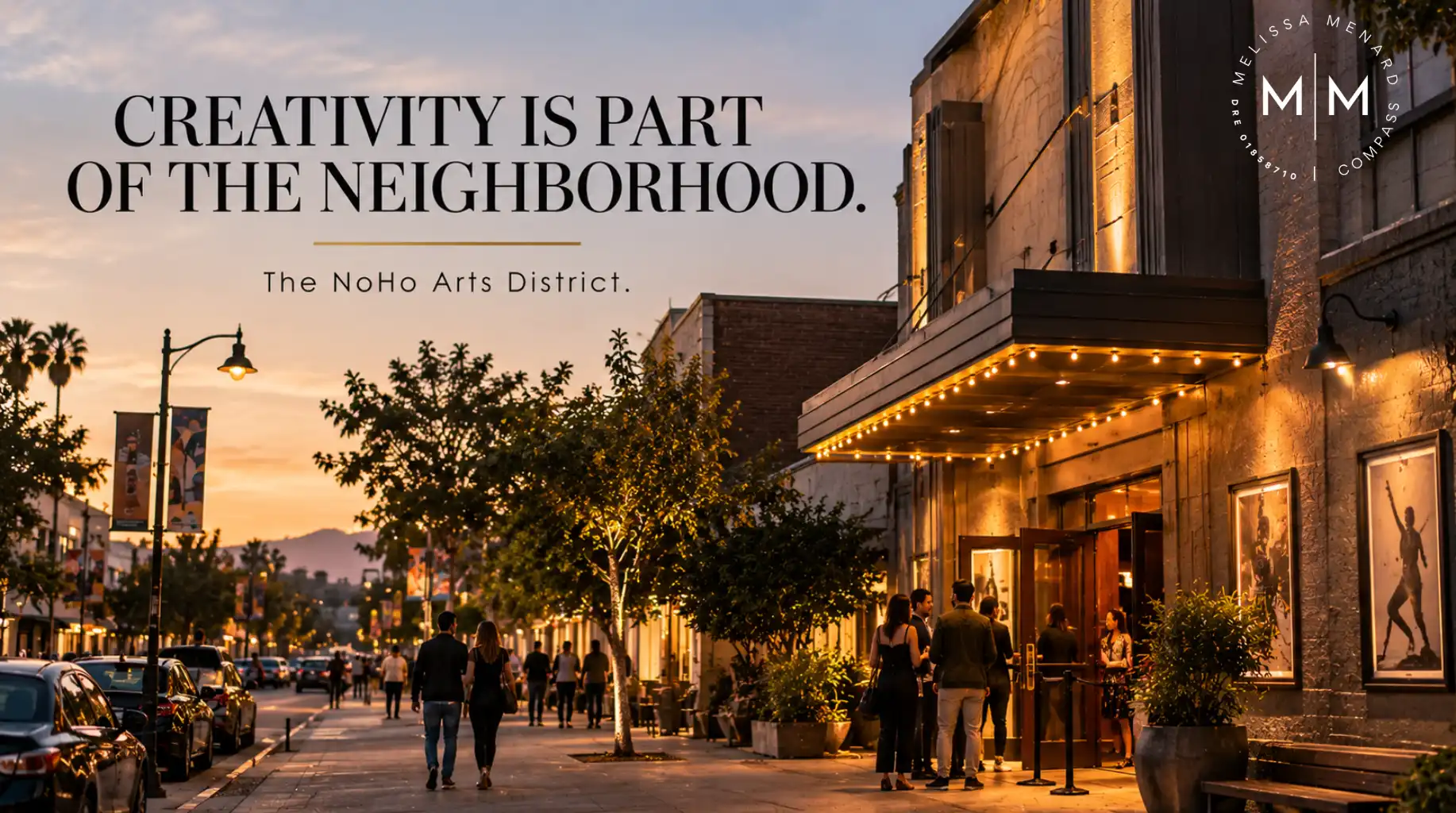
The Arts District is arguably North Hollywood’s most recognizable destination.
Independent theaters and performance spaces are a defining feature, offering productions that range from experimental performances to established theatrical works.
The neighborhood is also home to acting schools, dance studios, galleries, and creative businesses.
What I appreciate about this environment is its accessibility.
You don’t necessarily need tickets to a major Hollywood production to enjoy an evening of live entertainment.
Sometimes the most memorable experiences happen in smaller venues where you’re sitting just a few feet from the performers.
For residents, having those cultural experiences close to home adds another dimension to everyday life.
And for buyers comparing neighborhoods, that sense of place can be just as important as the number of bedrooms or square footage.
The North Hollywood Curated List: Local Standouts
One of my favorite ways to understand a neighborhood is to explore the businesses and gathering places that give it personality.
Real estate listings can tell you about square footage, lot size, and property features.
They can’t always tell you what a Saturday morning feels like.
North Hollywood has a collection of neighborhood destinations worth getting to know.
Coffee & Neighborhood Hangouts
A familiar name in Los Angeles coffee culture, Groundwork has built its reputation around organic coffee and a relaxed, neighborhood-oriented atmosphere.
Its North Hollywood presence fits naturally into the area’s creative character.
Located along Lankershim Boulevard, Amp Coffee is part of the neighborhood’s independent coffee scene.
It’s the kind of place that contributes to the daily rhythm of the Arts District, whether you’re grabbing an espresso before work or meeting someone for a casual conversation.
For those who appreciate specialty coffee and a welcoming neighborhood atmosphere, Cara Vana is another name to explore.
Coffee shops often become informal gathering places, and they’re one of the details I pay attention to when getting to know a community.
Restaurants & Nightlife
North Hollywood’s nightlife has its own personality, and The CanTiki brings a playful, tropical-inspired atmosphere to the mix.
It’s a reminder that neighborhood dining doesn’t have to be formal to be memorable.
For those who enjoy discovering nightlife beyond the usual restaurant-and-bar experience, Risky Business brings a more unconventional energy to the local scene.
It’s the kind of destination that reflects North Hollywood’s independent spirit.
A longtime Valley favorite, Salsa & Beer is known for generous portions, bold Mexican flavors, and a lively dining experience.
It’s one of those places that frequently comes up when people start comparing their favorite Valley restaurants.
Bakeries & Sweet Stops
Known for pastries, baked goods, and sweet treats, Papillon offers another example of the variety found throughout North Hollywood’s food scene.
Sometimes getting to know a neighborhood is as simple as discovering where you’d stop for something delicious on your way home.
Parks & Outdoor Space
For all the energy surrounding the Arts District, access to outdoor space remains an important part of the neighborhood.
North Hollywood Park offers recreational facilities, athletic areas, and space to enjoy time outdoors.
The surrounding area also includes community amenities such as the North Hollywood Amelia Earhart Regional Library and the North Hollywood Recreation Center.
The Hollywood Skate Plaza adds another recreational destination.
For buyers who enjoy an active lifestyle, nearby parks and community facilities can be important considerations when choosing a home.
Local businesses, hours, and programming can change. I always recommend checking current information before planning a visit.
Understanding the North Hollywood Real Estate Market
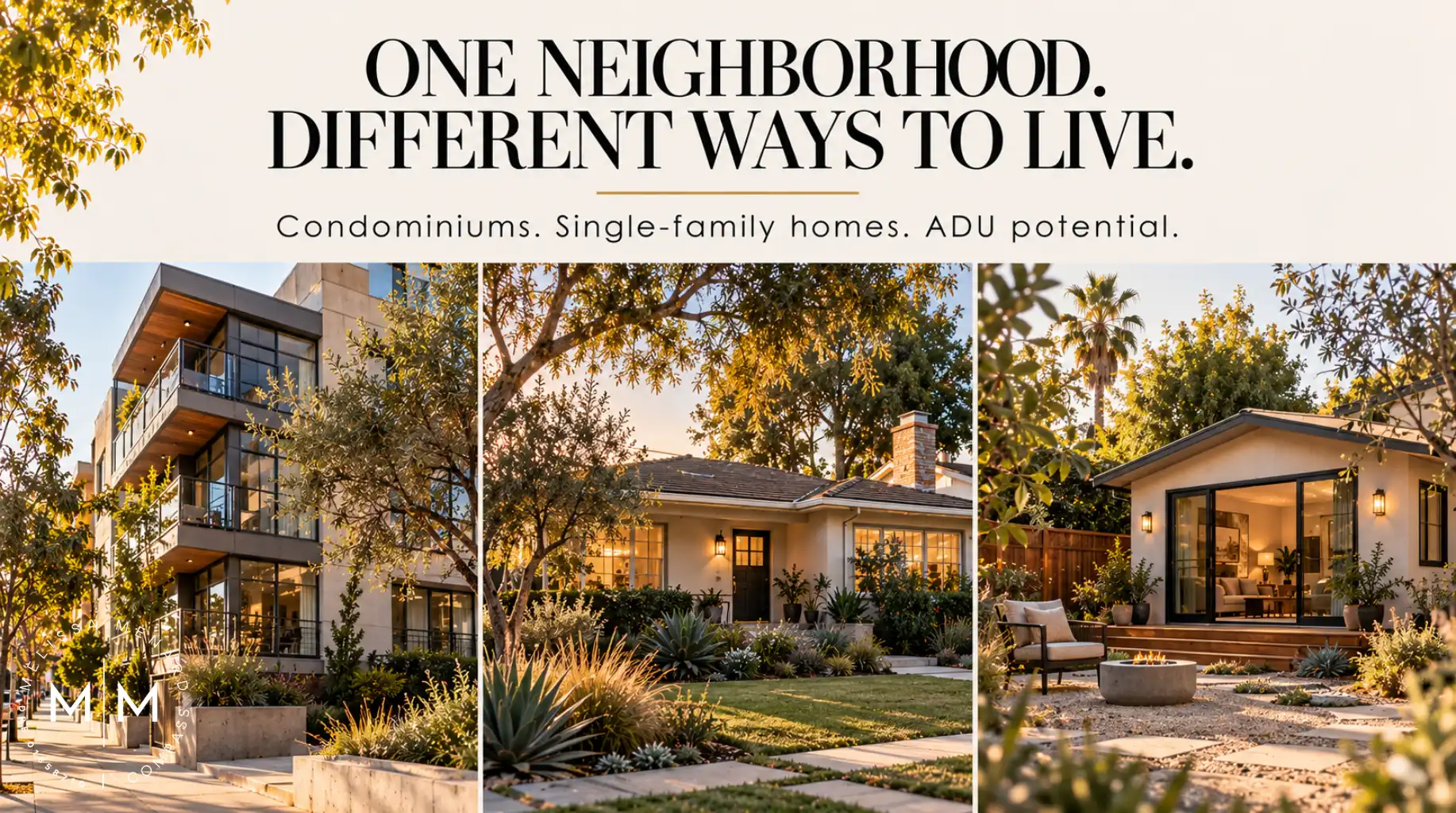
Here’s where North Hollywood becomes especially interesting.
When someone tells me they’re considering buying a home in North Hollywood, one of my first questions is:
What kind of North Hollywood lifestyle are you looking for?
Because we’re not talking about one uniform housing market.
We’re talking about several distinct property types, each with different characteristics, ownership considerations, and potential buyer audiences.
1. Condominiums & Lofts: Convenience Meets Urban Living
Near the Arts District and major commercial corridors, buyers will find a selection of condominiums, loft-style residences, and newer multifamily developments.
These properties can appeal to buyers who prioritize location, convenience, and reduced exterior maintenance responsibilities.
For some, the appeal is being able to walk to restaurants, theaters, and public transportation.
For others, it’s the opportunity to enter the Los Angeles ownership market without taking on the maintenance responsibilities of a detached home.
But condominium ownership requires careful evaluation.
I always encourage buyers to look beyond the monthly mortgage payment.
Homeowners association dues, reserve funding, insurance coverage, upcoming assessments, rental restrictions, and the association’s overall financial condition can materially affect ownership costs and future resale considerations.
A beautifully renovated condo isn’t necessarily a great purchase if the underlying association has significant financial challenges.
The property matters, but so does the financial health of the community you’re buying into.
2. Single-Family Homes: Established Neighborhoods & Room to Grow
Move beyond the Arts District, and North Hollywood reveals another side of its personality.
Established residential streets feature traditional homes, California ranch properties, and mid-century architecture.
Many were built during the postwar housing expansion, and some have remained in the same families for decades.
These properties often offer features that are increasingly valuable in Los Angeles:
- Private outdoor space and mature landscaping.
- Traditional single-level floor plans.
- Detached garages or additional structures.
- Opportunities for renovation and personalization.
- Potential flexibility for future improvements, subject to applicable regulations.
Lot sizes and configurations vary considerably throughout North Hollywood.
Some properties offer generous yards, while others have more compact footprints.
The key is understanding what you’re purchasing today and what may realistically be possible in the future.
A home that needs cosmetic updates can sometimes present a very different opportunity from one requiring major structural or systems work.
And that’s an important distinction.
Not every fixer-upper is a good investment, and not every beautifully renovated home is priced appropriately.
The numbers, property condition, and your long-term goals need to make sense together.
3. ADUs: Understanding the Opportunity Without Overlooking the Details
Accessory dwelling units have become an important part of the conversation surrounding Los Angeles housing.
In North Hollywood, certain single-family properties may offer opportunities to add a detached ADU, convert an existing structure, or explore other configurations permitted under applicable laws.
For homeowners, an ADU might serve several purposes.
It could provide additional living space, accommodate changing household needs, or potentially generate rental income.
For buyers, it may create opportunities to expand a property’s functionality over time.
But there’s an important distinction between a property having ADU potential and a property being ready for an ADU.
Before assuming a project is feasible, I recommend evaluating several factors:
Zoning and local regulations: What does the property legally permit?
Lot configuration: Is there adequate space for the proposed structure?
Existing improvements: Could a garage conversion be practical, or would new construction make more sense?
Utilities and infrastructure: What electrical, plumbing, sewer, or other upgrades might be required?
Construction costs: Does the anticipated investment make financial sense?
Rental considerations: If rental income is part of the plan, what do local regulations and realistic market rents support?
I love helping clients recognize possibilities they may not have considered.
But I also believe those possibilities need to be evaluated carefully.
An ADU can be a valuable addition to a property, but projected income should never be treated as guaranteed, and construction feasibility should be confirmed with qualified professionals.
Why North Hollywood’s Location Matters
One of North Hollywood’s advantages is its position within the eastern San Fernando Valley.
The neighborhood offers access to several employment, entertainment, and cultural destinations.
Universal City is nearby, including Universal Studios Hollywood and the surrounding entertainment and production facilities.
Burbank’s entertainment industry campuses are also accessible, including major studio operations associated with Warner Bros. and Disney.
Studio City, Toluca Lake, and Valley Village provide additional dining, shopping, and neighborhood amenities.
And for those who travel frequently throughout Los Angeles, nearby freeway connections and Metro access offer multiple transportation options.
Of course, anyone who has lived in Los Angeles knows that geographic proximity doesn’t always translate into a quick commute.
Traffic patterns, work schedules, and the specific location of a property can make a significant difference.
That’s why I encourage relocating clients to test their anticipated commute during the hours they’d actually be traveling.
A neighborhood can look perfect on a map and feel very different during a Tuesday morning commute.
It’s a small step that can prevent a lot of frustration later.
North Hollywood vs. Nearby Neighborhoods: Finding the Right Fit
One of the questions I hear from buyers exploring this part of Los Angeles is how North Hollywood compares with its neighbors.
It’s a worthwhile conversation because each community offers a different combination of housing, amenities, and lifestyle.

North Hollywood vs. Studio City
Studio City is known for its residential neighborhoods, Ventura Boulevard dining and shopping, and proximity to major entertainment industry destinations.
North Hollywood offers a different mix, particularly around the Arts District, where transit access, independent theaters, and multifamily housing play a more prominent role.
Both communities have a range of property types and price points, so comparisons should be based on current listings and recent comparable sales rather than neighborhood reputation alone.
North Hollywood vs. Toluca Lake
Toluca Lake is generally associated with a more intimate neighborhood atmosphere, established residential properties, and a concentrated commercial district.
North Hollywood covers a larger and more varied geographic area, with everything from busy commercial corridors to traditional residential streets.
Buyers looking at both communities should consider the specific blocks and properties rather than relying on broad neighborhood descriptions.
North Hollywood vs. Valley Village
Valley Village offers a predominantly residential environment with established homes, neighborhood businesses, and access to surrounding Valley amenities.
North Hollywood’s Arts District provides a more concentrated entertainment and transit-oriented experience.
However, portions of North Hollywood also offer quiet residential streets, making the differences less dramatic in certain areas.
My advice? Spend time in each neighborhood before deciding which one feels right.
Visit during the day.
Come back in the evening.
Walk the surrounding streets.
Explore the businesses you’d actually use.
A neighborhood should support the way you live, not just look appealing in listing photographs.
Buyer & Seller Considerations in Today’s North Hollywood Market
Real estate decisions are rarely just about timing.
They’re about understanding your options, evaluating the available information, and developing a strategy that supports your goals.
And in a neighborhood as varied as North Hollywood, that strategy should reflect the specific property and its surrounding market.
For Buyers: Look Beyond the Listing Photos
When I’m helping a buyer evaluate North Hollywood, I want us to understand more than whether the home has the right number of bedrooms.
We need to consider the property’s condition, location, ownership costs, and how it fits into your longer-term plans.
For a condominium, that might mean reviewing the HOA’s financial documents, insurance, maintenance obligations, and potential assessments.
For a single-family home, we may need to evaluate the roof, foundation, major systems, permits, and any improvements completed over the years.
If you’re considering a property with renovation or ADU potential, we’ll want to understand the likely costs and limitations before building a financial strategy around those possibilities.
And if you’re purchasing your first home, I want you to feel confident about the responsibilities that come with ownership—not simply excited about getting the keys.
A successful purchase isn’t just about winning the offer. It’s about making a decision you’ll continue to feel good about after closing.
That’s why I believe in looking at the complete picture.
Questions Worth Asking Before Buying in North Hollywood
What have comparable properties actually sold for?
How long have similar homes been sitting on the market?
Have competing listings required price adjustments?
Are there differences in condition, lot size, or location that explain pricing variations?
What repairs or improvements might be necessary?
Are there permit or zoning considerations?
How will the property’s ongoing expenses affect your budget?
These questions help us move beyond asking prices and focus on actual market behavior.
And that information can make a meaningful difference when determining how to structure an offer.
For Sellers: Your Property Deserves a Strategy Built Around Its Strengths
If you’re preparing to sell a home in North Hollywood, understanding your likely buyer audience is essential.
A contemporary condo near Lankershim Boulevard should not necessarily be marketed the same way as a traditional single-family home on an established residential street.
They’re different products.
They appeal to different priorities.
And the marketing should reflect those differences.
Selling a North Hollywood Condo
For a condominium, buyers may place significant value on convenience, transportation access, floor plan functionality, parking, amenities, and monthly ownership costs.
A strong marketing strategy should communicate the property’s actual advantages while providing clear information about the HOA and community.
Professional photography, thoughtful property descriptions, accurate listing details, and competitive pricing all contribute to the presentation.
But it’s also important to understand the competition.
If several comparable units are available in the same building or nearby developments, buyers will naturally compare them.
We need to know how your property stands apart.
Selling a North Hollywood Single-Family Home
Single-family homes require a different approach.
Buyers may be evaluating the home’s condition, lot configuration, outdoor space, architectural character, and opportunities for future improvements.
If a property has a detached garage, generous yard, or other potentially useful features, those details deserve attention.
However, any claims about expansion, conversions, or additional dwelling units should be supported by the property’s actual characteristics and applicable regulations.
I also believe there’s tremendous value in telling a home’s story.
A property that has been owned by the same family for decades may have mature landscaping, original architectural details, or a history that contributes to its character.
Those features can help buyers understand what makes the home special.
Of course, storytelling needs to be supported by the fundamentals.
The right presentation gets attention. The right pricing and strategy help turn that attention into offers.
What I Watch When Evaluating the Market
When reviewing North Hollywood market activity, I pay attention to more than the median sale price.
I want to understand:
- How many comparable properties are currently competing for buyers.
- How long listings are taking to sell.
- Whether properties are selling above, at, or below their asking prices.
- How frequently sellers are making price adjustments.
- Which property features appear to be attracting interest.
- Whether the market is behaving differently for condos and single-family homes.
These details help us identify trends that broader neighborhood averages can sometimes conceal.
A seller competing against several similar condominiums faces a different situation from someone selling a distinctive single-family home with limited direct competition.
That’s why I don’t believe in applying a one-size-fits-all pricing strategy.
Every property deserves its own analysis.
For Current North Hollywood Homeowners: Is Your Property Working for Your Next Chapter?
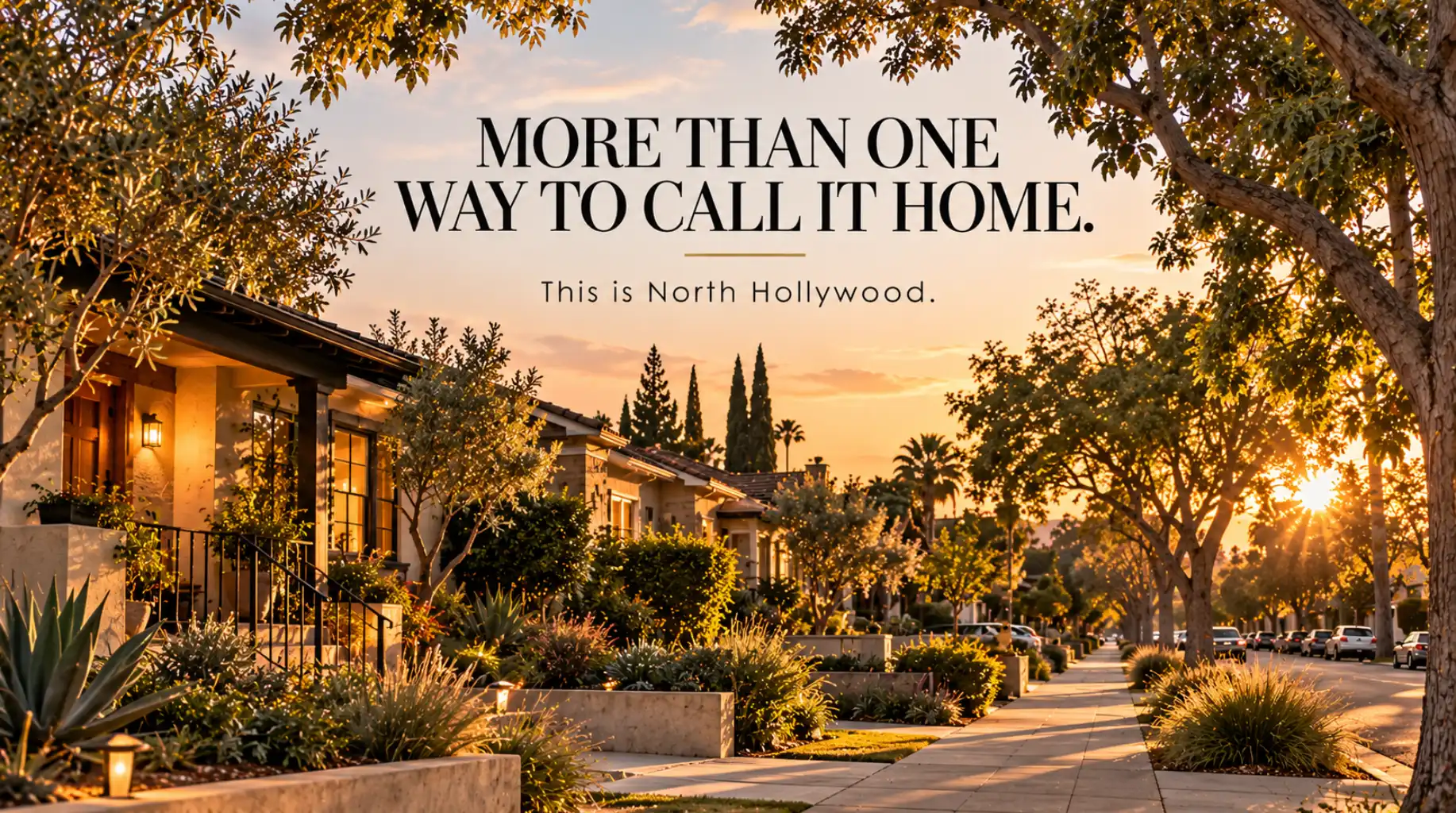
You don’t have to be actively buying or selling to benefit from understanding your local real estate market.
In fact, some of the most valuable real estate conversations happen long before a transaction.
Maybe you’ve owned your North Hollywood home for fifteen years and haven’t seriously considered its current value.
Perhaps you’re wondering whether renovating makes more sense than moving.
You might be considering an ADU, evaluating your property’s equity, or simply trying to understand how recent neighborhood sales compare with your home.
These are all worthwhile conversations.
And they don’t have to begin with a decision to sell.
I believe homeowners should understand their options before they need to make a major decision.
That might mean reviewing recent comparable sales, discussing potential improvements, or identifying which property characteristics could influence future marketability.
Sometimes the best real estate strategy is making a move.
Other times, it’s staying exactly where you are and making your current home work better for your needs.
The goal isn’t always a transaction. It’s helping you make an informed decision.
And if you have a friend, family member, or colleague considering North Hollywood, sharing reliable neighborhood information can be a great way to help them begin their research.
Frequently Asked Questions: North Hollywood Real Estate & Lifestyle
1. Is North Hollywood considered a walkable neighborhood?
Yes, particularly within the NoHo Arts District.
The area surrounding Lankershim and Magnolia Boulevards offers access to restaurants, coffee shops, theaters, neighborhood services, and public transportation.
However, walkability varies significantly throughout North Hollywood. Buyers should evaluate the specific property location and the destinations they expect to visit regularly.
2. What types of homes are available in North Hollywood?
North Hollywood offers a diverse mix of housing.
Buyers can find contemporary condominiums, loft-style residences, townhomes, traditional single-family homes, and mid-century properties.
Housing characteristics vary by location, with greater concentrations of multifamily development near commercial corridors and established single-family neighborhoods throughout surrounding residential areas.
3. Does the North Hollywood Metro station affect property values?
Transportation access can influence buyer demand and property desirability, particularly for those who value convenient commuting options.
North Hollywood’s B Line subway and G Line busway provide important regional connections.
However, proximity to transit does not guarantee appreciation. Property condition, location, pricing, market conditions, and other factors remain essential.
4. Are there opportunities to build ADUs in North Hollywood?
Many North Hollywood properties may offer ADU opportunities, particularly certain single-family residences with suitable lot configurations.
However, eligibility depends on the specific property, applicable regulations, existing improvements, and construction requirements.
Buyers and homeowners should verify feasibility with the appropriate city departments and qualified professionals before assuming an ADU can be constructed.
5. What is the NoHo Arts District known for?
The NoHo Arts District is recognized for its independent theaters, acting studios, dance facilities, creative businesses, restaurants, and neighborhood cultural scene.
It offers a distinctive mix of artistic activity and urban living within the San Fernando Valley.
6. Is North Hollywood a good place to invest in real estate?
North Hollywood offers several property types and potential ownership strategies, but whether a particular investment makes sense depends on the numbers.
Purchase price, financing, property condition, rental income, operating expenses, vacancy assumptions, and long-term objectives should all be evaluated.
A neighborhood’s popularity alone doesn’t make every property a good investment.
7. How close is North Hollywood to major entertainment studios?
North Hollywood is conveniently located near several entertainment industry destinations.
Universal City is accessible by the Metro B Line, while Warner Bros. and Disney’s major Burbank operations are within the surrounding region.
Actual travel times depend on the property location, destination, transportation method, and traffic conditions.
8. What architectural styles are common in North Hollywood?
North Hollywood features a variety of architectural styles.
Common examples include traditional postwar homes, California ranch properties, mid-century residences, and contemporary multifamily developments.
Some properties retain original architectural details, while others have been extensively renovated or rebuilt.
9. Is North Hollywood a good neighborhood for first-time buyers?
North Hollywood can offer opportunities for first-time buyers, particularly those considering condominiums or smaller residences.
However, affordability depends on current pricing, financing, ownership expenses, and individual financial circumstances.
Comparing North Hollywood with nearby neighborhoods can help buyers understand the options available within their budget.
10. What are Transit-Oriented Communities (TOC) incentives?
Los Angeles established its Transit-Oriented Communities program to encourage qualifying housing development near public transportation.
In February 2025, the city also implemented its Citywide Housing Incentive Program (CHIP), which includes additional housing incentive programs and expanded transit-oriented development provisions.
These programs have specific eligibility requirements and should not be interpreted as automatic development rights for every property near a transit station.
11. Does North Hollywood have parks and recreational facilities?
Yes.
North Hollywood Park is a major neighborhood recreational destination, with athletic facilities, open space, and nearby community resources.
The North Hollywood Recreation Center, Amelia Earhart Regional Library, and Hollywood Skate Plaza contribute to the area’s recreational and community amenities.
12. What is the dining scene like in North Hollywood?
North Hollywood’s dining scene is diverse and generally relaxed.
Residents can explore independent coffee shops, Mexican restaurants, bakeries, casual neighborhood eateries, and nightlife destinations.
The Arts District and surrounding commercial corridors provide a variety of options, with new businesses continuing to shape the neighborhood.
13. What is the difference between North Hollywood and Valley Village?
Valley Village is generally more residential in character, while the NoHo Arts District features a greater concentration of theaters, restaurants, transit access, and multifamily development.
However, North Hollywood also contains established residential neighborhoods.
The best comparison depends on the specific streets and properties being considered.
14. Are there historic or architecturally interesting homes in North Hollywood?
Absolutely.
North Hollywood includes traditional postwar residences, mid-century properties, and homes that retain original architectural features.
Although the neighborhood isn’t primarily known for large historic preservation districts, individual properties can have significant architectural character.
Buyers interested in preservation or renovation should investigate any applicable property-specific restrictions.
15. Can you live in North Hollywood without a car?
In certain locations, particularly near the Arts District and Metro station, a car-free or car-light lifestyle can be practical.
Residents may be able to access restaurants, entertainment, transit, and everyday services on foot.
However, the feasibility of living without a car depends on work locations, personal routines, and the specific property.
16. What is the North Hollywood rental market like?
North Hollywood offers a variety of rental housing, including apartments, condominiums, single-family residences, and some accessory dwelling units.
Rental demand and pricing vary by property type, condition, location, and broader economic conditions.
Owners considering rental income should review current comparable rentals, operating expenses, applicable rental regulations, and realistic vacancy assumptions.
17. What are property taxes like in North Hollywood?
North Hollywood properties are subject to Los Angeles County property taxation.
Under California’s Proposition 13 framework, the general property tax levy is 1% of assessed value, with additional voter-approved indebtedness and applicable direct assessments.
The total effective amount varies by property and tax rate area.
Buyers should review property-specific tax information rather than relying on a universal percentage estimate.
18. Where do North Hollywood residents go for entertainment?
The NoHo Arts District offers independent theater productions, comedy performances, acting and dance-related events, restaurants, and nightlife.
Nearby destinations throughout Universal City, Studio City, and Burbank provide additional entertainment options.
One of North Hollywood’s defining characteristics is the accessibility of smaller creative venues.
19. How long does it take to commute from North Hollywood to Downtown Los Angeles?
The Metro B Line provides direct service between North Hollywood and Downtown Los Angeles, including Union Station.
Depending on the destination, station access, and service conditions, the rail portion of the trip generally takes approximately half an hour.
Travelers should check current Metro schedules and account for walking, transfers, and potential service changes.
20. When is the best time to buy a home in North Hollywood?
The best time depends on your financial readiness, housing needs, and available inventory.
Some seasonal periods may offer fewer competing buyers, but they may also provide fewer properties to choose from.
Rather than relying exclusively on seasonality, I recommend evaluating current listings, recent sales, pricing trends, and your individual goals.
A well-priced property that meets your needs may be worth pursuing regardless of the month.
The Strategist’s Perspective: North Hollywood Is More Than One Market
If there’s one thing I hope you take away from this guide, it’s that North Hollywood deserves a closer look.
Not because every property is an incredible investment.
Not because every street offers the same lifestyle.
And certainly not because there’s one perfect time to buy or sell.
It’s because North Hollywood offers something that’s becoming increasingly important in Los Angeles real estate: options.
You can find an urban lifestyle centered around independent theaters, restaurants, and public transportation.
You can find established residential streets with traditional homes and mature landscaping.
You can explore properties that may offer renovation or expansion opportunities.
And you can find housing choices that appeal to different priorities, budgets, and stages of homeownership.
But those choices also make understanding the market more important.
A condominium purchase requires different considerations from a single-family home acquisition.
A property with potential for an ADU needs a different evaluation from one that’s already fully renovated.
And a homeowner preparing to sell should understand how their property compares with the homes buyers are actually considering.
After years of helping clients navigate Los Angeles real estate, I’ve learned that the most valuable part of my job isn’t simply identifying properties or negotiating contracts.
It’s helping people see the complete picture.
The opportunities.
The potential challenges.
The details that aren’t always obvious in the listing description.
And the decisions that could affect them long after the transaction closes.
That’s why I believe who you work with matters.
Whether you’re discovering North Hollywood for the first time or you’ve called it home for decades, my goal is to help you understand your options and make decisions with confidence.
Because loving where you live should begin with understanding what you’re buying, selling, or choosing to hold onto.
Let’s Talk About Your North Hollywood Real Estate Goals
Are you considering buying a home in North Hollywood?
Wondering what your property might be worth in today’s market?
Thinking about renovating, adding an ADU, or evaluating your next move?
I’d love to help you explore your options.
We can review current market activity, discuss your priorities, and develop a strategy that makes sense for your circumstances.
No one-size-fits-all approach. Just thoughtful guidance, clear information, and a conversation about what matters most to you.
Let’s make your next real estate decision an informed one.
Schedule a Strategy Consultation
Melissa Menard | REALTOR® | Compass
North Hollywood & Surrounding Los Angeles Areas
📞 310.729.9726 | DRE# 01858710
📧 melissa@melissamenardhomes.com
🌐 www.MelissaMenardHomes.com
My handshake is my word.
Disclaimer: The information provided in this article is intended for general educational purposes and should not be considered financial, legal, tax, or investment advice. Real estate market conditions, property values, zoning regulations, and housing laws may change. Property-specific development opportunities, including ADUs, should be independently verified with the appropriate authorities and qualified professionals. Readers should consult licensed professionals regarding their individual circumstances. All real estate services are provided in accordance with applicable Fair Housing laws and regulations.