
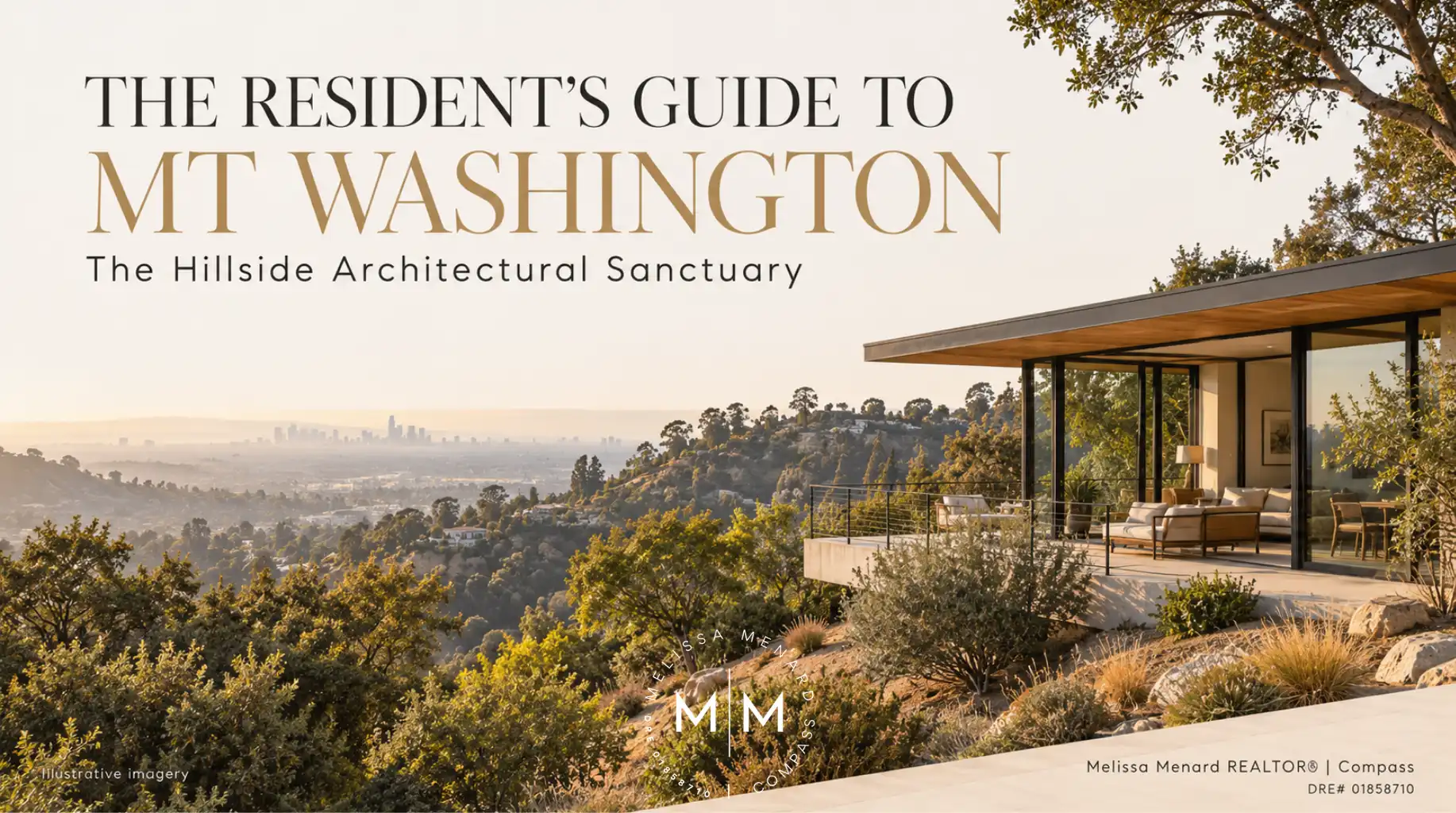
Los Angeles is a city historically defined by its endless horizontal sprawl, but the moment you begin the ascent up Mt Washington, that entire paradigm shifts. I’ve always found it fascinating how quickly the urban grid dissolves here, replaced by winding canyon roads and steep, native hillside. Mt Washington is a masterclass in topographical isolation. It isn’t just a neighborhood; it’s a vertical counterweight to the city below, offering a level of serene seclusion and mid-century architectural pedigree that is increasingly rare in Northeast Los Angeles.
If you are looking for a community that prioritizes privacy and architectural integrity over traditional walkability, you’ve found it. Let’s explore what makes this elevated enclave so fiercely protected by the creative executives, master artists, and design purists who call it home. (Source: Compass Los Angeles Market Insights)
FAST FACTS: Mt Washington Snapshot
- Topography: Steep, winding, curb-free canyon roads carved into native hillside.
- Architecture: A world-class gallery of early 1900s Craftsman bungalows alongside mid-century modernist glass pavilions (featuring works by Lautner, Ain, Neutra).
- Lifestyle Pace: “Hill-to-Base” living; utter privacy on the mountain, vibrant Michelin-recognized commercial culture at the base (Cypress Ave, Eagle Rock Blvd, Figueroa St).
- Key Greenspace: Elyria Canyon Park, a 35-acre protected nature reserve offering native chaparral trails and unblockable basin vistas.
- Market Profile: High-barrier-to-entry; strictly enforced hillside ordinances restrict new development, preserving equity for existing architectural properties.
The Story of the Street: Elevation as Insulation
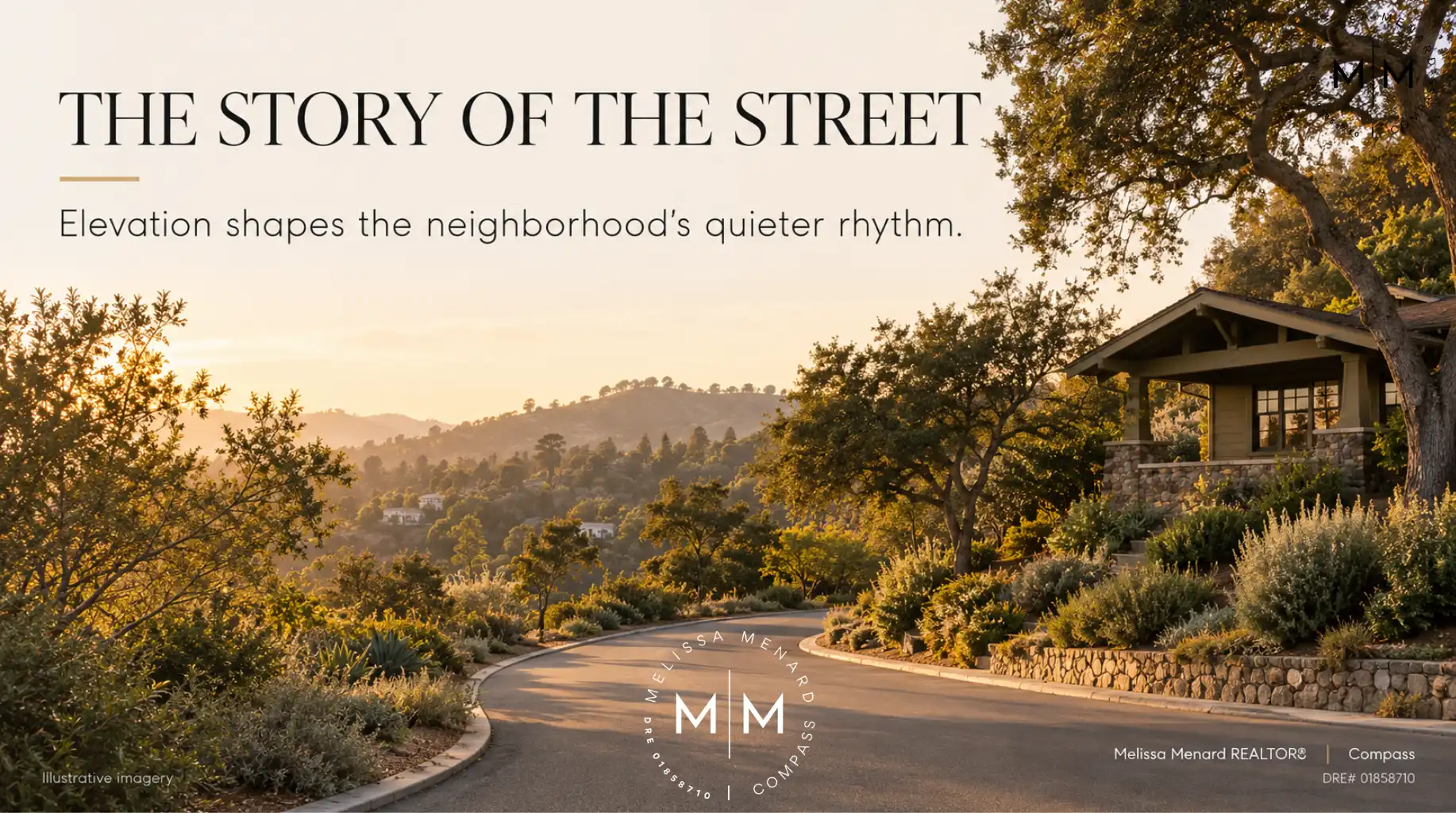
Established in 1909 by real estate pioneer Robert Marsh—who ingeniously built a historic funicular railway to carry affluent Angelenos up the mountain—Mt Washington’s narrative is fundamentally about structural elevation. Today, this challenging, high-elevation terrain acts as a natural buffer against through-traffic. The geography is sculpted around native black walnut trees, the tranquil grounds of the Self-Realization Fellowship, and dramatic drop-offs that ensure privacy.
When I drive clients through the neighborhood, the first thing they notice is the quiet. It’s an insulated calm that allows the area’s legendary architecture to breathe. You aren’t just buying a home here; you are often acting as the custodian for a highly protected, world-class architectural movement.
The “Hill-to-Base” Lifestyle
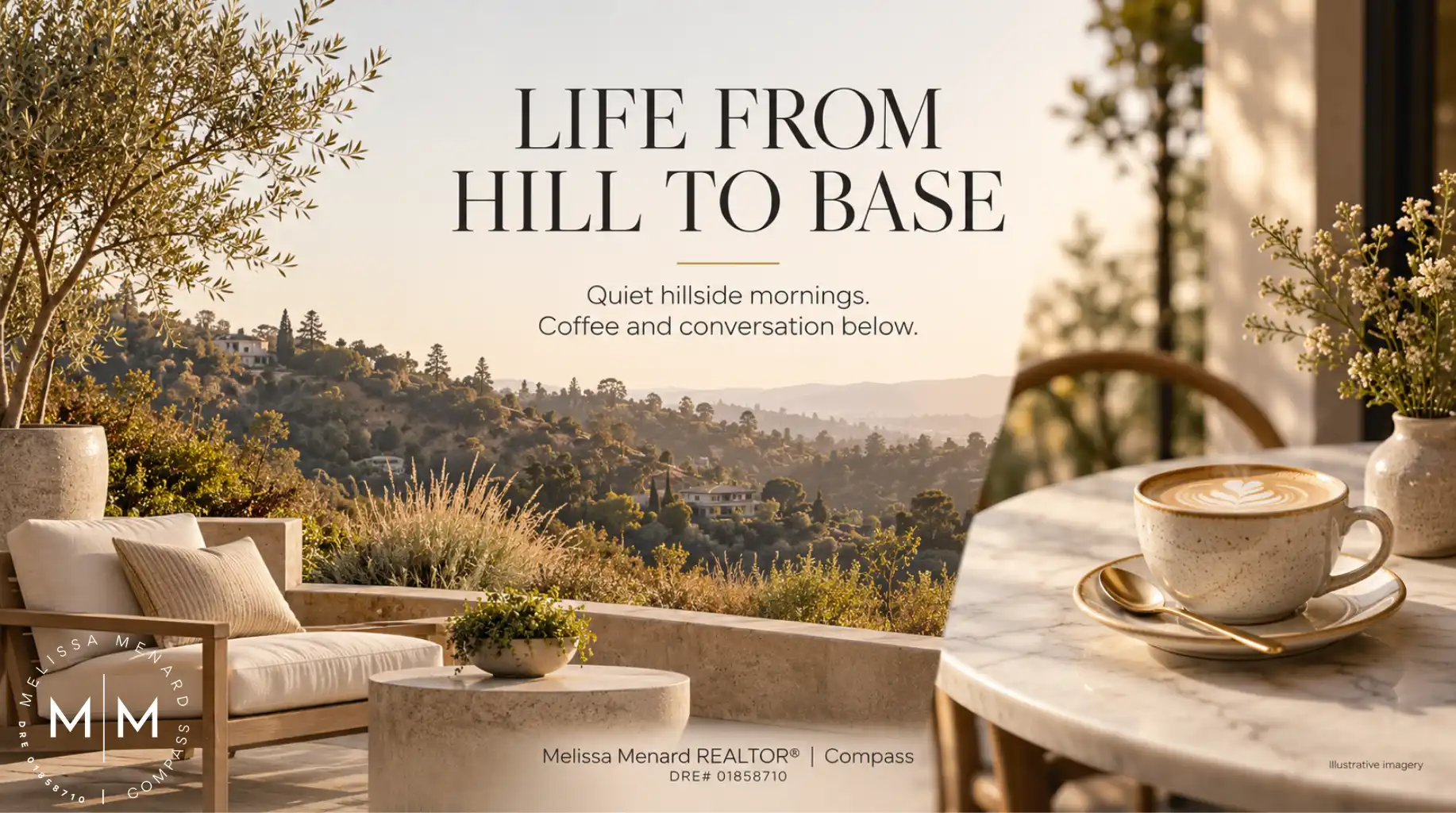
Mt Washington offers a lifestyle profile that requires a slight perspective shift. Traditional sidewalk walkability is largely non-existent within the steep residential interior. Instead, residents treat the historic public staircases and canyon roads as a vertical fitness playground.
However, the neighborhood is grounded by a hyper-walkable, culturally rich commercial base. The daily cadence here is intentionally unhurried. Mornings begin with a quiet walk down the ridge to a technical third-wave espresso bar like Loquat Coffee. Days are spent working in secluded home studios, and evenings conclude at zero-pretension, highly acclaimed eateries tucked at the mountain’s edge, such as the Michelin-recognized Dunsmoor or the intimate Barra Santos.
Comparative Breakdown: Mt Washington vs. Silver Lake
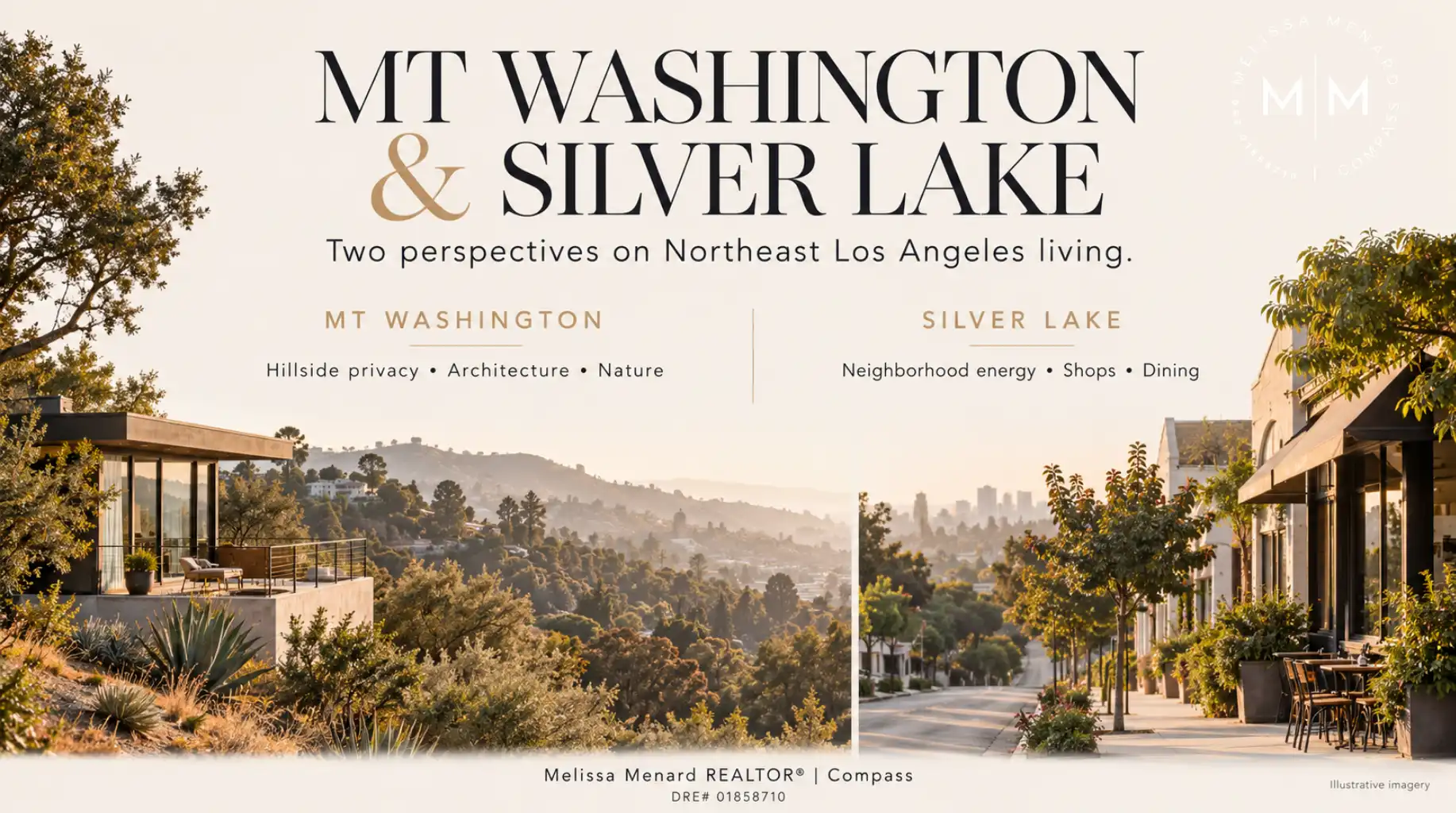
For buyers navigating the Northeast LA hillside markets, comparing Mt Washington to nearby Silver Lake is essential. Here is how they structurally differ:
| Feature | Mt Washington (90065) | Silver Lake (90039) |
| Primary Vibe | Secluded, rugged, architecturally significant, hyper-private. | Bustling, socially active, trendy, pedestrian-heavy. |
| Walkability | “Hill-to-Base”: Private hillsides with walkable edges (Cypress Ave). | Highly walkable interior with integrated commercial corridors (Sunset Blvd). |
| Architectural Focus | Mid-Century Modern cantilevered builds, historic Craftsman. | Spanish Colonial Revival, Mid-Century Modern, contemporary infills. |
| Traffic & Noise | Near-zero through-traffic due to complex, winding canyon roads. | High through-traffic, prominent tourist and weekend visitor presence. |
| Buyer Profile | Privacy-seekers, nature enthusiasts, architectural purists. | Socialites, creatives desiring immediate access to nightlife and culture. |
Buyer & Seller Considerations in a Hillside Market
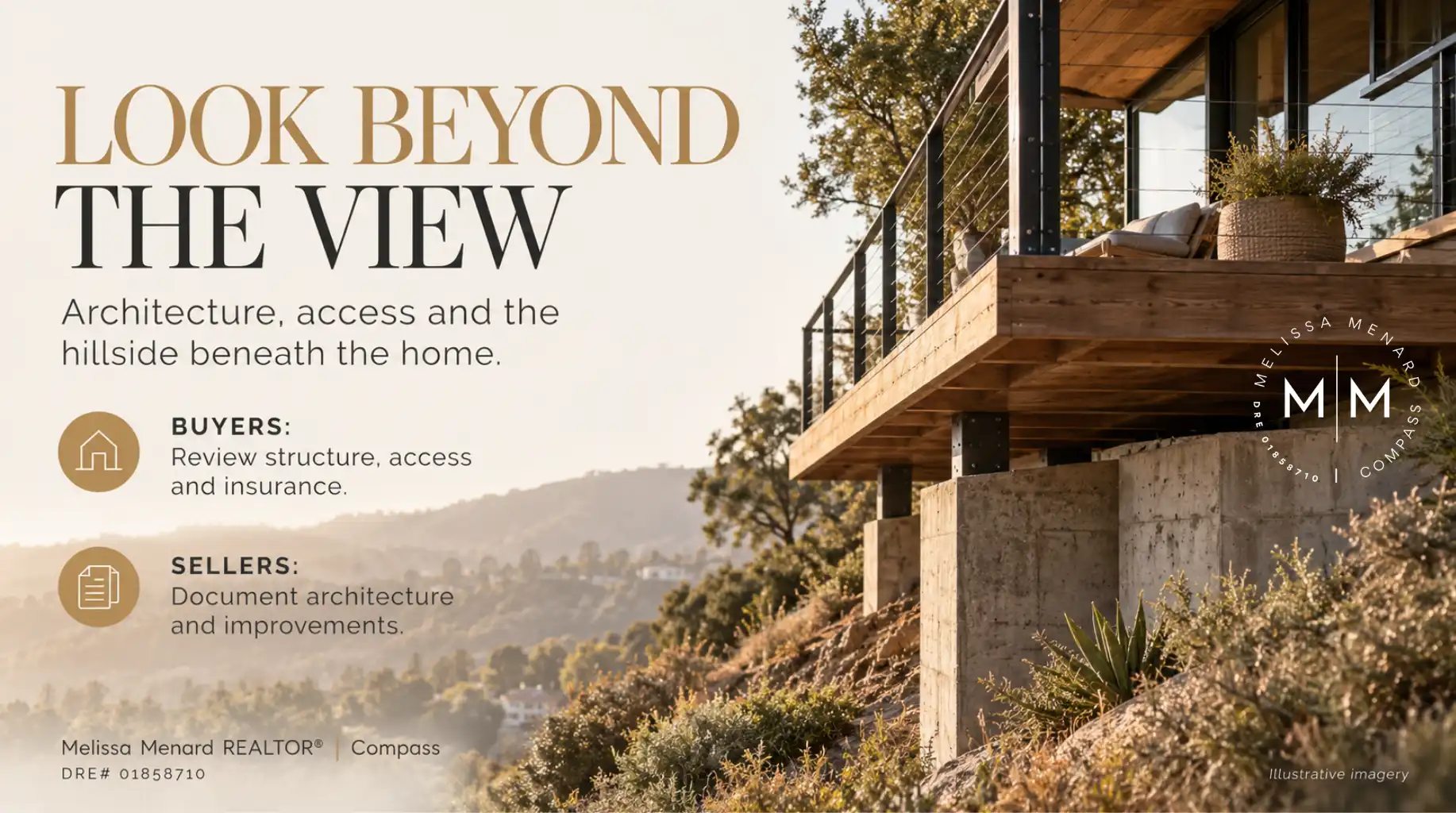
For Buyers:
Purchasing in Mt Washington requires a specific kind of diligence. Hillside ordinances are strict. We aren’t just looking at the aesthetics of a home; we are rigorously evaluating retaining walls, caissons, bedrock foundations, and slope-density metrics. You must be prepared for complex geological reports and specialized home inspections. I always advise my clients to look past the panoramic views of the San Gabriel Mountains for a moment to truly understand the structural engineering beneath their feet.
For Sellers:
Your property’s architectural pedigree and structural integrity are your highest leverage points. We don’t just market the square footage; we market the topographical scarcity. Because new construction is severely limited by hillside ordinances, your existing property holds a premium. Highlighting your home’s privacy, specific architectural provenance, and updated engineering (like retrofitted foundations or newer retaining walls) is how we command top-tier offers from qualified, design-conscious buyers.
Frequently Asked Questions (FAQ)
1. Is Mt Washington considered a walkable neighborhood?
Not in the traditional sense. The interior hills are steep and lack sidewalks, making them better for hiking than casual strolling, though the base corridors are highly walkable.
2. What are the local schools like?
Mt Washington Elementary is highly regarded and a significant draw for families moving into the 90065 ZIP code.
3. Are there parks within Mt Washington?
Yes, Elyria Canyon Park offers 35 acres of protected trails and native habitats right in the neighborhood.
4. How is the commute to Downtown LA?
It’s exceptionally convenient. Depending on traffic, you can often reach DTLA in 10 to 15 minutes.
5. What architectural styles are most common?
You’ll primarily find Mid-Century Modern builds (including works by famous architects) and early 1900s Craftsman homes.
6. Is hillside insurance expensive?
Yes, properties in high brush or steep slope areas often require specialized insurance policies, including FAIR plan coverage for fire, which can be costly.
7. How do the historic staircases work?
Built in the early 20th century to connect hillside homes to the trolley lines below, they are now maintained as public rights-of-way and used heavily for exercise.
8. Is street parking difficult?
It can be. The roads are narrow and winding. Homes with dedicated garages or carports carry a significant premium.
9. What is the geological risk?
All of hillside Los Angeles carries seismic and landslide risks. A thorough geological inspection is non-negotiable when buying here.
10. Can I build an ADU in Mt Washington?
It’s possible but highly complex due to strict hillside ordinances, slope restrictions, and emergency vehicle access requirements.
11. Who lives in Mt Washington?
The demographic skews heavily toward entertainment executives, artists, musicians, and design purists who value discretion.
12. What is the commercial center of the neighborhood?
The neighborhood relies on the base-level corridors of Cypress Avenue, Eagle Rock Boulevard, and Figueroa Street for dining and retail.
13. Are there active community associations?
Yes, the Mt Washington Homeowners Alliance is very active in preserving the neighborhood’s character and managing local issues.
14. What is the Self-Realization Fellowship?
It’s a tranquil, historic spiritual center headquartered on the mountain, featuring beautiful grounds that add to the area’s serene atmosphere.
15. How do property values compare to neighboring areas?
Mt Washington generally commands a higher price per square foot than adjacent Glassell Park, mirroring the premiums found in Silver Lake or Los Feliz due to its views and architecture.
16. Are there wild animals in the neighborhood?
Yes. Given the native brush and Elyria Canyon, residents frequently see coyotes, hawks, owls, and occasionally bobcats.
17. What are the best local coffee spots?
Loquat Coffee, Habitat Coffee, and Cafe de Leche are the neighborhood staples at the base of the hill.
18. Where do locals go for dinner?
Dunsmoor for high-end heritage cooking, and Barra Santos for intimate Portuguese wine and tapas.
19. How strict is the local building code?
Extremely strict. The Baseline Hillside Ordinance (BHO) heavily regulates height, square footage, and grading to prevent overdevelopment.
20. Is the historic funicular railway still running?
No, the original railway built by Robert Marsh closed in 1919, though the original ticket office remains as a historic structure.
Closing Perspective
Mt Washington isn’t for everyone, and that is precisely its power. It demands a resident who appreciates the quiet, who values the structural ingenuity of cantilevered modernism, and who understands that true luxury in Los Angeles is often measured by the absence of noise. If you are willing to trade the flat, gridded walkability of the basin for unblockable vistas and architectural pedigree, there is simply no better sanctuary in the city.
Are you ready to explore the specific structural nuances and architectural opportunities in the 90065 market?
Melissa Menard REALTOR® | Compass
Mt Washington & Surrounding Los Angeles Areas
📞 310.729.9726 | DRE# 01858710
📧 melissa@melissamenard.com
🌐 www.MelissaMenardHomes.com
Disclaimer: The information provided in this post is intended for educational purposes only and should not be considered financial, legal, tax, or investment advice. Real estate laws, market conditions, and regulations change over time. Please consult the appropriate licensed professionals regarding your specific situation. All content should comply with applicable Fair Housing laws and regulations.