


Most people treat moving as a purely physical chore—a chaotic weekend of cardboard boxes, packing tape, and heavy lifting. But when you look closer at high-stakes moves across Southern California, you realize that moving isn’t just about transporting boxes; it’s about carefully closing one chapter to purposefully open another. Whether you’re relocating across the country, moving from a historic Craftsman in Pasadena to a coastal retreat in Santa Monica, or navigating a local move within the Westside, the physical transition often causes the most friction.
When moves go wrong, it’s rarely because of bad intentions. It’s almost always a failure of strategy. In a city like Los Angeles, where narrow canyon roads, parking restrictions, multi-story Mediterranean layouts, and notoriously unpredictable traffic add real complexity to moving day, relying on effort alone isn’t enough. You need systems.
By shifting your perspective from “packing up” to “orchestrating an environment,” you preserve your peace of mind and protect your investment. Here is how to master the architecture of a seamless move.
Fast Facts: High-Efficiency Moving & Relocation Systems
- Room-by-Room Isolation: Packing strictly by room prevents mixed-destination boxes and reduces unpacking friction by up to 60%.
- Vertical Dish Stacking: Plates packed on their edges absorb vertical impact far better than flat-stacked dishes, drastically reducing breakage risk during transit.
- Rolling Suitcase Strategy: Dense, heavy items like hardcover books, manuals, and tools should be packed in wheeled luggage rather than cardboard boxes to avoid box failure and spinal strain.
- Color-Coded Routing: Utilizing distinct colored tape for each room allows movers to route items instantly without stopping to read written text.
- Cable Architecture Photography: Photographing electronic terminal setups prior to unplugging saves hours of reconnection time in your new home.
- First-Night Essentials Basket: Isolating 24 hours of personal items, toiletries, chargers, and essential documents prevents frantic box opening on arrival night.
The 12 Strategic Moving Hacks for Effortless Transitions
1. Pack strictly by room, never by random impulse
It’s tempting to grab whatever fits into an open box when you’re trying to wrap up a room quickly. Resist that urge. When you mix kitchen items with living room decor or home office supplies, you aren’t saving time—you’re just transferring modern-day chaos to your future self.
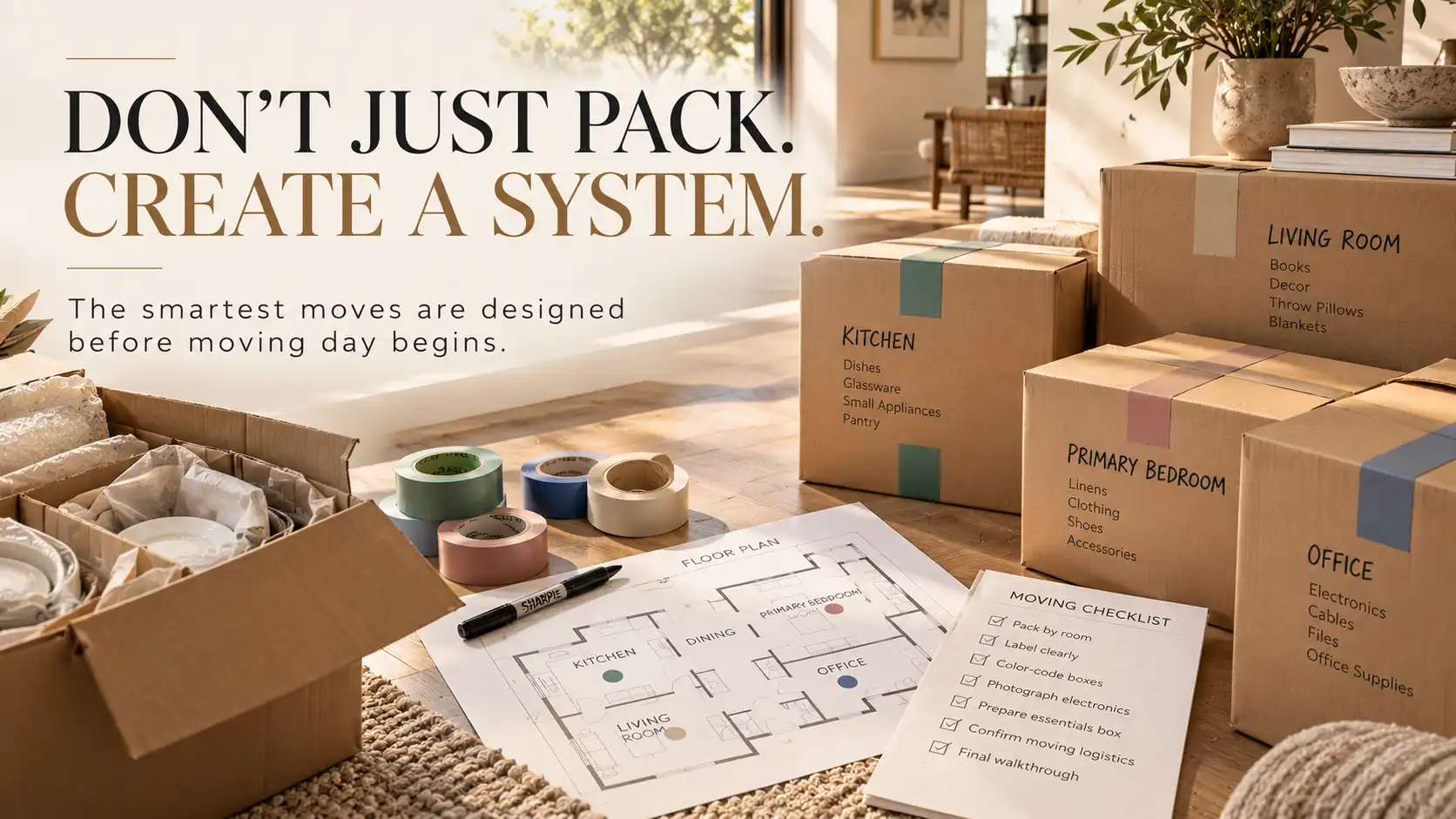
Tackle one room completely before moving to the next. Keeping box contents unified by destination room streamlines the unloading phase and keeps your new home organized from day one.
2. Label every box with destination details and key contents
A box marked simply “Stuff” or “Misc” is a mystery waiting to disrupt your move. Every box should clearly state two things: its destination room and a quick summary of its key contents (e.g., KITCHEN: Glassware, Bowls, Daily Plates).
When movers or family members unload the truck, clear labeling eliminates guesswork. You won’t have to answer “Where does this go?” fifty times, and you won’t have to open six different boxes to find your morning coffee mug.
3. Respect box weight limits and don’t overload
There’s a common misconception that larger boxes should hold heavy items. In reality, large cardboard boxes are meant for lightweight, bulky items like throw pillows, comforters, and winter coats.
Keep your boxes light enough for one person to lift safely without strain. Overloaded boxes break at the seams, damage their contents, and risk physical injury. If a box feels awkward or overly dense, divide the contents into smaller containers.
4. Protect breakables through space-filling cushion systems
Glassware and ceramics don’t break because the box gets moved; they break because they shift inside the box while the truck is in motion. Proper wrapping requires a three-tier approach: wrap each piece individually, cushion the bottom and top of the box with dense paper or bubble wrap, and fill every remaining air pocket.
If you shake a packed box gently and feel anything shifting inside, add more cushioning. Zero movement equals zero breakage.
5. Curate a dedicated “First Night” essentials box
Your first night in your new home should feel like a celebration, not an obstacle course. Pack an easily accessible basket or clear container containing everything you’ll need for the first 24 to 48 hours.
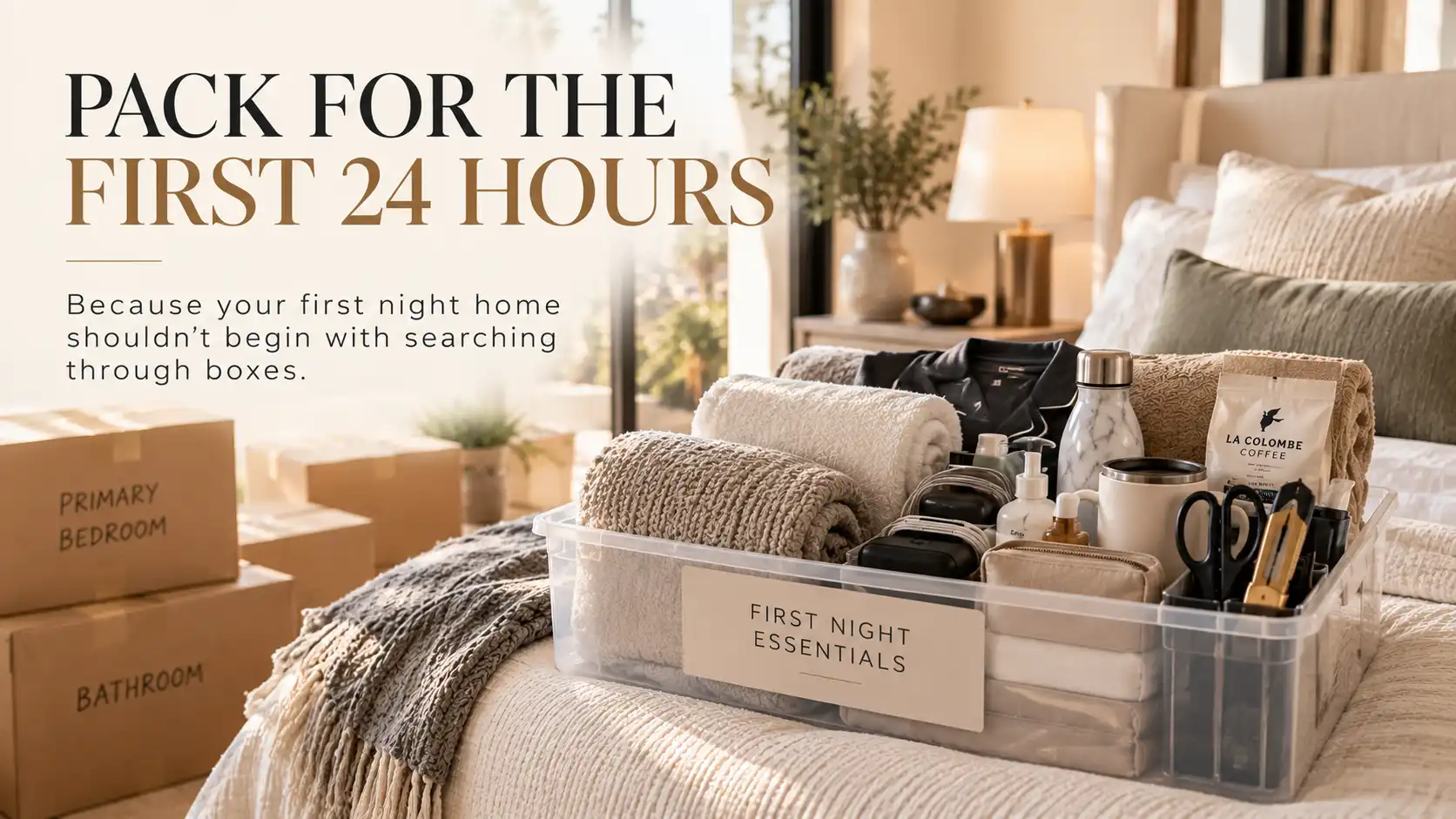
Include bed linens, bath towels, basic toiletries, phone chargers, comfortable clothing, disposable plates, coffee supplies, and essential tools like a box cutter and scissors. Keep this container with you in your personal vehicle—not loaded deep into the back of the moving truck.
6. Photograph wire connections before disconnecting electronics
Behind every home entertainment system or office setup lies a complex web of cables, HDMI ports, and power adapters. Before you unplug a single cable, take two or three clear, well-lit photos of the back panel on your smartphone.
Having a visual reference guide turns a potentially frustrating reassembly process into a quick 10-minute task when setting up your new living room or home office.
7. Implement a visual color-coding system by room
While written labels are necessary, visual color coding speeds up moving day exponentially. Assign a specific color of painter’s tape or shipping tape to each room in your new floor plan (e.g., Blue for Primary Bedroom, Green for Kitchen, Yellow for Living Room).
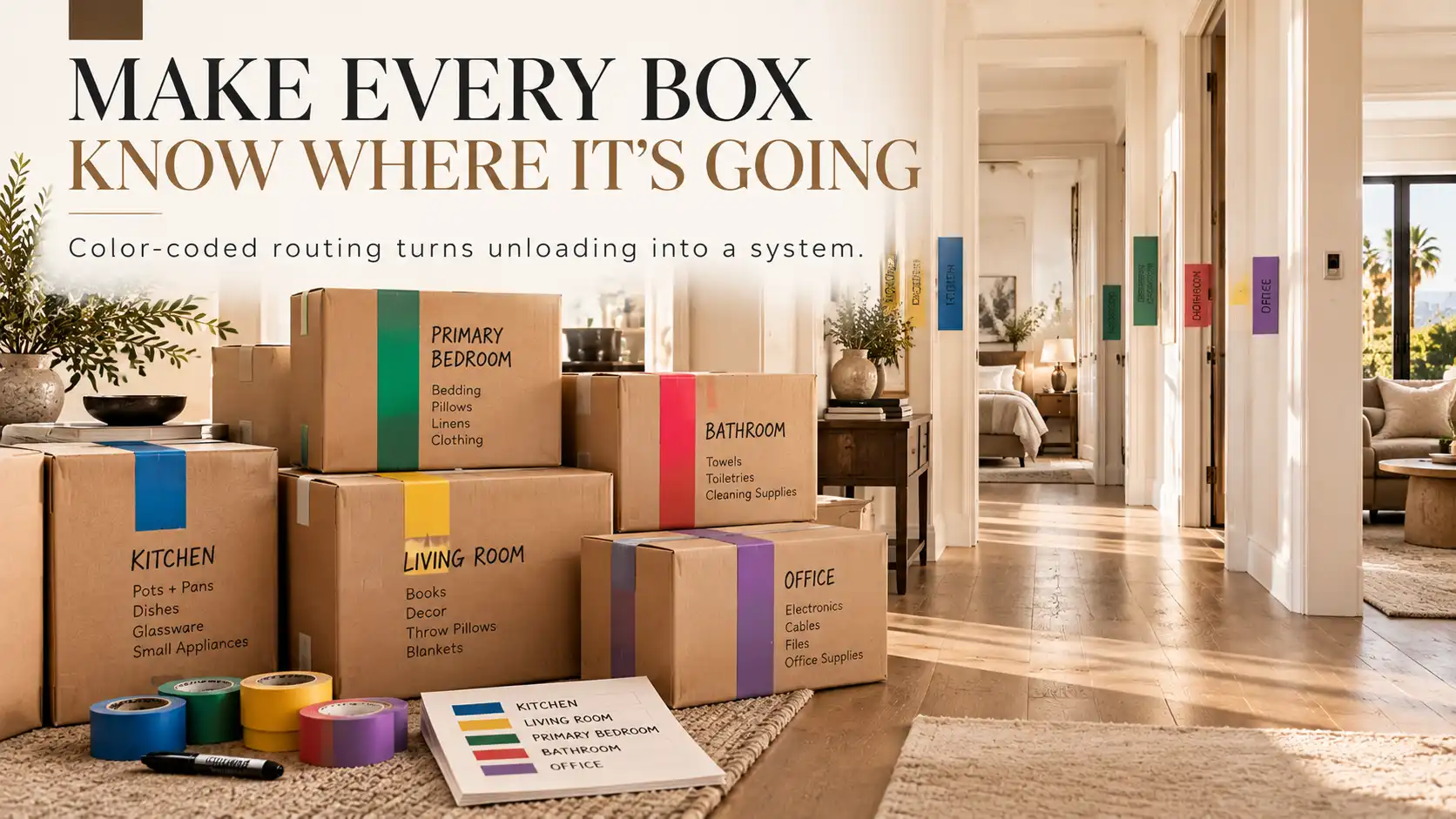
Place matching colored tape on the doorframes of the destination rooms in your new home. Movers won’t even need to read the labels—they can simply match the tape on the box to the tape on the doorframe at a glance.
8. Isolate and secure small hardware parts
Few things stall a move faster than a bed frame you can’t reassemble because the frame bolts vanished during transit. As you dismantle furniture, immediately place all screws, bolts, brackets, and allen wrenches into a clear, sealable storage bag.
Label the bag clearly with a permanent marker (e.g., Guest Room Bed Frame Hardware) and tape it securely to the largest piece of that furniture item, or store all hardware bags together in your Essentials Box.
9. Pack plates vertically on their sides
Standard instinct tells us to stack plates flat, one on top of another. However, ceramics and china are naturally stronger along their vertical edges. Stacking plates horizontally creates cumulative downward weight that can easily crack the bottom dishes during a bumpy ride.
Wrap each plate individually in butcher paper or bubble wrap, then line them up vertically on their sides like vinyl records inside a sturdy, padded box.
10. Leverage laundry baskets and hampers for odd-shaped essentials
Not everything needs to fit into a square cardboard box. Open-weave laundry baskets, hamper totes, and flexible storage bins are perfect for transporting bulky, odd-shaped, or soft items.
Use them for throw blankets, oversized decorative pillows, soft toys, or last-minute closet items. Because they have built-in handles, they’re easy to carry and fill empty gaps in the moving vehicle.
11. Protect mirrors and artwork with cross-taping and corner guards
Large framed glass, decorative mirrors, and fine art require extra care during a move. Start by applying high-tack painter’s tape across the glass surface in a large “X” pattern from corner to corner. If the glass happens to crack, the tape holds the shards in place, preventing shattered pieces from tearing the artwork or scratching your floor.
Fit cardboard corner protectors over the edges, wrap the entire piece in heavy moving blankets, and secure it with stretch wrap. Always store and transport mirrors and artwork standing vertically on their edge—never flat.
12. Pack dense, heavy items in rolling suitcases
Hardcover book collections, dumbells, tool sets, and heavy documents can make cardboard boxes dangerously heavy. Instead of packing them in standard boxes, pack these dense items into sturdy, rolling luggage.
Suitcases are specifically designed to support heavy weight, and their built-in wheels turn a 70-pound load of books from an awkward lift into an effortless stroll across the room.
Essential Addendum: The “Keep With You” Personal Protocol
Beyond your household furnishings, there is a category of items that should never enter a moving truck. Maintain a dedicated travel bag or lockbox that stays directly in your personal care throughout moving day.
- Legal & Identification Documents: Passports, birth certificates, deeds, trust papers, and closing contracts.
- Financial Instruments: Unused checkbooks, active credit cards, luxury watches, and fine jewelry.
- Medical Needs: Prescription medications, medical records, and medical devices.
- Sentimental Belongings: Irreplaceable family photo albums, heirlooms, and personal journals.
Buyer & Seller Relocation Considerations
For Sellers: Packing as a Strategic Staging Tool
If you’re preparing your home for the Los Angeles market, packing early serves a dual purpose. Decluttering closets, clearing garage storage, and packing away seasonal items creates a spacious feeling during showings. Using laundry baskets and uniform boxes during pre-packing keeps storage areas looking immaculate for prospective buyers.
For Buyers: Protecting Your Investment on Day One
When moving into a newly acquired property, damage often occurs during the initial move-in phase. High-traffic areas—like hardwood hallways, historic door casings, and fresh paint—are vulnerable to scrapes. Ensure your moving team installs temporary floor runners and corner guards before carrying large furniture through your new home.
Comparative Matrix: Standard vs. Strategic Relocation
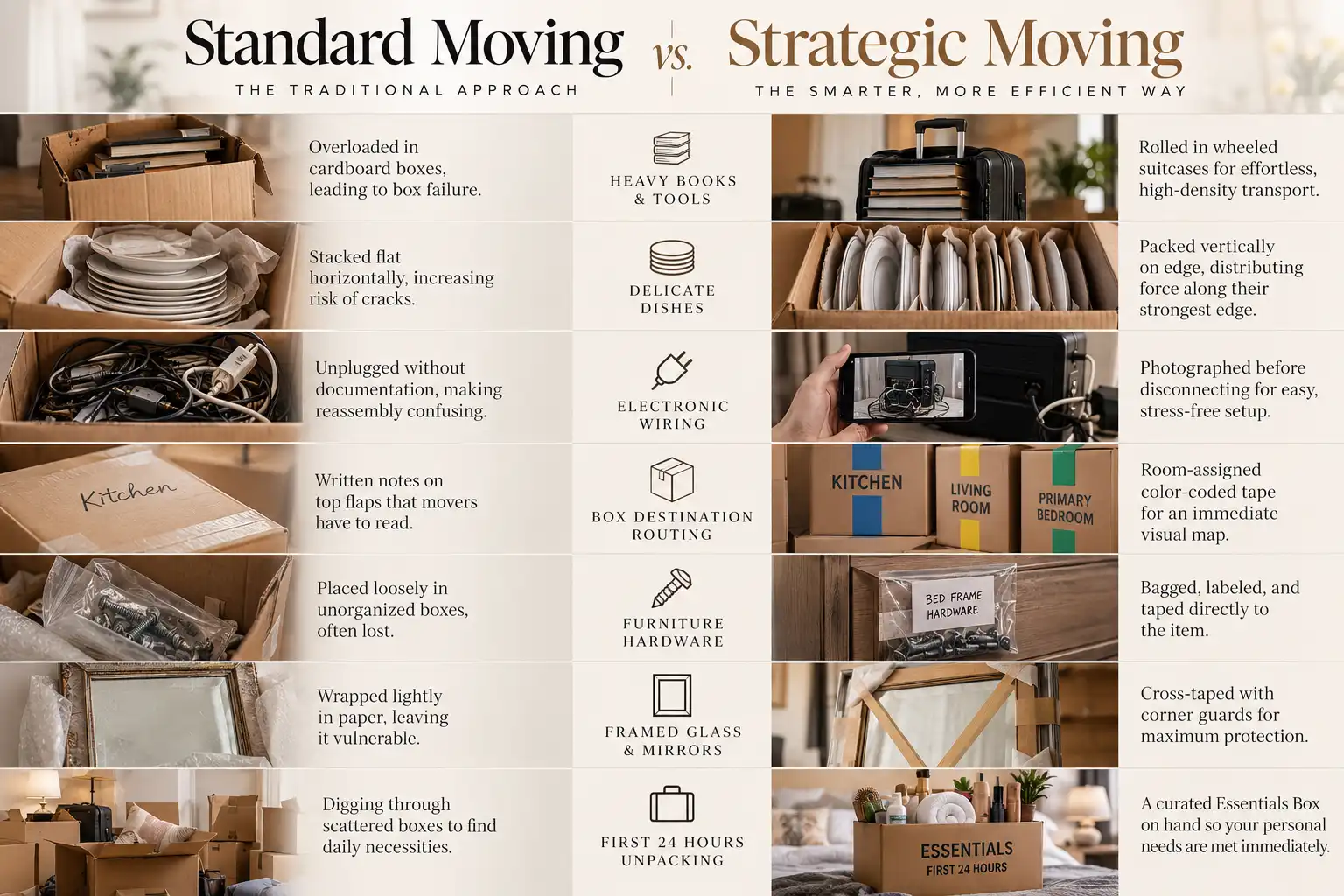
| Relocation Dimension | Standard Moving Approach | Strategic Editorial Method |
| Heavy Item Transport | Packed into large cardboard boxes that risk tearing | Packed into rolling suitcases utilizing built-in wheels |
| Plate Packaging | Stacked flat horizontally, placing weight on bottom plates | Packed vertically on edge with padding like vinyl records |
| Electronics Setup | Unplugged randomly, relying on memory for reassembly | Connections photographed prior to disassembly for fast setup |
| Box Routing | Written notes on top flaps that require reading each box | Color-coded tape matching destination doorframes |
| Small Hardware | Placed loosely in unorganized boxes | Sealed in labeled bags taped directly to furniture pieces |
| Glass Protection | Wrapped in thin paper without surface support | Cross-taped with painter’s tape to hold glass if damaged |
| First 24 Hours | Digging through multiple sealed boxes for essentials | Accessing a dedicated, pre-packed Essentials Box |
Frequently Asked Questions
1. How far in advance should I start packing for a move?
It’s best to start packing non-essential items—like seasonal clothing, fine china, and books—4 to 6 weeks before your moving date. Reserve the final 2 weeks for daily-use rooms.
2. What is the single most common packing mistake?
Overloading large boxes with heavy items and failing to label destination rooms clearly on the side panels of the boxes.
3. How do I choose between hiring full-service movers or doing a self-move?
Full-service movers are ideal if you have a tight timeline, physical constraints, or complex luxury items. Self-moves work best for smaller, local relocations with flexible schedules.
4. How can I safely move large TV screens?
Whenever possible, use the original manufacturer packaging. If unavailable, use specialized heavy-duty TV boxes with foam corner inserts, and always keep the screen upright during transit.
5. What items are professional movers prohibited from hauling?
Movers typically cannot transport hazardous materials, perishable food, plants across state lines, propane tanks, ammunition, or personal valuables like cash and jewelry.
6. Should I rent plastic moving crates or buy cardboard boxes?
Plastic moving crates offer superior stackability and weather protection for local relocations, while cardboard boxes are often better suited for long-distance moves or long-term storage.
7. How do I protect delicate hardwood floors during move-in?
Lay down heavy-duty floor protection paper (such as Ram Board or Neoprene floor runners) along all main walkways before moving heavy furniture inside.
8. What is the best way to handle clothes in hanging closets?
Use wardrobe boxes with built-in metal bars, or group hanging clothes in bundles of 10 to 15 and pull a clean heavy-duty trash bag up from the bottom, tying the hangers together at the top.
9. How do I prepare my refrigerator for a move?
Unplug, empty, and thoroughly clean the unit at least 24 to 48 hours prior to moving day. Leave the doors propped open to dry completely and prevent mold growth.
10. How many boxes will I need for a typical 3-bedroom home?
On average, a 3-bedroom home requires approximately 70 to 100 boxes of varying sizes, along with packing paper, bubble wrap, and tape.
11. What is the color-coding method for moving boxes?
Color coding involves placing a specific colored piece of tape on every box belonging to a room, and putting the corresponding color tape on the doorframe of that room in the new home.
12. How should I secure mirrors to prevent shattering?
Apply high-tack painter’s tape in a large “X” pattern across the glass, add cardboard corner protectors, and wrap the mirror securely in moving blankets.
13. Is moving insurance necessary?
Yes. Standard mover liability (released value protection) only covers around $0.60 per pound per item. Full Value Protection or third-party insurance is recommended for high-value items.
14. How do I keep small screws and furniture hardware organized?
Place all hardware into clear, sealable storage bags, label them clearly, and tape them directly to the corresponding furniture piece or keep them in an essentials box.
15. What should go into a “First Night” essentials box?
Include bed sheets, towels, basic toiletries, phone chargers, coffee supplies, a box cutter, light bulbs, basic tools, and a change of clothes.
16. How do I manage moving day traffic and parking in Los Angeles?
Schedule your move start time early in the morning (around 7:00 AM) to avoid peak traffic, and secure any necessary street parking permits or building elevator reservations well in advance.
17. Can I leave clothes inside dresser drawers when moving?
If the dresser is sturdy and the move is local, lightweight clothing can often remain inside. However, remove heavy items, delicate pieces, or anything that could slide around and damage the drawers.
18. How do I pack delicate wine bottles or barware?
Use specialized cell-divider boxes made for bottles, wrap each bottle in bubble wrap, and ensure the box is clearly marked “FRAGILE – LIQUIDS.”
19. What is the safest way to transport indoor house plants?
Pack plants upright in open-top boxes, cushion the base with paper so the pot cannot tip over, and transport them in a climate-controlled personal vehicle rather than a closed truck bed.
20. How do I organize an unpacking strategy once in the new home?
Start by setting up beds and assembling essential furniture. Next, unpack the kitchen and bathrooms, followed by main living spaces, leaving decorative items and storage closets for last.
Closing Perspective
A move shouldn’t feel like a chaotic blur. When you approach relocation with clear systems and thoughtful preparation, you protect your energy for what truly matters: stepping comfortably into your next chapter.
Whether you’re purchasing your next residence, staging a home for market success, or planning a move within Southern California, having an experienced guide by your side makes all the difference.
Ready to discuss your real estate strategy?
Schedule a Strategy Consultation | Request a Personalized Buyer or Seller Strategy
Melissa Menard REALTOR® | Compass
Los Angeles & Surrounding Areas
📞 310.729.9726 | DRE# 01858710
📧 melissa@melissamenardhomes.com
🌐 www.MelissaMenardHomes.com
Disclaimer: The information provided in this post is intended for educational purposes only and should not be considered financial, legal, tax, or investment advice. Real estate laws, market conditions, and regulations change over time. Please consult the appropriate licensed professionals regarding your specific situation. All content should comply with applicable Fair Housing laws and regulations.