

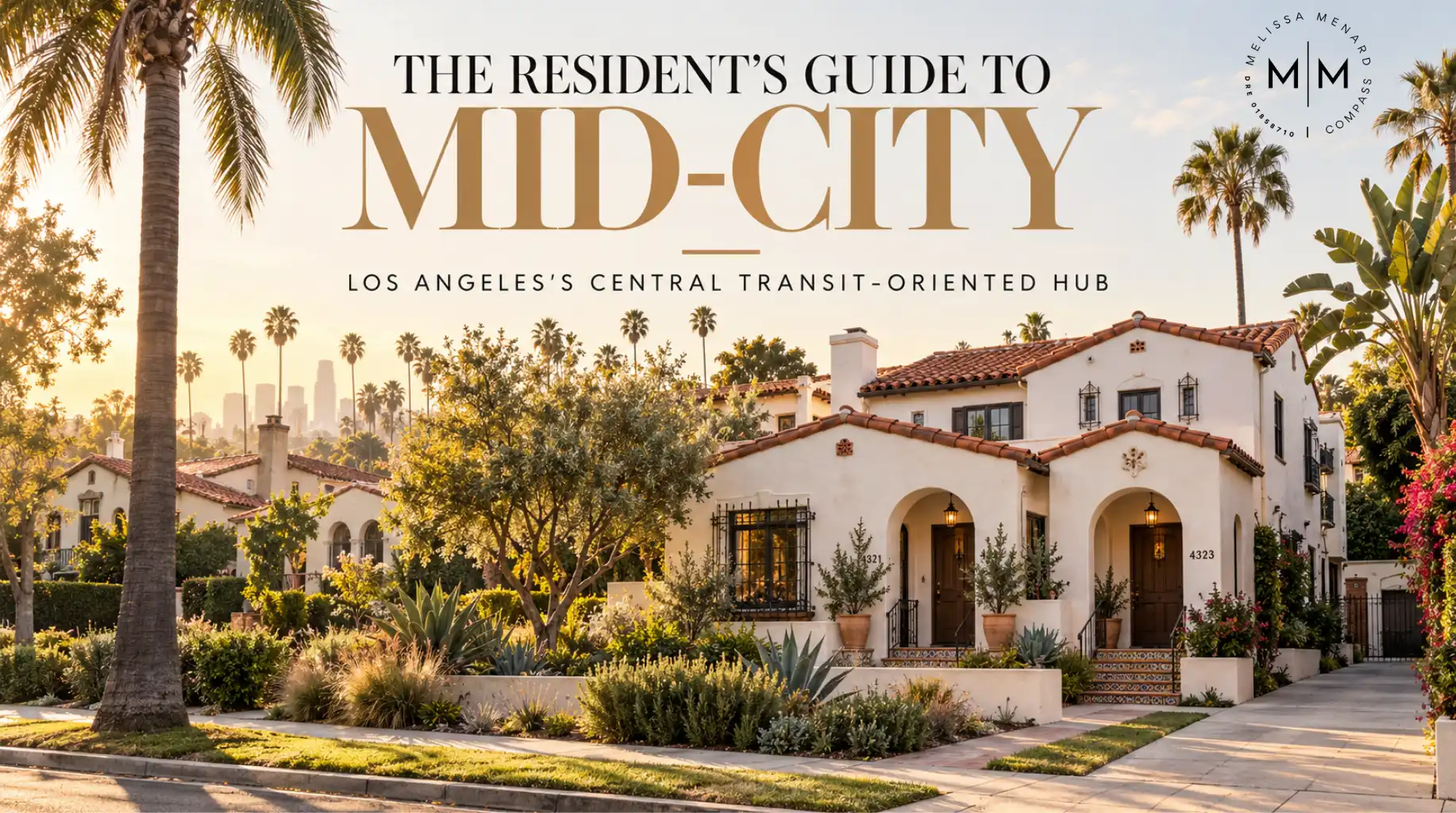
It’s easy to think of Los Angeles as a fragmented collection of coastal enclaves and hillside retreats, completely disconnected from one another. We often buy into the narrative that living in LA requires endless highway commutes and geographic isolation. But when you look closely at the city’s grid, there’s a vital geometric center that challenges that entire paradigm.
Mid-City is a masterclass in geographical centrality, architectural resilience, and modern transit-oriented development. Pivoting from the premium coastal markets of Venice or Santa Monica, we move inland to examine a high-utility urban micro-market that quietly acts as the anchor of the Los Angeles basin. Originally developed in the 1920s and 1930s as streetcar suburbs connected by the historic Pacific Electric Railway lines, Mid-City’s “Story of the Street” has entered a vibrant contemporary chapter defined by infrastructure optimization and creative commercial reuse. I’ve always found that understanding Mid-City requires looking at it not just as a neighborhood, but as a strategic logistical hub.
FAST FACTS: Mid-City Market Overview
- Geographic Anchor: Centrally located between Downtown Los Angeles and the Westside, bounded roughly by Hoover St, Pico Blvd, Crenshaw Blvd, and the Santa Monica Freeway.
- Transit Integration: Heavily supported by the Metro E Line (Expo), providing direct, traffic-free access to DTLA and Santa Monica.
- Architectural Heritage: High concentration of exceptionally preserved 1920s/1930s multi-family fourplexes, Spanish Colonial Revival duplexes, and classic Craftsman bungalows.
- Zoning Advantage: High prevalence of Transit-Oriented Communities (TOC) incentives, supporting strategic multi-family investments.
- Primary Arteries: Driven by east-west commercial corridors including Washington, Venice, and Pico Boulevards.
The Story of the Street: Architecture and Equity
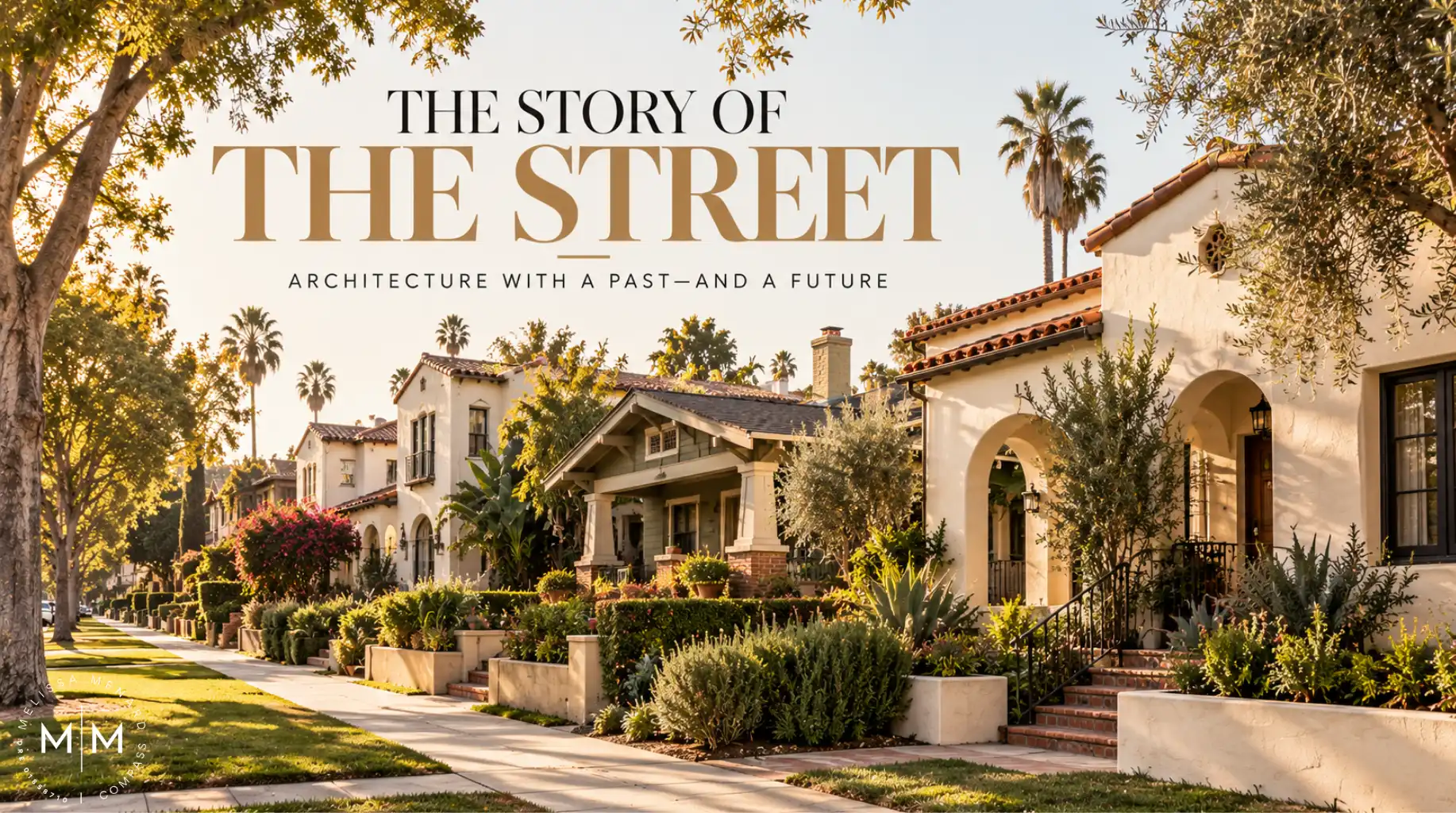
When I walk through Mid-City, what immediately stands out isn’t new development, but architectural preservation. The residential housing stock here presents an exceptional, highly preserved inventory of multi-family assets. These aren’t the generic box-builds you see cropping up elsewhere; these are character-rich Spanish Colonial Revival duplexes with original terracotta tile, arched entryways, and deeply shaded Craftsman bungalows with broad, welcoming porches.
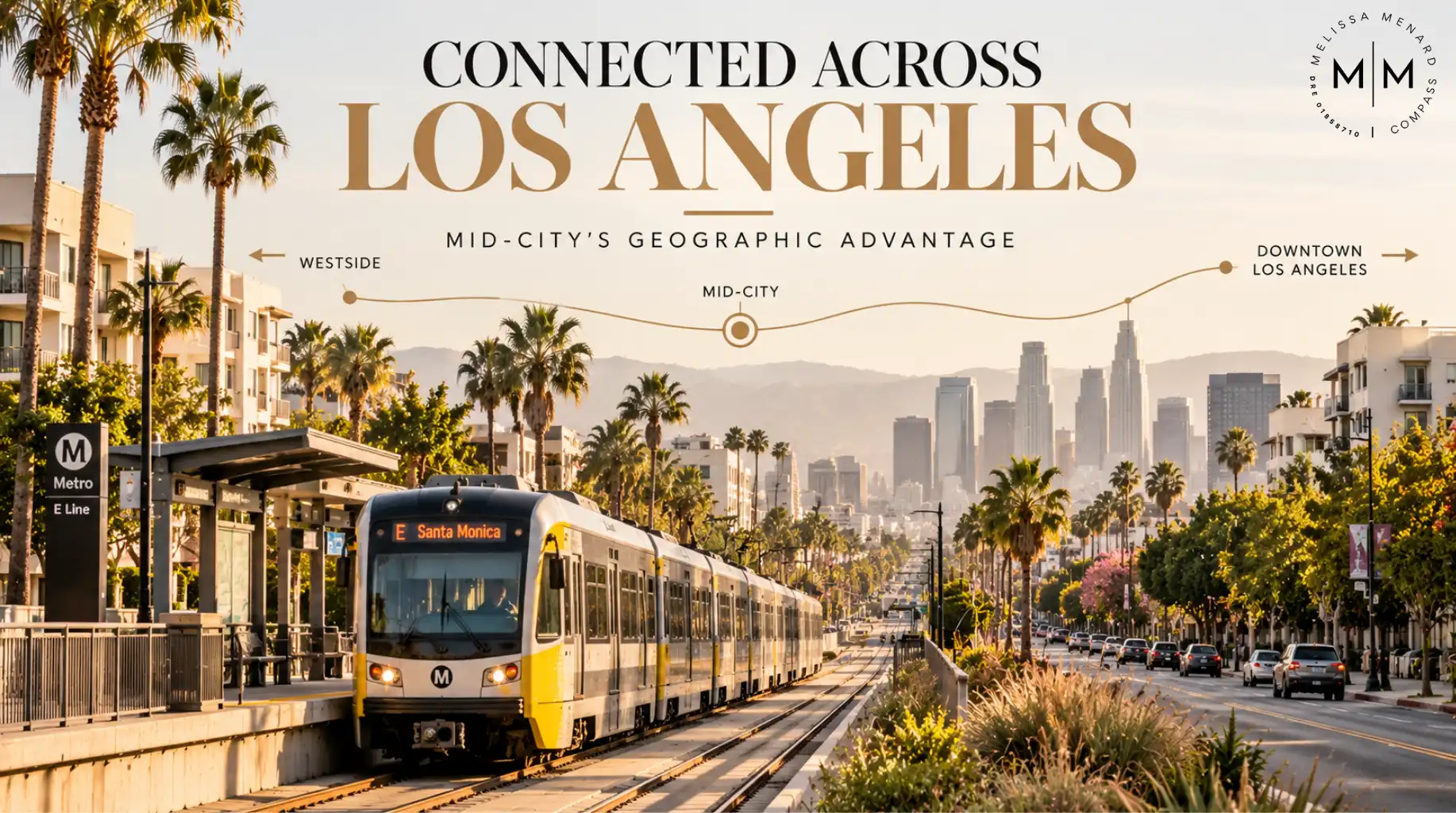
Today, this gridded urban topography is heavily insulated by its proximity to the Metro E Line. It’s drawing a diverse demographic of tech, media, and design professionals who prioritize regional connectivity and true architectural equity over the traditional prestige of the hills. Buying in Mid-City means buying into tangible history—and for investors, it means acquiring duplexes and fourplexes that yield strong rental demand due to the neighborhood’s supreme walkability and transit access.
Walkability, Lifestyle, and The Mid-City Curated List
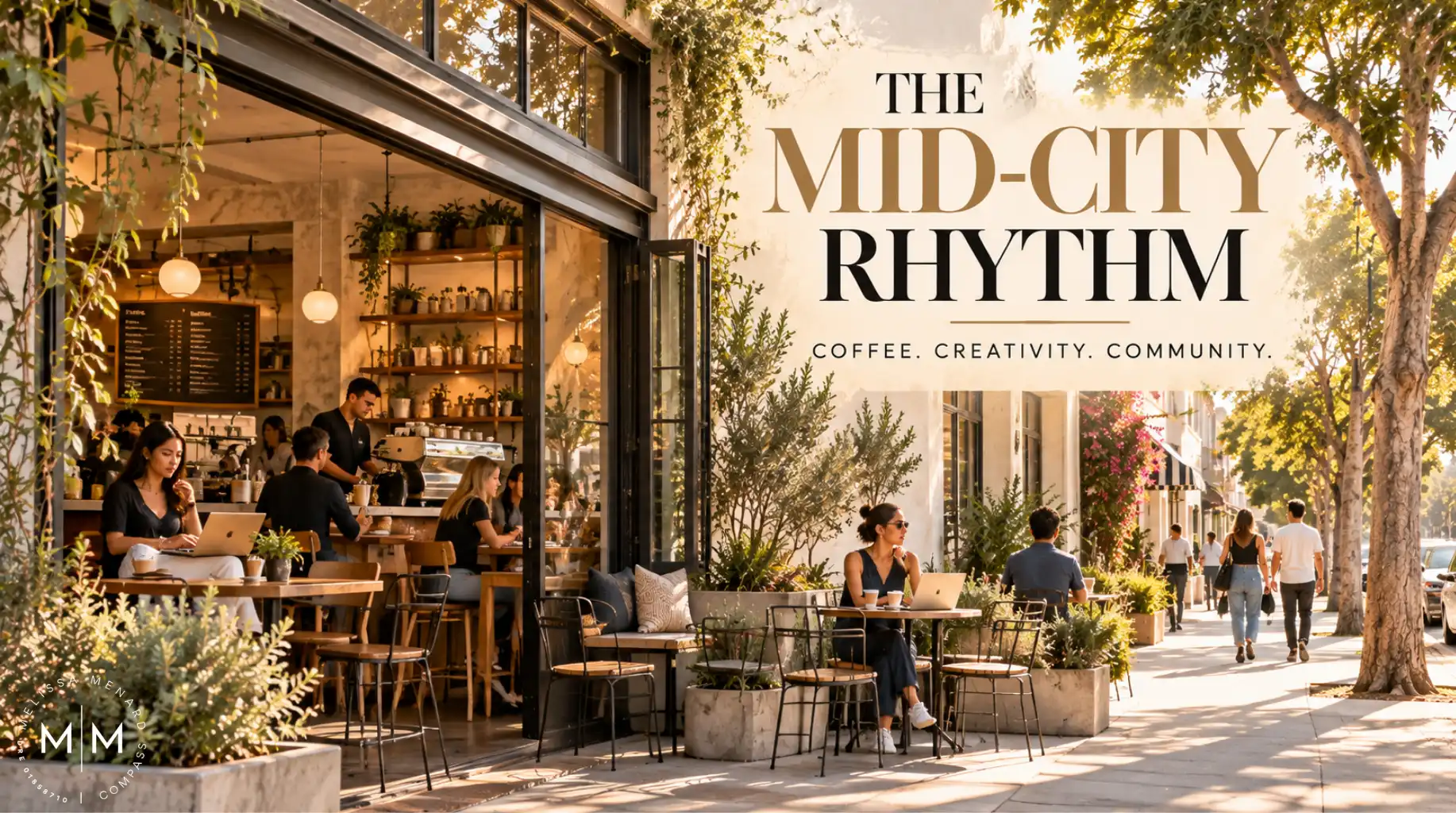
Mid-City delivers an authentic, “Gridded Urban” lifestyle profile. The cadence here is unpretentious, highly active, and community-centric. Residents benefit from an intentional daily rhythm where car dependency is significantly mitigated by public transit routes and bike-friendly avenues. You can easily start your morning at a neighborhood espresso house, transition into a creative workspace, and finish with open-air dining along rapidly evolving culinary rows.
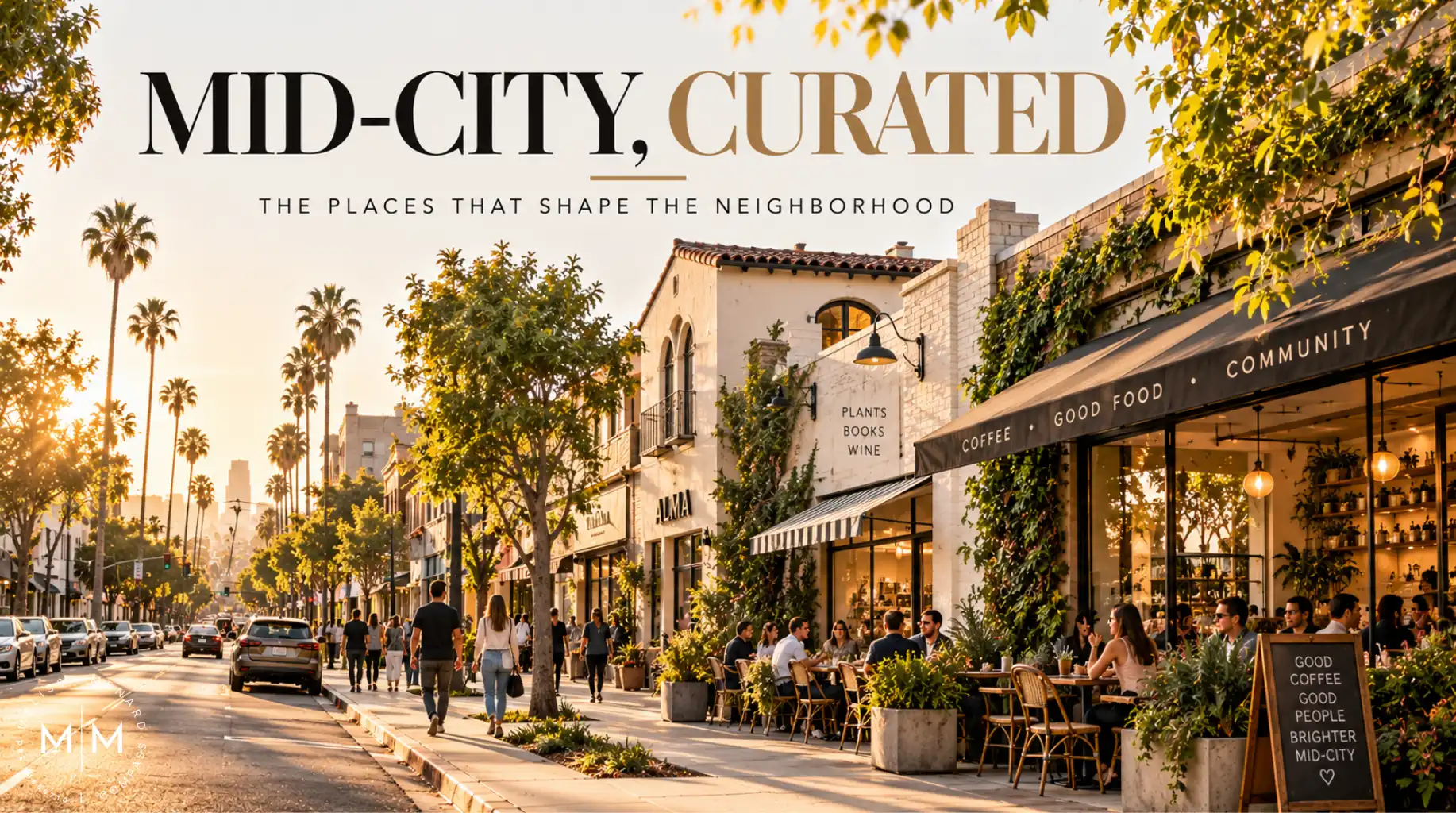
Here are the cornerstones of the Mid-City lifestyle:
- Paper or Plastik Cafe: A high-concept, multi-level hybrid space on Pico Blvd combining a working dance studio with artisanal micro-lot pour-overs. It’s the definitive hub for morning creative meetings.
- Jurassic Magic: A stunning, design-forward coffee shop on Mansfield Ave offering striking panoramic views of the Hollywood Hills alongside precision matcha.
- Undergrnd Cafe: A sleek, industrially designed community staple known for specialty roasts, reliable WiFi, and a high-energy pulse.
- Candela Taco Bar: A vibrant La Brea staple. I always recommend their executive social hour for craft margaritas and elevated traditional Mexican plates.
- Leather & Rose: A highly rated, hidden underground speakeasy sanctuary featuring intimate low-lit seating and meticulous custom mixology.
- My Two Cents: Chef Alisa Reynolds’ celebrated culinary powerhouse on Pico Blvd, famous for its elevated, health-conscious Southern comfort food.
- Cake Monkey Bakery: The renowned local headquarters specializing in modern, sophisticated twists on classic childhood snack treats.
- Queen Anne Park: A vital, beautifully maintained community green space featuring active athletic courts and shaded picnic groves.
Mid-City vs. The Broader LA Market: A Strategic Breakdown
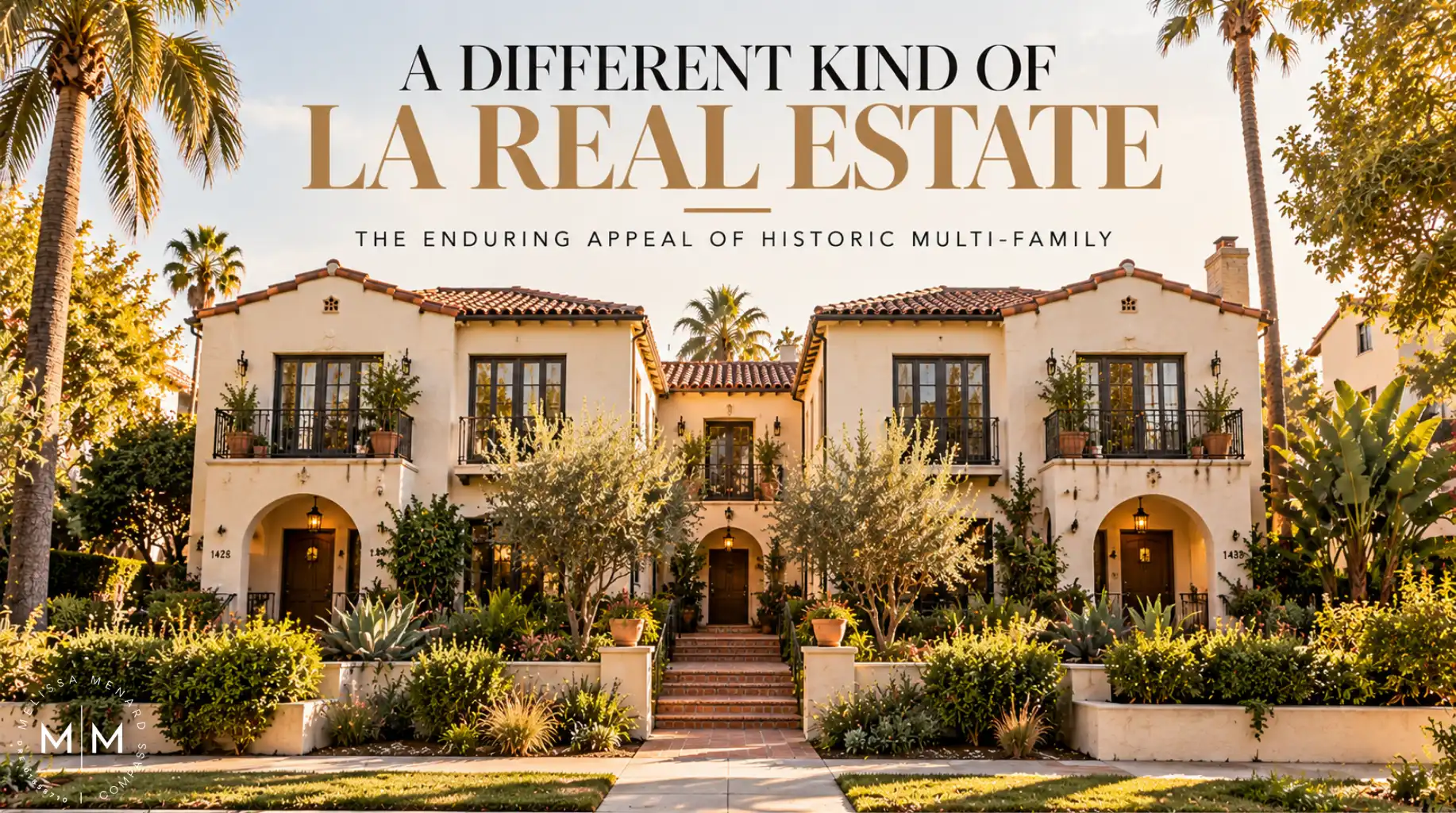
When we look at real estate as a defensive store of value, Mid-City occupies a unique lane. If you’re deciding whether to invest your capital here versus other emerging or established hubs, the deciding factor usually comes down to utility.
| Feature | Mid-City | West Adams | Culver City |
| Primary Housing Type | Historic Duplexes & Fourplexes | Historic Single-Family & Estates | Mid-Century Single-Family & New Condos |
| Price Point Entry | Accessible to Moderate | Moderate to High | High to Premium |
| Transit Access | Excellent (Metro E Line, Major Bus) | Good (E Line periphery) | Excellent (E Line Hub) |
| Commercial Vibe | Emerging, adaptive reuse, grassroots | Rapidly gentrifying, high-end retail | Established, tech-heavy, corporate |
| Investment Play | Multi-family yields, TOC zoning | Single-family flips, historic restoration | Appreciation, tech-worker rentals |
Buyer & Seller Considerations
For Buyers: You aren’t just buying a house here; you’re often buying a micro-business. Because of the high volume of duplexes and fourplexes, many of my buyers utilize FHA or conventional multi-family lending to live in one unit and rent the others. You need to be deeply aware of rent control (RSO) regulations in Los Angeles, as many of these 1930s buildings fall under those protections. However, the geographic centrality means you won’t struggle to find premium tenants.
For Sellers: Pricing a Mid-City property requires nuance. We can’t just look at the raw square footage. We have to price in the transit adjacency, the walk score, and the architectural provenance. If you own a Spanish duplex with original Batchelder tiles and it sits three blocks from the E Line, you possess a highly liquid asset. Our strategy will focus on targeting DINKs (Dual Income, No Kids), creatives, and savvy house-hackers who understand the logistical value of your location.
The Mid-City 20 FAQ’s:
1. Where exactly are the borders of Mid-City?
Mid-City is generally bounded by Pico Boulevard to the north, Crenshaw Boulevard to the east, the Santa Monica Freeway (I-10) to the south, and Robertson Boulevard to the west.
2. Is Mid-City well-connected by public transit?
Yes, it’s one of the most transit-rich neighborhoods in LA. The Metro E Line (formerly Expo Line) borders the southern edge, offering light rail access directly to Downtown LA and Santa Monica.
3. What architectural styles define the neighborhood?
You’ll primarily find 1920s and 1930s Spanish Colonial Revival, classic California Craftsman bungalows, and Mediterranean-style multi-family duplexes and fourplexes.
4. Are Mid-City properties subject to Los Angeles Rent Control (RSO)?
Most multi-family buildings built before October 1978 in Los Angeles are subject to the Rent Stabilization Ordinance (RSO). Buyers looking at duplexes should factor this into their investment strategy.
5. How walkable is Mid-City?
It’s highly walkable compared to the broader LA basin. The gridded streets and commercial corridors like Pico and Washington Boulevards mean coffee shops, galleries, and groceries are often within a 15-minute walk.
6. What is a Transit-Oriented Community (TOC) and does it apply here?
TOC is a Los Angeles city program that encourages the construction of affordable housing near transit hubs by offering density bonuses. Mid-City has several TOC corridors, driving new multi-family development.
7. Is Mid-City a good place for first-time homebuyers?
Absolutely. Because of the multi-family inventory, first-time buyers can purchase a duplex, live in one unit, and use the rental income from the other to help qualify for the mortgage (often called “house hacking”).
8. How does Mid-City compare to neighboring West Adams?
West Adams is known more for its grand, historic single-family estates and rapid high-end commercial gentrification. Mid-City leans more heavily into multi-family housing, grassroots commercial spaces, and slightly more accessible entry prices.
9. What is the typical commute time to DTLA?
Via the Metro E Line, it’s roughly a 20-30 minute stress-free ride. Driving via the I-10 takes about the same time, though rush hour traffic can push it to 45 minutes.
10. What is the typical commute time to the Westside (Santa Monica/Venice)?
Using the E line, you can reach Downtown Santa Monica in about 30-40 minutes. Driving usually takes 30-45 minutes depending on the time of day.
11. Are there Historic Preservation Overlay Zones (HPOZs) in Mid-City?
While adjacent neighborhoods like Lafayette Square are strict HPOZs, Mid-City has specific character blocks. Always check the zoning before planning exterior renovations.
12. What are the best local parks in the area?
Queen Anne Park is the primary green space, offering tennis courts, athletic fields, and recreation centers.
13. What is the culinary scene like?
It’s an incredible mix of legacy establishments and new creative ventures. From Chef Alisa Reynolds’ My Two Cents to legacy taco spots and modern cafes, it’s diverse and rapidly evolving.
14. What are the lot sizes typically like?
Lot sizes vary but are generally standard for central LA, ranging from 5,000 to 7,000 square feet, often heavily utilized by the footprint of multi-family structures.
15. Is parking difficult in Mid-City?
It depends on the street. Because of the density of duplexes and fourplexes, street parking can be tight. Homes with dedicated driveways and garages carry a distinct premium.
16. Are there good options for remote workers?
Yes. Spaces like Paper or Plastik, Jurassic Magic, and Undergrnd Cafe act as de-facto coworking spaces for the neighborhood’s heavy concentration of creatives and tech workers.
17. What should sellers know before listing here?
Sellers should focus their marketing on lifestyle and logistics. Highlighting proximity to the E Line, architectural details, and walkability will attract the most qualified buyers.
18. How have property values trended in Mid-City?
Values have seen sustained, steady appreciation over the last decade, insulated from extreme market dips by the area’s central location and high rental demand.
19. What is the nightlife like?
It’s more localized and intimate rather than club-heavy. Think hidden gems like Leather & Rose speakeasy or vibrant happy hours at Candela Taco Bar.
20. Is Mid-City considered safe?
Like any major urban center, it experiences typical city living dynamics. However, the strong community pride, active neighborhood councils, and busy, well-lit commercial corridors foster a highly engaged and secure community feel.
Closing Perspective
Choosing where to live or invest in Los Angeles is rarely just an emotional decision—it’s a strategic one. Mid-City proves that you don’t have to sacrifice architectural beauty for logistical efficiency. It stands as a premier defensive store of value for buyers seeking central geographic placement without premium coastal overhead. Whether you’re looking to secure a Craftsman home to build your life in, or a historic Spanish duplex to build your wealth with, this neighborhood offers a rare convergence of history, community, and forward-looking infrastructure.
If you’re considering making a move, let’s look at the data together.
Request a Personalized Buyer or Seller Strategy today.
Melissa Menard REALTOR® | Compass
Mid-City & Surrounding Los Angeles Areas
📞 310.729.9726 | DRE# 01858710
📧 melissa@melissamenardhomes.com
🌐 www.MelissaMenardHomes.com
Disclaimer: The information provided in this post is intended for educational purposes only and should not be considered financial, legal, tax, or investment advice. Real estate laws, market conditions, and regulations change over time. Please consult the appropriate licensed professionals regarding your specific situation. All content should comply with applicable Fair Housing laws and regulations.