

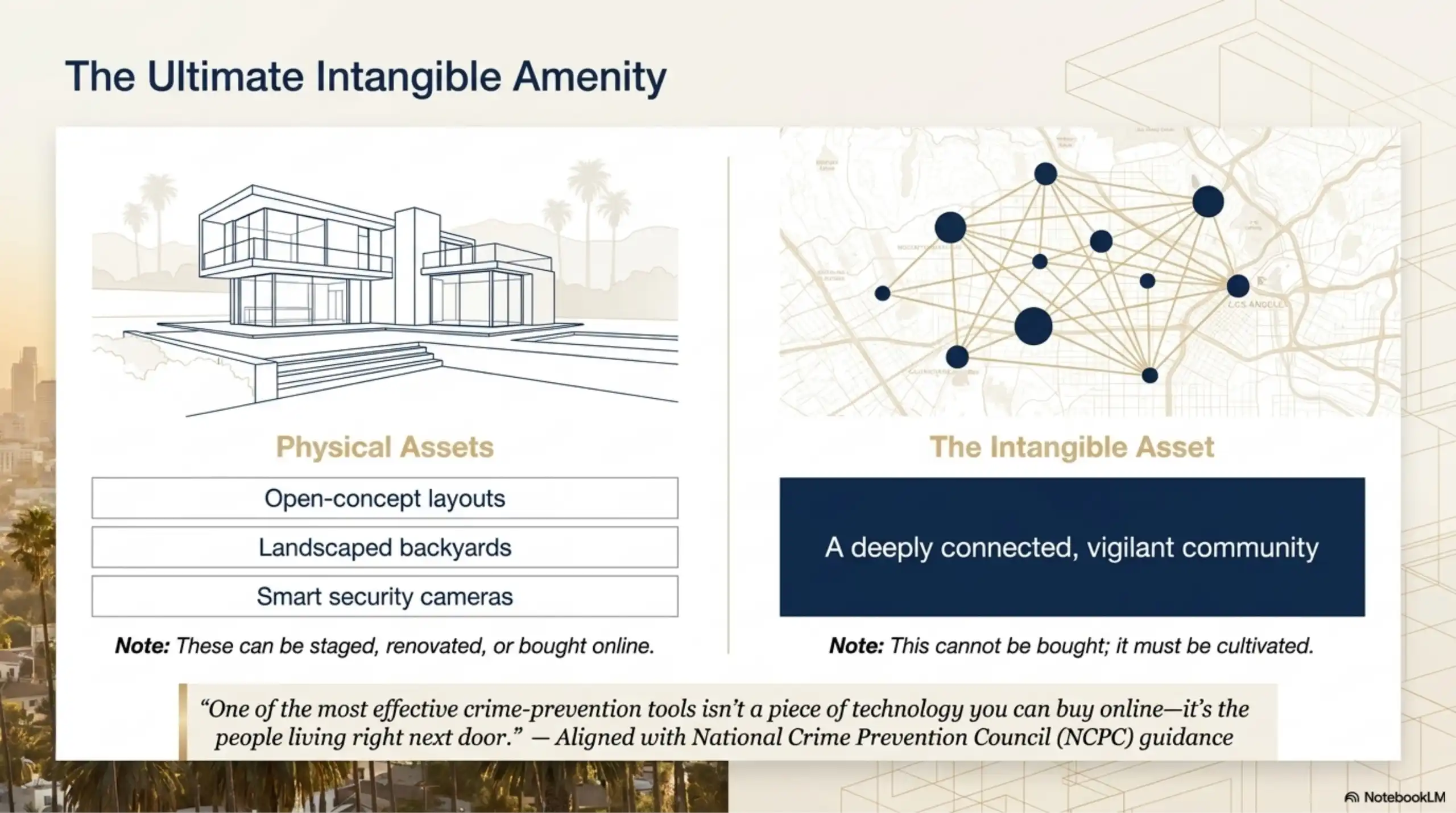
When searching for the perfect home in Los Angeles and its surrounding areas, buyers often arrive with a specific checklist: an open-concept layout, a beautifully landscaped backyard, and proximity to top-tier schools or dining. But beyond the aesthetics and the architecture, there is an intangible amenity that consistently commands top dollar and fiercely loyal residents: a deeply connected, safe, and vigilant community.
We all want to feel secure in our private sanctuaries. We lock our doors, install smart security cameras, and invest in sophisticated alarm systems. However, as noted by the National Crime Prevention Council (NCPC), one of the most effective crime-prevention tools isn’t a piece of technology you can buy online—it’s the people living right next door.
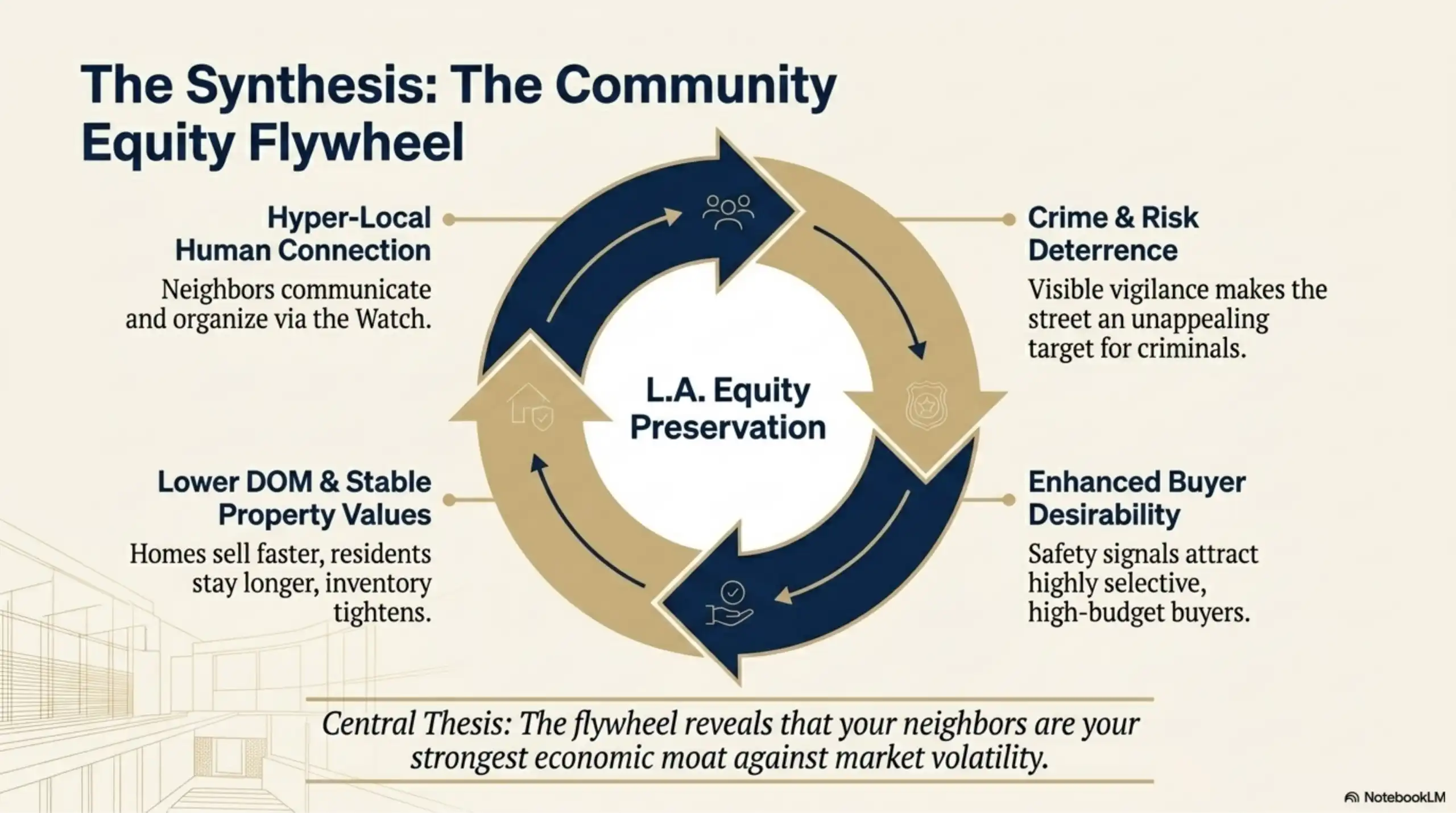
In today’s shifting Los Angeles real estate market, where fluctuating interest rates and dynamic inventory levels dictate buyer behavior, community cohesion is more than just a feel-good concept; it is a vital component of neighborhood desirability and equity preservation. A Neighborhood Watch transforms a street full of passing strangers into a vigilant, connected community. If you’ve ever wondered what it takes to start one, or why it’s worth the effort for your family and your property value, here is your deep-dive guide.
FAST FACTS: Community Safety & L.A. Real Estate
- Equity Preservation: Neighborhoods with visible, active community watch programs historically experience more stable property values during market shifts.
- Buyer Demand: In a high-interest-rate environment, motivated buyers are highly selective, prioritizing secure, tight-knit neighborhoods to ensure long-term ROI.
- Days on Market (DOM): Homes in communities known for low crime and high neighbor engagement tend to sell faster, as buyers recognize the premium of peace of mind.
- Modern Networking: Digital platforms (like Nextdoor) combined with traditional Watch programs create a highly responsive local micro-network, highly sought after by relocating families.
What Exactly Is a Neighborhood Watch (And What Is It Not)?
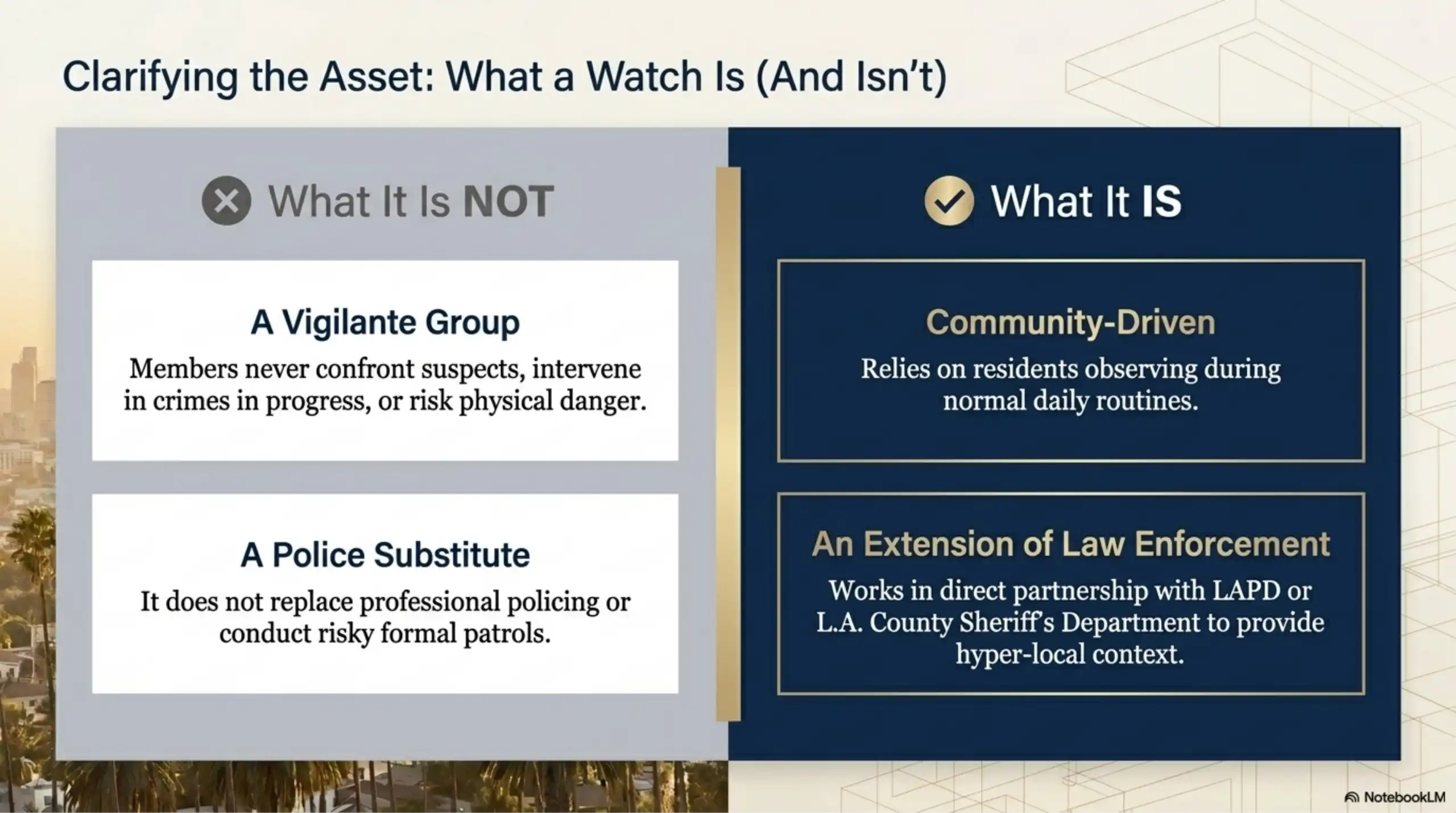
At its core, a Neighborhood Watch is a community-driven initiative organized in direct partnership with local law enforcement, such as the LAPD or the Los Angeles County Sheriff’s Department. It relies on residents to keep an active eye out for suspicious activity and systematically report it to the authorities.
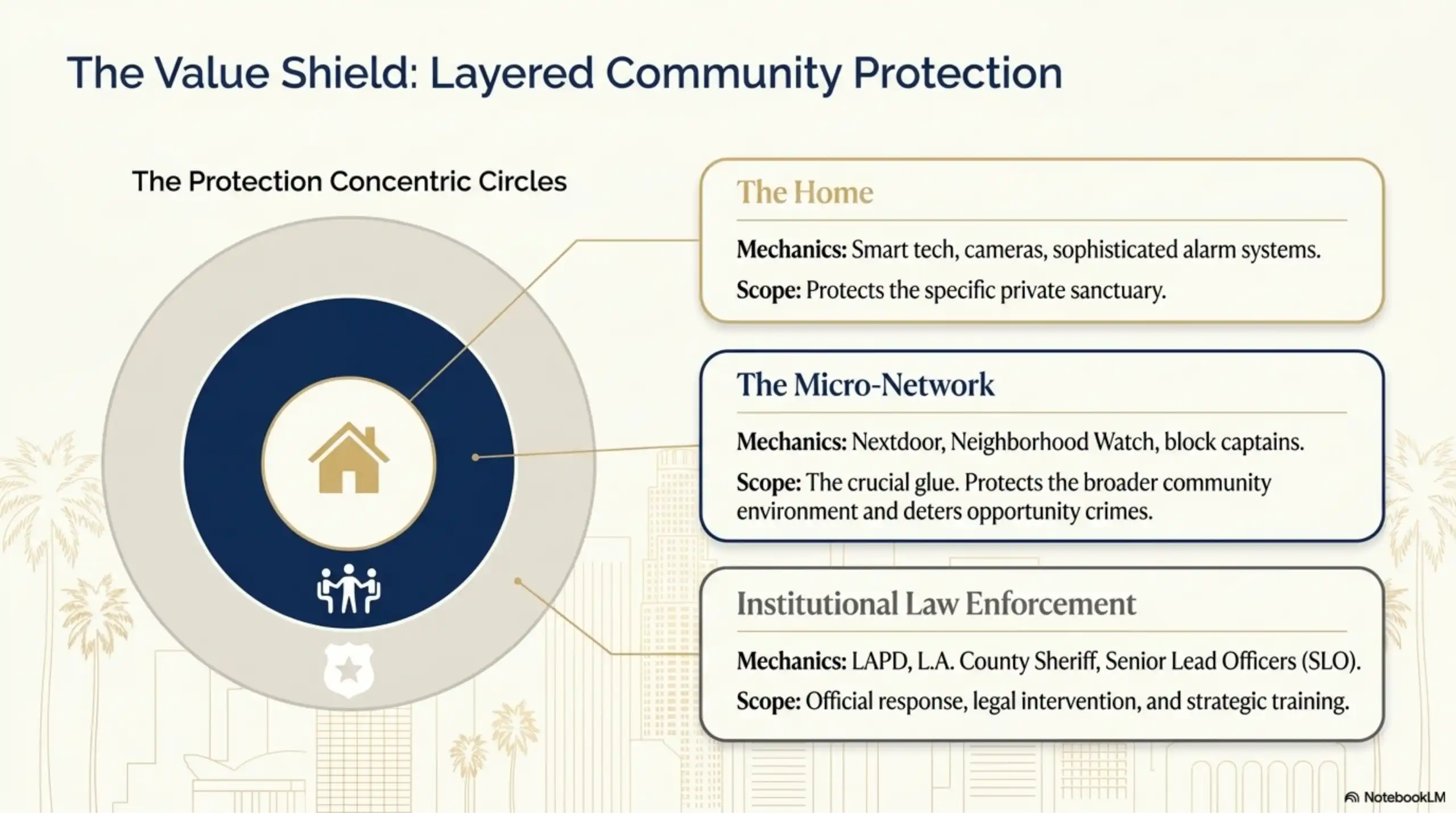
In a sprawling metropolis like Los Angeles, where neighborhoods can sometimes feel disconnected, these programs act as the crucial glue that binds a street together. But to ensure the program is effective and legally sound, it is important to clearly define its boundaries:
- It is NOT a vigilante group: Members are never encouraged to intervene in a crime in progress, confront suspects, or put themselves in any physical danger. Safety is always the ultimate priority.
- It is NOT a substitute for police: It is an extension of the community’s eyes and ears. A Neighborhood Watch works collaboratively with law enforcement, gathering information and providing hyper-local context, but it does not replace professional policing.
The Real Estate ROI: The Tangible Benefits of a Watch Program
Starting or joining a Neighborhood Watch does significantly more than just deter petty crime; it fundamentally changes the dynamic of a street, subdivision, or HOA, which directly impacts the local micro-economy of your real estate market.
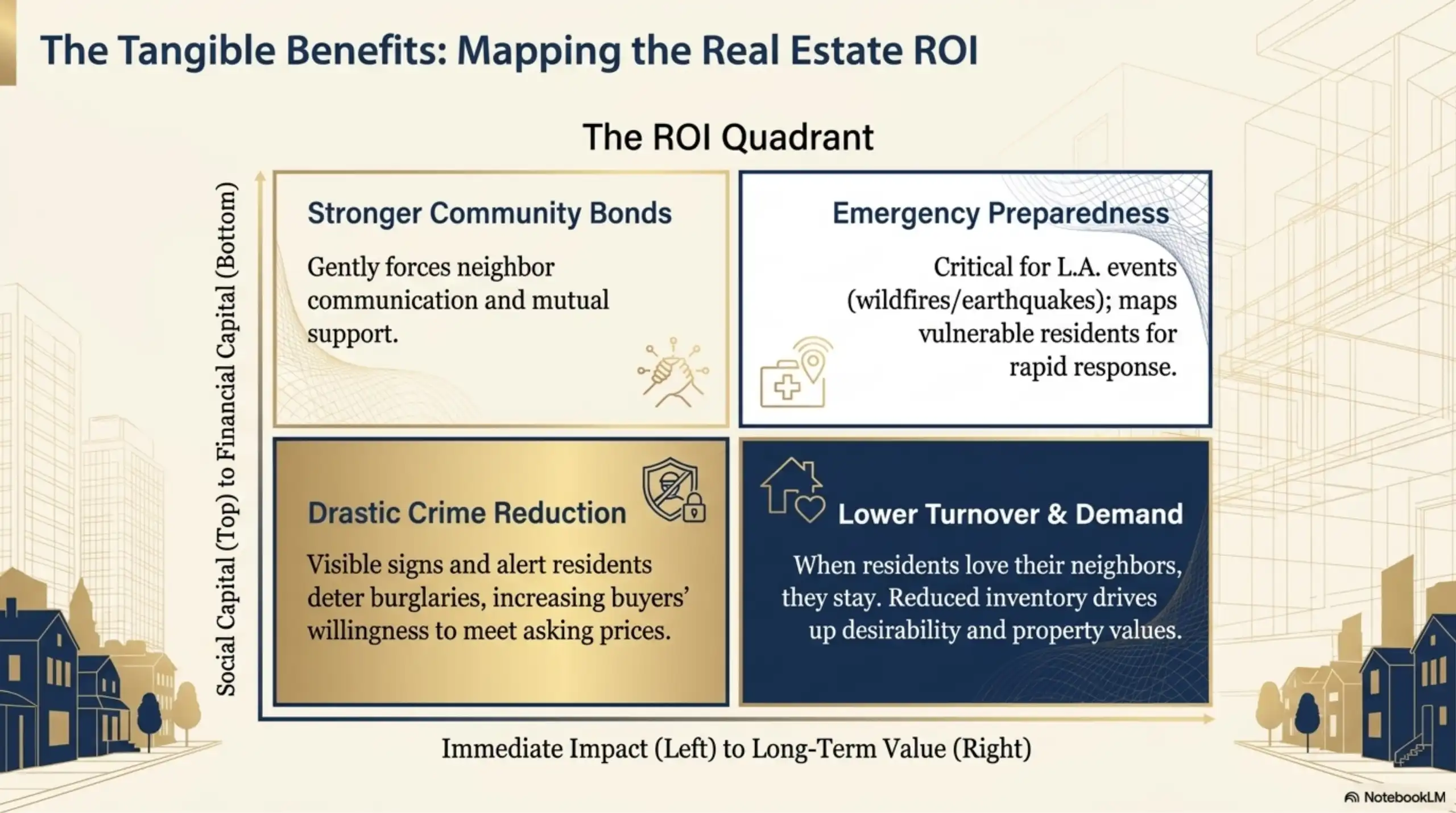
Drastic Crime Reduction and Enhanced Desirability
Criminals look for easy targets. A neighborhood heavily marked with visible “Neighborhood Watch” signs, well-lit exteriors, and alert residents is significantly less appealing to burglars and vandals. For prospective home buyers touring properties on a Sunday afternoon, these signs act as a beacon of community pride. When buyers feel a palpable sense of security, their willingness to meet asking prices—even in a competitive or high-rate environment—increases substantially.
Stronger Community Bonds and Lower Turnover
In today’s fast-paced world, it is remarkably easy to go years without knowing the person living three doors down. A watch program gently forces neighbors to communicate, host meetings, and look out for one another. This creates a true sense of community. From a real estate perspective, high community cohesion leads to lower resident turnover. When people love their neighbors, they stay longer, reducing the inventory of available homes and thereby driving up demand and property values for the entire street.
Better Emergency Preparedness
Los Angeles is no stranger to natural events, from wildfires in the hills to earthquakes. When neighbors actually know each other, they know who might need extra help during a local emergency—such as elderly residents, those with disabilities, or families with young children. Buyers relocating to L.A. frequently ask about emergency preparedness; living in an organized neighborhood provides a massive psychological comfort that helps close the decision-making gap.
Unshakeable Peace of Mind
There is a profound sense of comfort in knowing that your neighbors have your back when you leave for a vacation or head into the office. This peace of mind is the ultimate luxury in real estate—a feature that cannot be staged or renovated, but must be cultivated.
The Market Context: Interest Rates, Inventory, and Security
Let’s look at this through the lens of the current Los Angeles real estate market. We are navigating an environment where buyers are highly educated and heavily scrutinizing their investments. With interest rates making the cost of borrowing higher than in recent years, buyers are looking for a “sure thing.” They are less likely to compromise on location or safety.
Simultaneously, housing inventory in highly desirable L.A. pockets remains constrained. When a beautifully prepared home hits the market in a neighborhood known for its robust Neighborhood Watch, annual block parties, and communicative residents, it stands out. Sellers who actively participate in these community initiatives can market this intangible asset. It signals to buyers that they aren’t just buying a plot of land; they are buying into a secure, supportive lifestyle.
How to Start a Neighborhood Watch in Los Angeles: 4 Actionable Steps
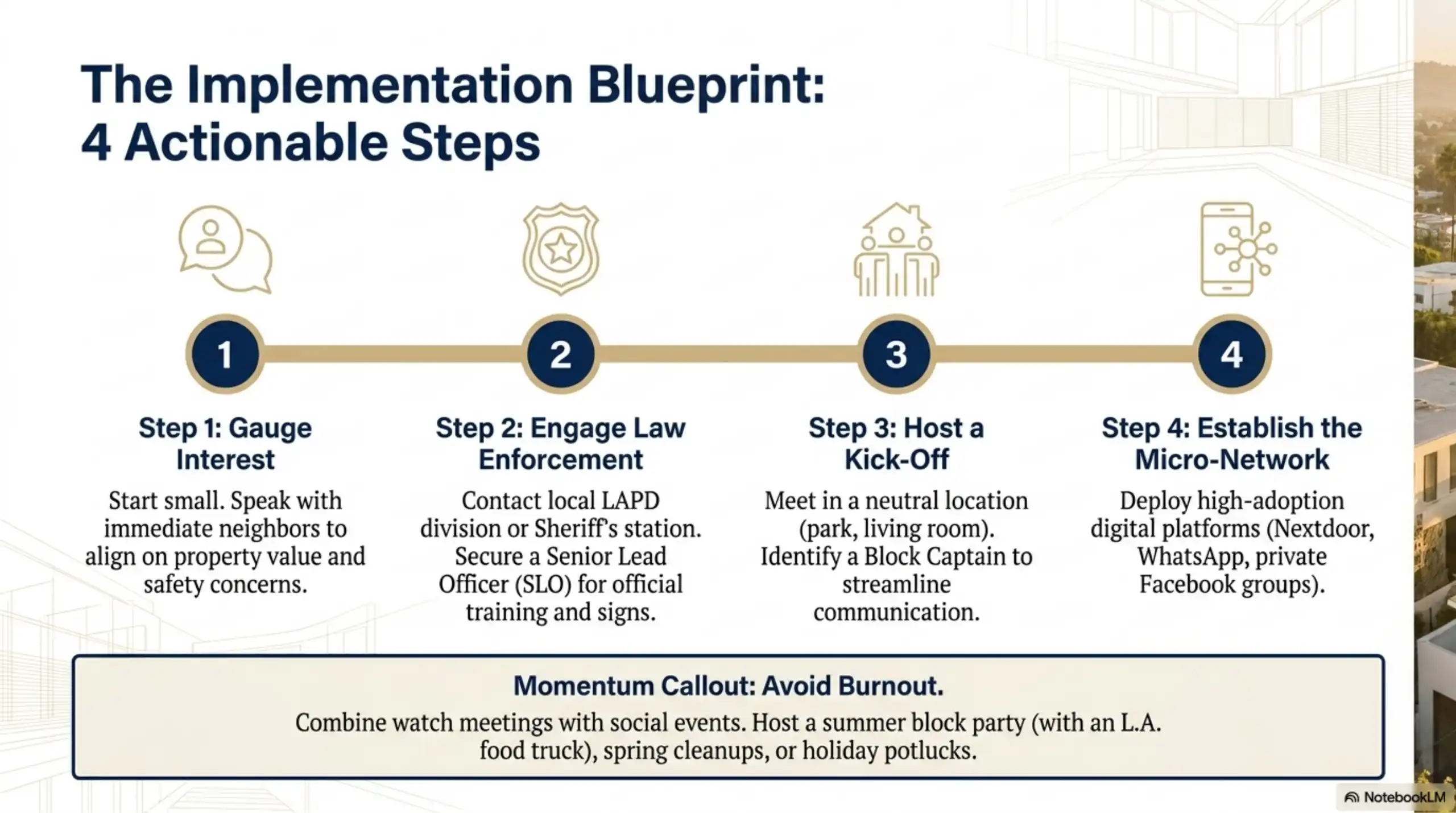
If your community doesn’t have a program yet, starting one is easier than you might think, and it is a brilliant way to establish yourself as a community leader.
1. Gauge the Interest of Your Neighbors
Start small. Talk to a few neighbors on your immediate block to see if they share your concerns about community safety and property values. You don’t need the entire neighborhood to agree right away; just a handful of dedicated, community-minded residents is enough to get the ball rolling.
2. Contact Local Law Enforcement
Reach out to your local LAPD division or Sheriff’s station. Ask to speak with the Senior Lead Officer (SLO) or community liaison. These professionals are highly trained in community policing and will gladly help you set up the program, provide official training, and even attend your kick-off meeting to answer legal and logistical questions.
3. Host a Kick-Off Meeting
Pick a neutral, accessible location. This could be a local community center, a nearby park, or even your own living room or backyard. Invite the neighborhood via beautifully designed flyers (pro tip: use sophisticated colors like navy and gold to make the invitations feel elevated and official). Use this time to introduce your police liaison, discuss specific local concerns, and identify a “Block Captain” to lead the group’s communications.
4. Establish Seamless Communication
Decide how you will share information efficiently. Will you use a private Facebook group, a dedicated WhatsApp chat, an email chain, or a localized app like Nextdoor? Pick a method that is easily accessible to the vast majority of your neighbors to ensure high adoption rates.
Keeping the Momentum Going
The biggest challenge for any Neighborhood Watch is avoiding burnout. Once the initial enthusiasm fades, participation can drop off. To keep the momentum alive, try combining watch meetings with social events. Host a summer block party (complete with a permit for a local L.A. food truck), organize a neighborhood cleanup before the spring real estate market hits, or host a holiday potluck.
When people genuinely like and know their neighbors, protecting the community becomes second nature—and the desirability of your neighborhood skyrockets.
Ready to Make a Difference in Your L.A. Neighborhood?
A Neighborhood Watch is far more than just putting up a few signs on street lamps. It is a long-term commitment to the people around you and a strategic investment in the health of your local real estate market. By keeping your eyes open and communicating effectively, you can make your slice of Los Angeles a safer, friendlier, and more valuable place to live.
Whether you are preparing to sell your home and want to highlight your community’s incredible cohesion, or you are a buyer seeking a neighborhood where residents truly look out for one another, having a strategic real estate partner is vital. Let’s navigate this market together.
Frequently Asked Questions (FAQ’s)
1. Does a Neighborhood Watch actually lower crime rates in L.A.?
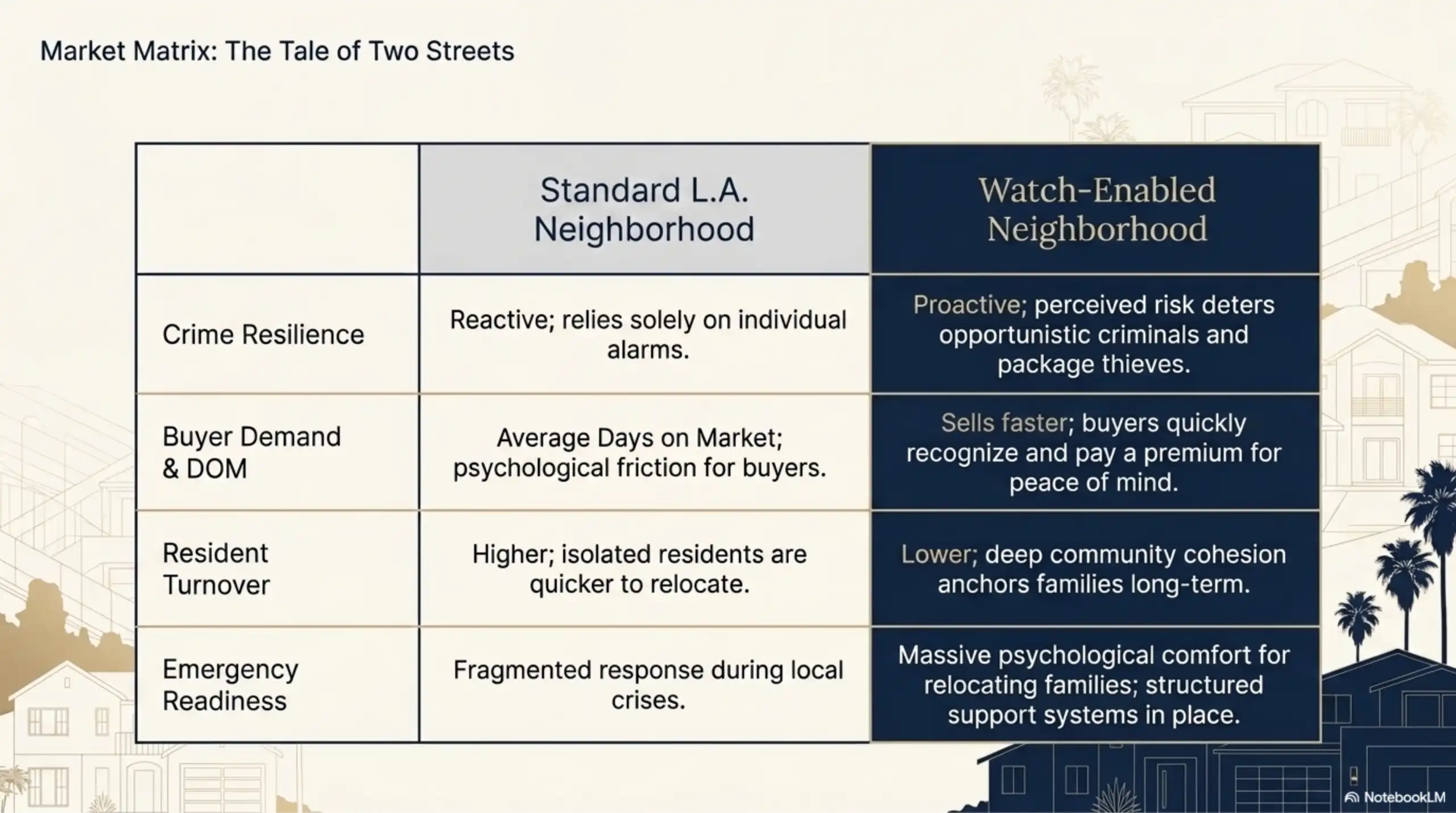
Yes, data consistently shows that visible, active community watch programs deter crimes of opportunity, such as burglaries and package thefts, by increasing the perceived risk for criminals.
2. Can an active Neighborhood Watch increase my property value?
Absolutely. While it doesn’t add square footage, it significantly boosts the neighborhood’s desirability. Safe, tight-knit communities experience higher demand, which drives up property values.
3. How do buyers find out if a neighborhood has a Watch program?
Buyers often notice the official street signs during tours. Additionally, knowledgeable real estate agents will highlight these programs in the property’s marketing materials and during open houses.
4. How does community safety impact days on market (DOM)?
Homes in neighborhoods known for high community engagement and low crime typically sell faster. Buyers are more confident making quick, strong offers when they feel secure about the location.
5. What is the first step to starting a Watch program in Los Angeles?
The very first step is to gauge interest with your immediate neighbors, followed closely by contacting your local LAPD Senior Lead Officer or Sheriff’s community liaison.
6. Do I have to patrol the streets if I join?
No. Modern Neighborhood Watches rely on residents simply being observant during their normal daily routines and communicating effectively, rather than conducting formal, risky patrols.
7. How do high interest rates affect the demand for safe neighborhoods?
When borrowing costs are high, buyers become highly selective. They view a home in a safe, cohesive neighborhood as a secure, long-term investment, making them more willing to commit despite the rates.
8. Can renters participate in a Neighborhood Watch?
Yes! A cohesive community relies on everyone. Renters are highly encouraged to participate, and their involvement helps maintain the overall safety and appeal of the neighborhood.
9. How do we get official street signs for our neighborhood?
Once your Neighborhood Watch is officially registered and trained by local law enforcement, your police liaison will provide the paperwork needed to have official signs installed by the city.
10. What role does the Nextdoor app play in community safety?
Nextdoor and similar localized apps serve as digital Neighborhood Watches, allowing real-time communication about lost pets, suspicious activities, and upcoming community meetings.
11. Is a Neighborhood Watch a replacement for a home security system?
No. A Watch program is complementary to your personal home security. Smart cameras and alarms protect your specific property, while the Watch protects the broader community environment.
12. How often should a Neighborhood Watch group meet?
Most successful groups hold formal meetings twice a year, but supplement this with casual social gatherings, block parties, or digital communication throughout the year to maintain engagement.
13. What should I do if I see suspicious activity in my neighborhood?
Never intervene. Observe the details (descriptions, license plates, directions of travel) from a safe distance and immediately call local law enforcement. Once reported, update your Watch communication channel.
14. If I am relocating to L.A., how can I evaluate a neighborhood’s safety?
Beyond looking at online crime maps, drive through the neighborhood at different times of the day, look for Watch signs, observe the upkeep of homes, and ask your Realtor for hyper-local insights.
15. How can I leverage my community’s safety record when selling my home?
Work with your Realtor to include details about the Neighborhood Watch, annual block parties, and neighborhood communication networks in your listing description and open house brochures.
Ready to Make Your Next Move?
Navigating the Los Angeles real estate market requires more than just looking at houses; it requires understanding communities. Whether you are looking to buy into a tightly-knit neighborhood or sell your home for top dollar by highlighting your community’s strengths, I am here to help.
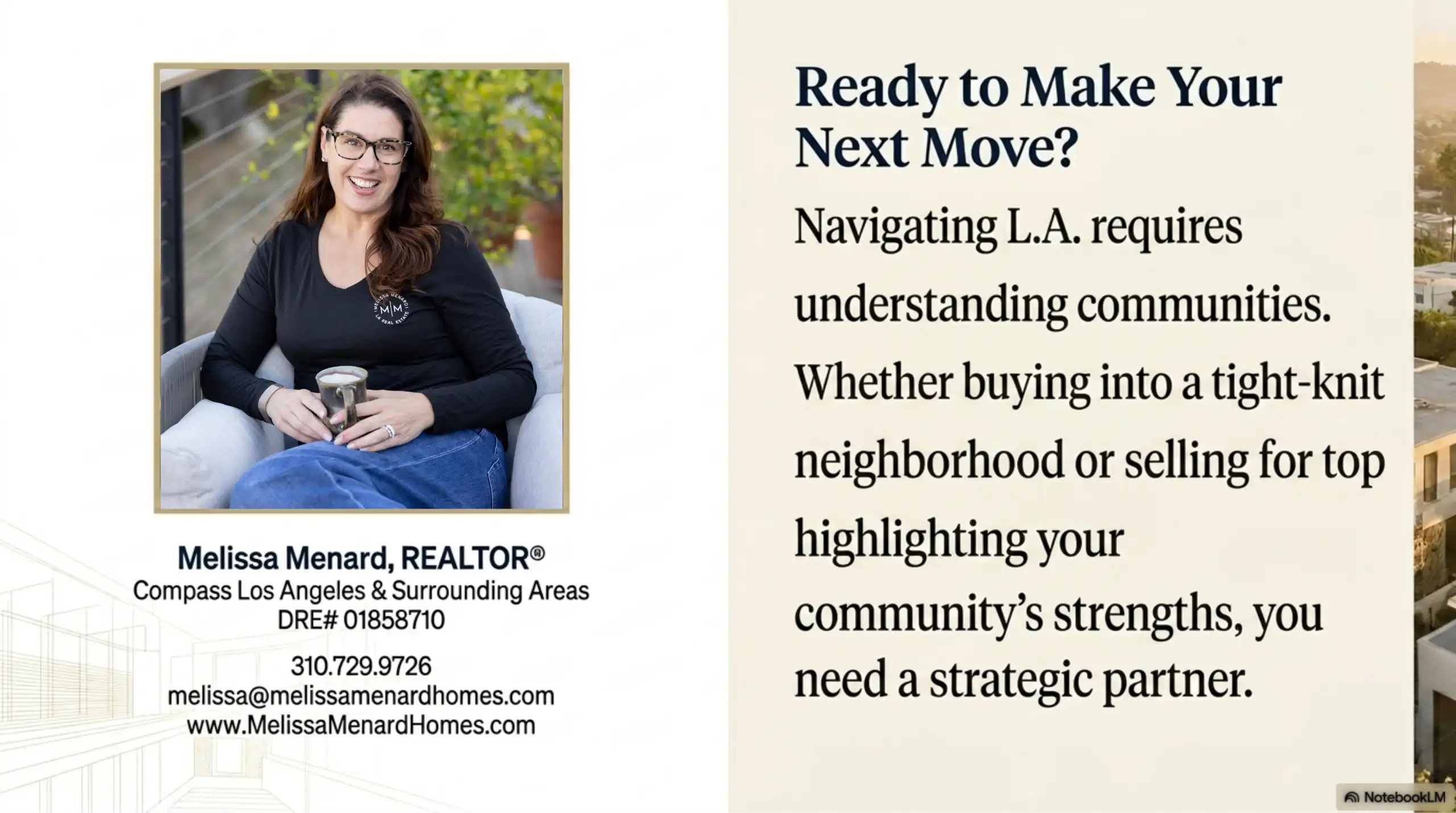
Melissa Menard REALTOR® | Compass
Los Angeles & Surrounding Areas
📞 310.729.9726 | DRE# 01858710
📧 melissa@melissamenardhomes.com
🌐 www.MelissaMenardHomes.com
Disclaimer: The information provided in this post is for educational purposes only and does not constitute financial, legal, or investment advice. Market conditions are subject to change. Please consult with a qualified professional regarding your specific real estate needs and local Fair Housing regulations.