

Living in Southern California is an absolute dream. From the sun-drenched beaches to the vibrant, dynamic communities of Los Angeles, the lifestyle here is unparalleled. However, as homeowners and prospective buyers, we also know that our beautiful environment comes with a few unpredictable elements—sudden earthquakes, seasonal wildfires, and unexpected power outages.
At Melissa Menard Homes, I believe that your property should be your ultimate sanctuary. But true peace of mind doesn’t come from simply hoping an emergency never happens; it comes from proactive, strategic preparation. Whether you are actively shopping for a new home, preparing to list your current property, or simply nesting in your forever home, getting your household ready doesn’t have to be overwhelming.
By taking a holistic approach to home and family readiness, you can ensure your household is safe, calm, and resilient. For the most up-to-date and comprehensive local guidelines, I always recommend referring to the City of Los Angeles Emergency Management Department as your primary source of truth.
Below, we dive into the four essential steps to get your home emergency-ready, along with a deep dive into how preparedness intersects with protecting your property value in today’s Los Angeles real estate market.
FAST FACTS: Los Angeles Preparedness & Real Estate
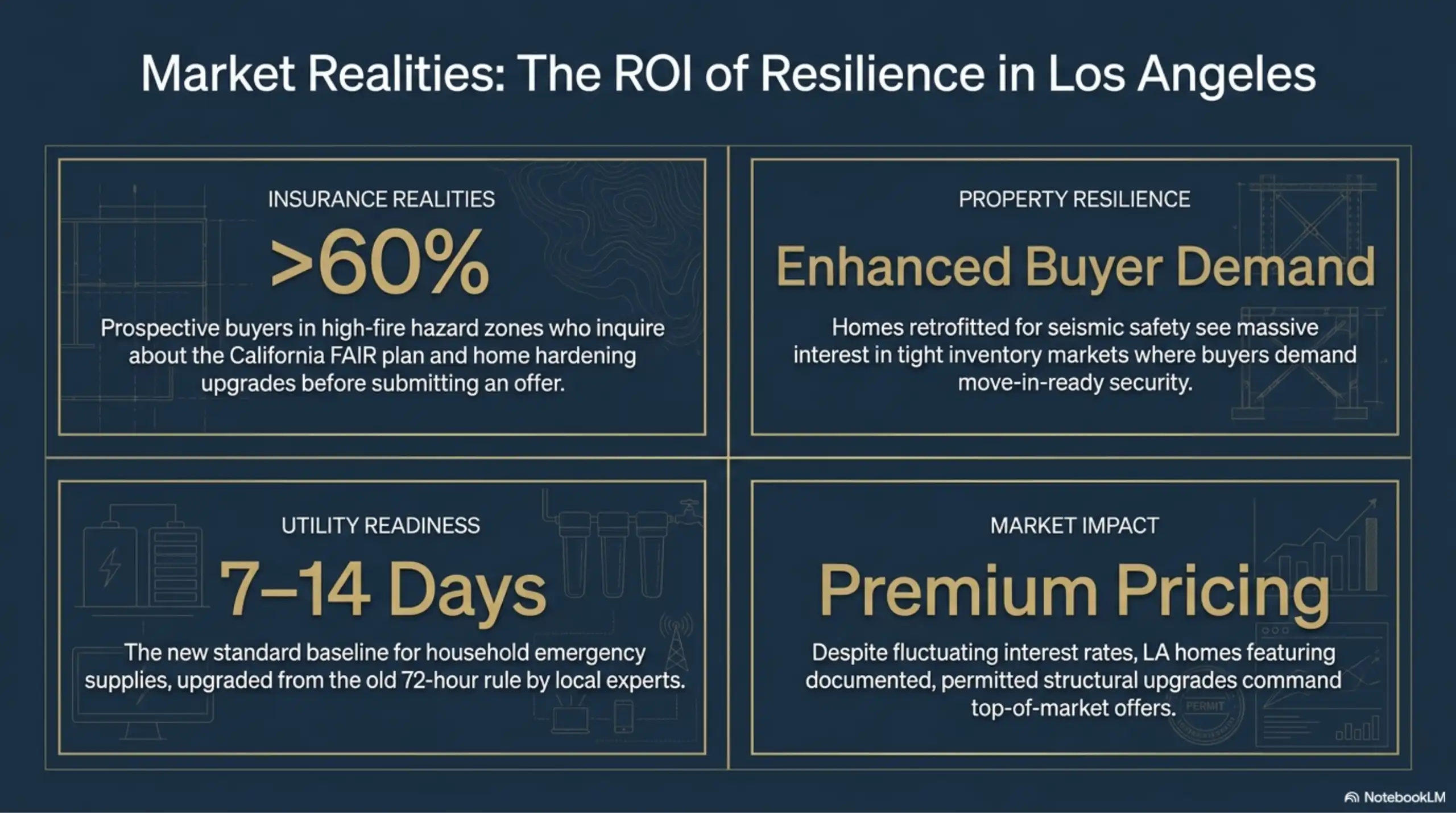
- Property Resilience: Homes retrofitted for seismic safety often see enhanced buyer interest, especially in tight inventory markets where buyers want move-in-ready, secure properties.
- Insurance Realities: Over 60% of prospective buyers in high-fire hazard zones inquire about the California FAIR plan and home hardening upgrades before submitting an offer.
- Utility Readiness: A standard emergency kit should sustain your family for a minimum of 72 hours, though local experts now recommend a 7-14 day supply of essentials.
- Market Impact: Despite fluctuating interest rates, homes in Los Angeles that showcase robust, permitted structural upgrades (like bolted foundations) command premium pricing.
Step 1: Build a Comprehensive “Go-Bag” and Stay-at-Home Kit
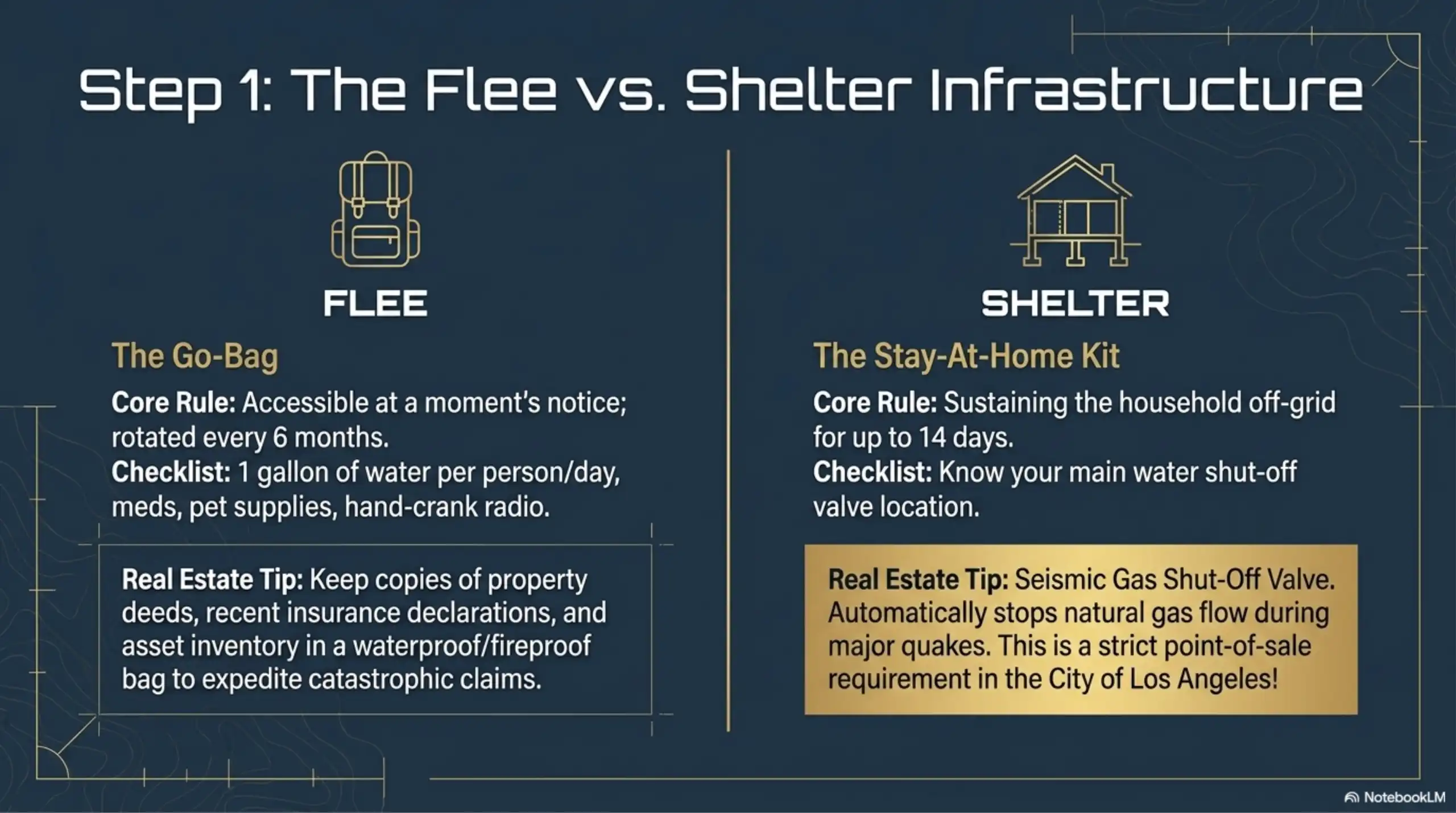
When an emergency strikes, you face two potential scenarios: leaving your home in a hurry, or sheltering in place without power, water, or gas for several days. From a homeowner’s perspective, this requires a dual approach.
The Go-Bag: A basic kit should be accessible at a moment’s notice. It must include water (one gallon per person per day), non-perishable food, heavy-duty flashlights, extra batteries, and a battery-powered or hand-crank radio. But don’t forget the highly personalized items: prescription medications, pet supplies, spare glasses, and crucial family documents.
Homeowner Tip: Keep copies of your property deed, recent home insurance policy declarations, and an inventory of your home’s assets (photos/videos) in a waterproof, fireproof bag, or backed up securely to the cloud. If you ever need to file a catastrophic claim, having immediate access to these documents expedites the process.
The Stay-at-Home Kit: If you are sheltering in place, you need to understand your home’s infrastructure. Do you know where your main water shut-off valve is? Do you have an automatic seismic gas shut-off valve installed? (If you are planning to sell your home in Los Angeles, a seismic gas shut-off valve is a point-of-sale requirement in many municipalities!). Knowing how to manage your home’s utilities is the first line of defense in a shelter-in-place scenario.
Step 2: Map Out Your Family’s Evacuation Plan
In the chaos of an unexpected event, split-second decisions can lead to panic. Sit down with your family and map out clear evacuation routes from every room in your house.
Decide on a designated meeting spot outside your neighborhood in case you are separated and cannot return home. Make sure every family member—especially children—understands the plan and knows exactly who your out-of-state emergency contact is.
Understanding Local Hazard Zones:
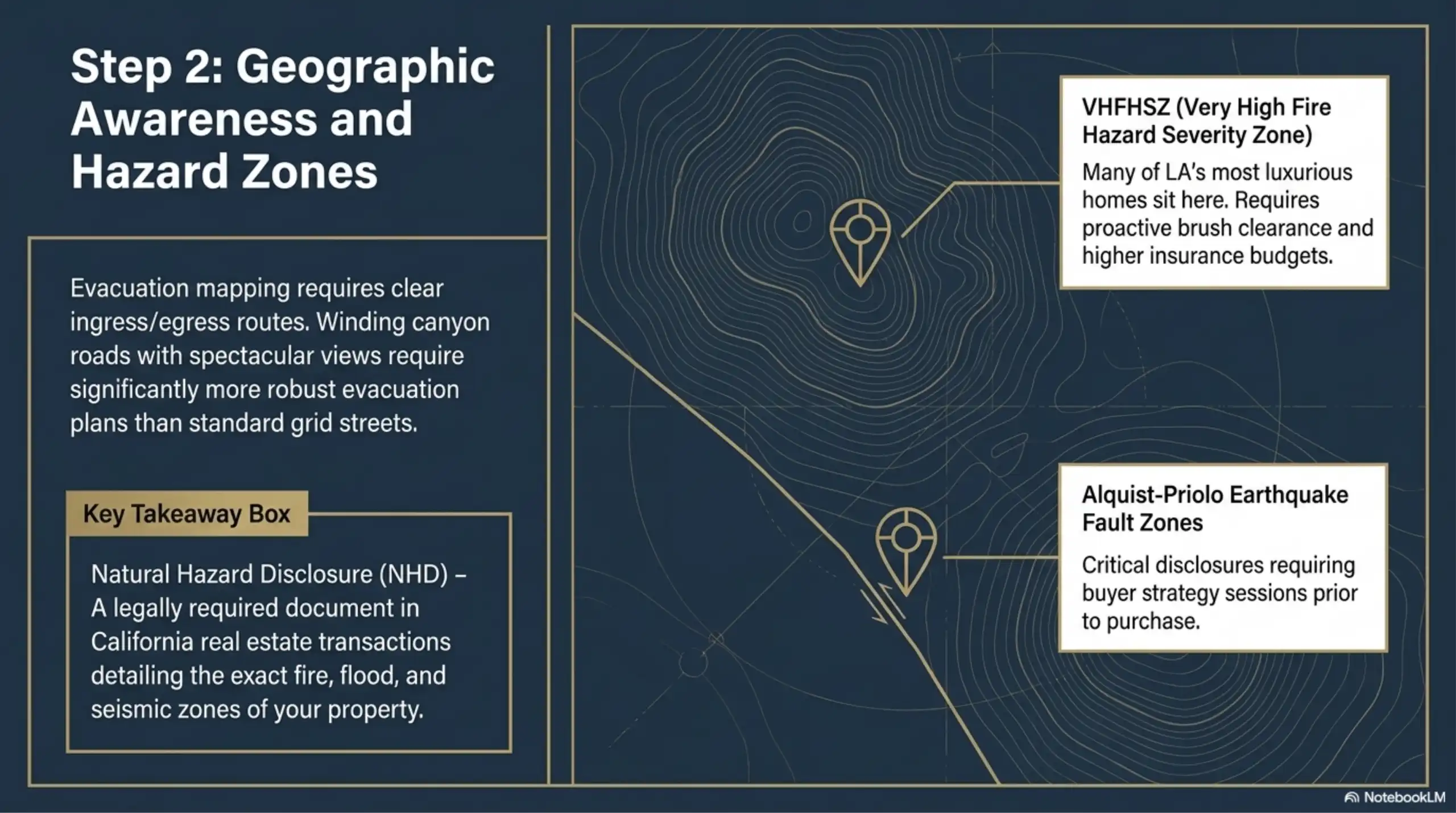
If you are planning a move within the next 0-12 months, mapping out evacuations starts before you even buy a home. Los Angeles is dotted with Very High Fire Hazard Severity Zones (VHFHSZ) and Alquist-Priolo Earthquake Fault Zones. When you buy or sell a home, these zones are disclosed via a Natural Hazard Disclosure (NHD) report. Understanding the ingress and egress routes of a neighborhood is a crucial part of my buyer-strategy sessions. A beautiful home on a narrow, winding canyon road offers spectacular views, but requires a much more robust evacuation strategy than a property on a grid street.
Step 3: Brush Up on First-Aid Essentials & Home Hardening
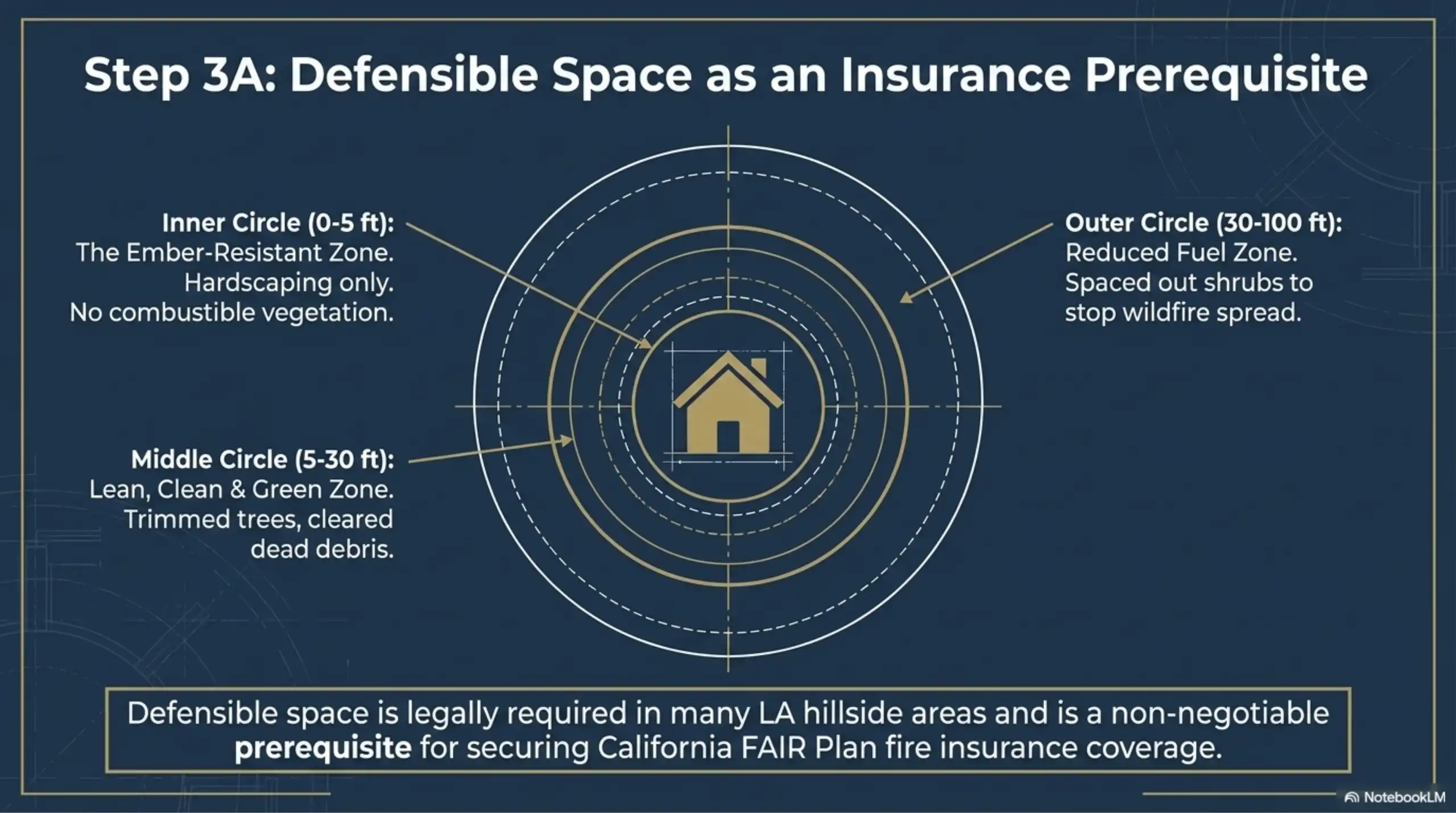
Emergency responders can be stretched incredibly thin during a community-wide crisis. Empower yourself with basic medical know-how. Having a fully stocked first-aid kit is only helpful if you know how to use it. Make sure at least one adult in your household knows how to clean and dress wounds, manage sprains, and administer basic first aid for common injuries until professional help can arrive.
Beyond personal first aid, consider the “first aid” of your actual property—often referred to as Home Hardening.
If you are a homeowner considering selling in the near future, home hardening not only protects your family today but secures your equity for tomorrow.
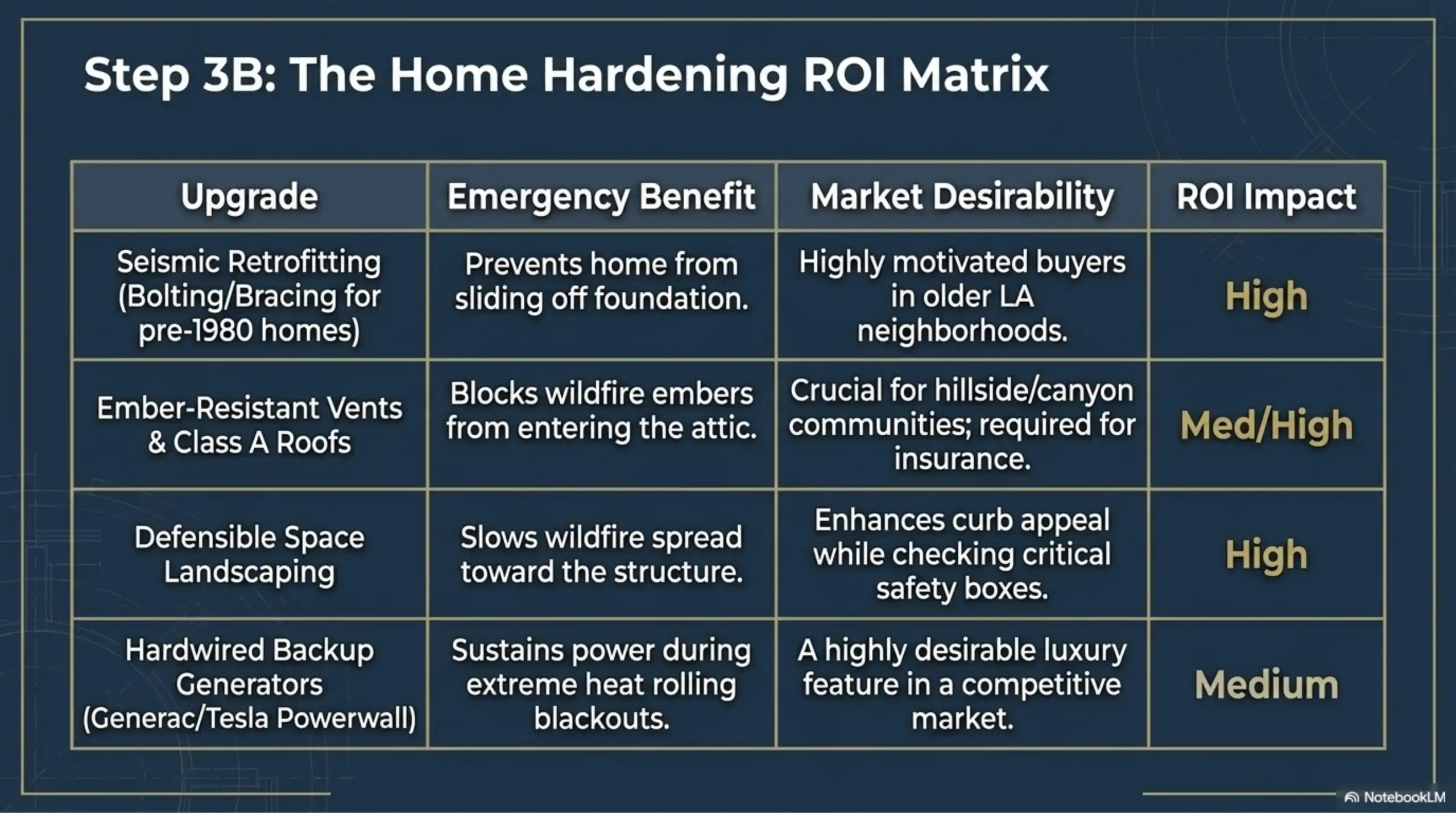
| Home Hardening Upgrade | Emergency Benefit | Real Estate ROI Impact |
| Seismic Retrofitting | Prevents the home from sliding off its foundation during an earthquake. | High. Buyers are highly motivated by documented seismic upgrades, especially in older L.A. neighborhoods. |
| Ember-Resistant Vents | Prevents wildfire embers from entering the attic. | Medium/High. Crucial for homes in hillside/canyon communities. May help with insurance eligibility. |
| Defensible Space Landscaping | Slows the spread of wildfires toward the structure. | High. Enhances curb appeal while checking off critical safety and insurance requirements. |
| Backup Generators | Sustains power for medical devices, refrigeration, and communication. | Medium. A highly desirable luxury feature that helps a property stand out in a competitive market. |
Step 4: Build a Resilient Community Network
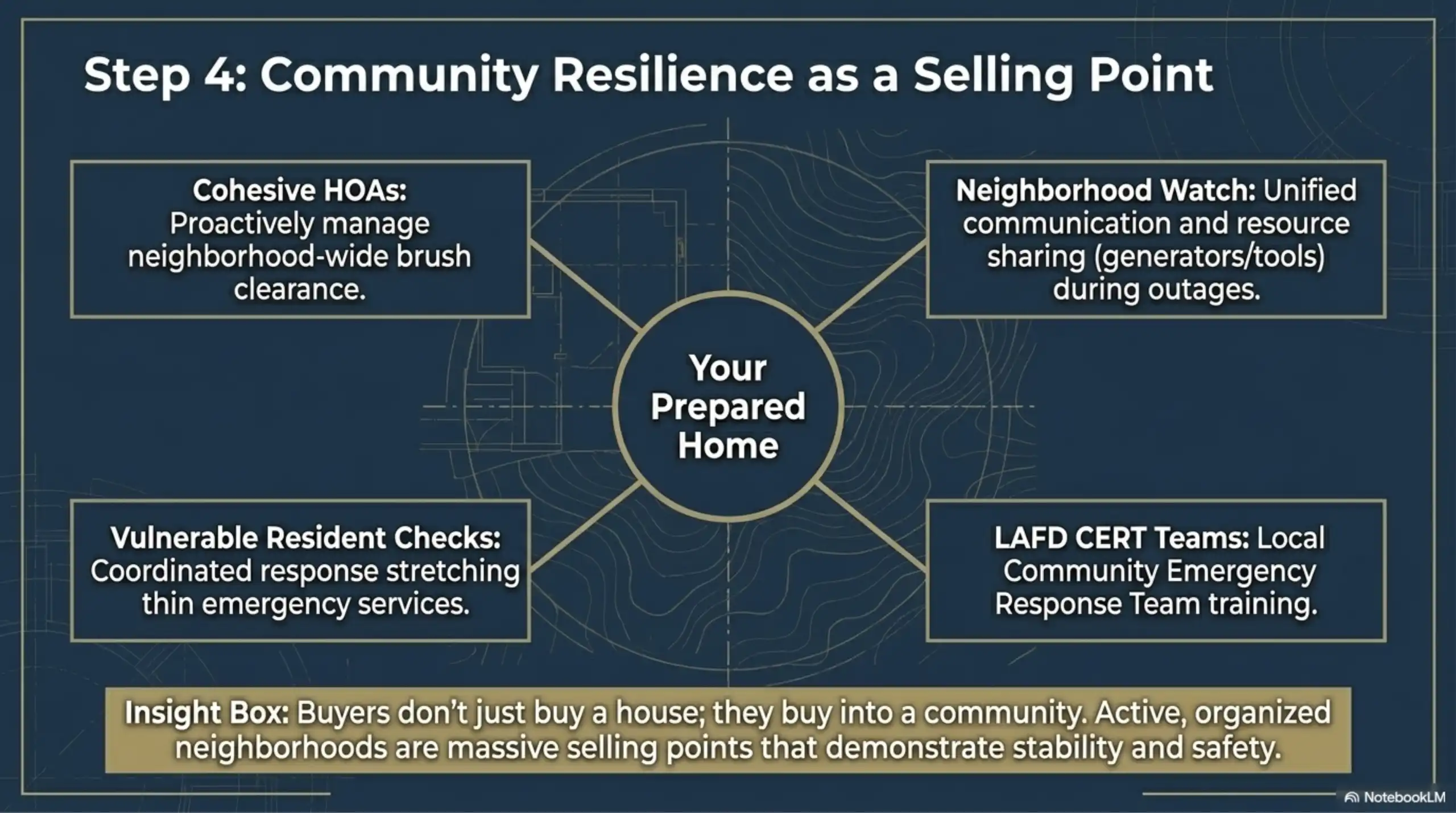
Your greatest asset during a crisis isn’t just what’s inside your house; it’s the people living next door. Take the time to get to know your neighbors. Establishing a neighborhood communication network allows you to check on vulnerable residents, share resources like generators or tools, and coordinate a stronger, unified response. Remember: we are always stronger together.
From a real estate standpoint, strong, communicative neighborhoods are highly desirable. Active Neighborhood Watches, cohesive Homeowners Associations (HOAs) that proactively manage brush clearance, and community-led resilience groups are massive selling points. When buyers look at properties, they aren’t just buying the house; they are buying into the community.
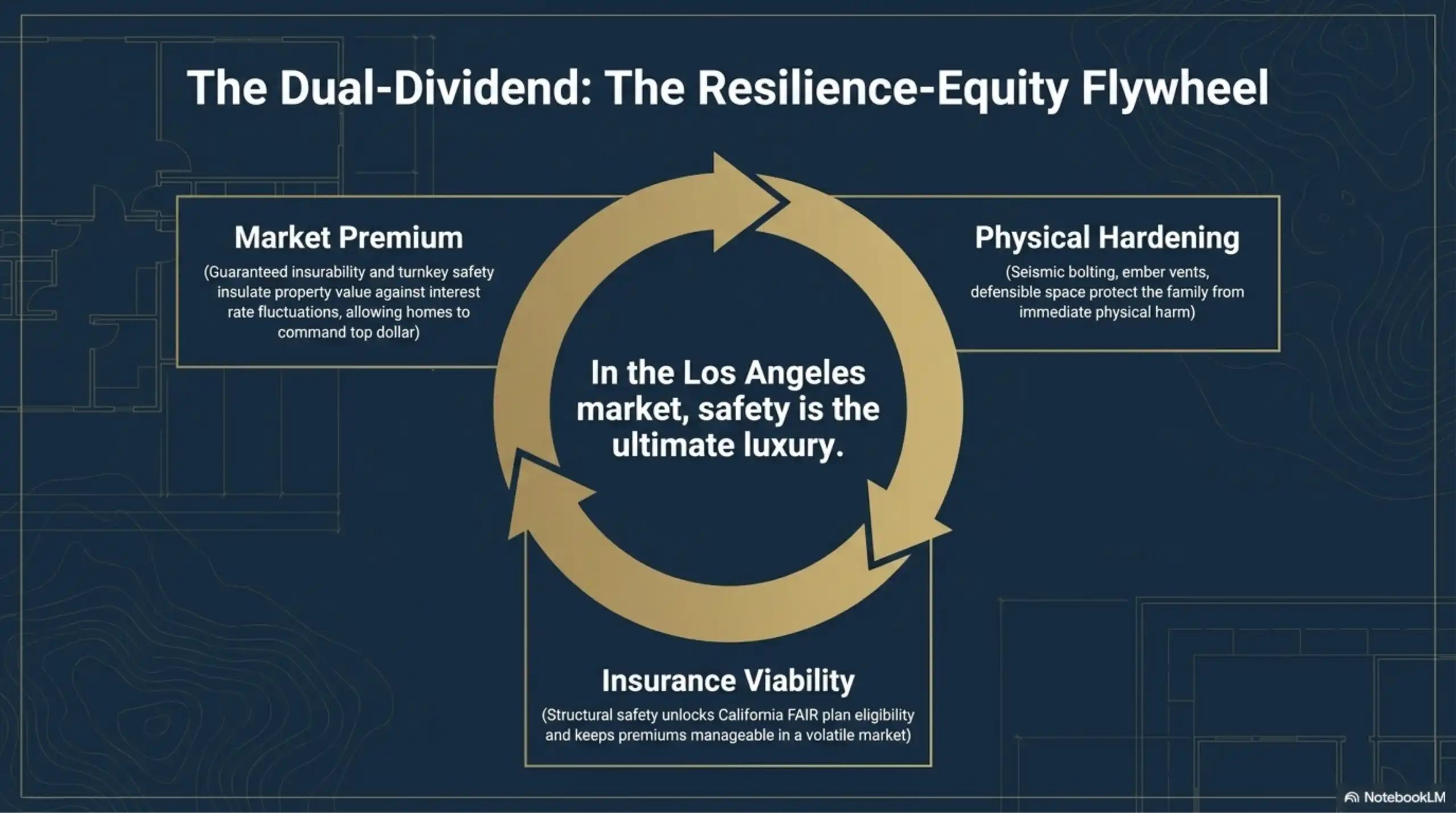
The Deep Dive: How Preparedness Protects Your L.A. Real Estate Investment
As a BOFU (Bottom of Funnel) real estate strategist, my goal is to ensure you are fully educated on how safety impacts your financial bottom line.
The Insurance Landscape
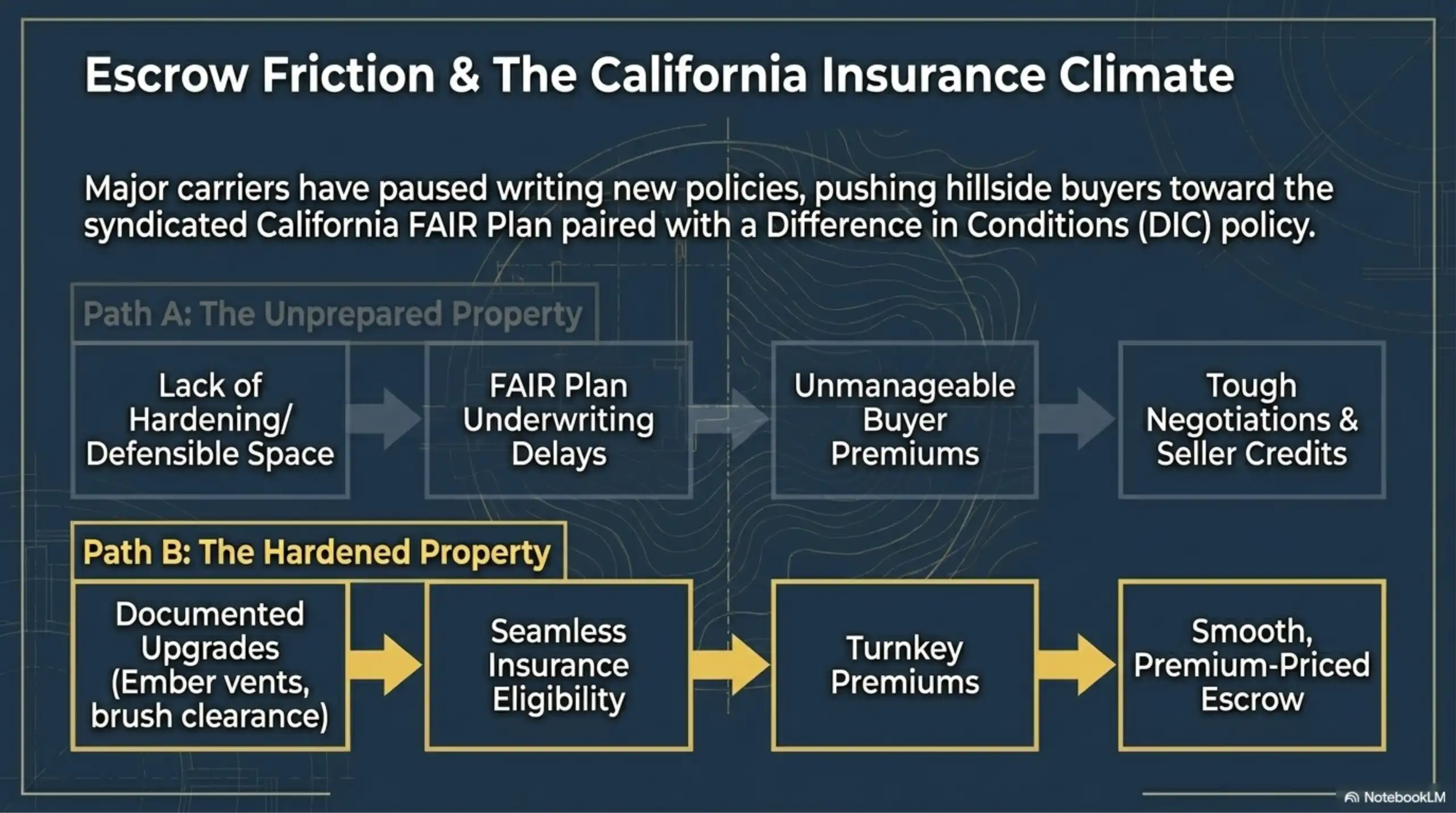
Currently, the California home insurance market is undergoing significant shifts. Major carriers have paused writing new policies, pushing many buyers in hillside or brush areas toward the California FAIR Plan, paired with a Difference in Conditions (DIC) policy. If you are selling, proving that your home is structurally prepared (e.g., proper brush clearance, Class A fire-rated roof, ember-resistant vents) is no longer just a safety measure; it is a vital part of keeping your buyer’s insurance premiums manageable so their escrow actually closes.
Interest Rates & Inventory Resilience
In an environment where interest rates impact purchasing power, buyers are incredibly selective. They are looking for “turnkey” safety. Low inventory means homes will still sell, but properties that require significant safety updates (like a foundation bolt or a complete electrical overhaul to prevent fire hazards) will likely face tougher negotiations and requests for seller credits. By investing in your home’s emergency resilience now, you insulate your property’s value against market fluctuations. A safe, secure, and ready-for-anything home is the ultimate luxury.
Frequently Asked Questions (FAQ’s)
1. What are the most common natural emergencies to prepare for in Los Angeles?
The most common events are earthquakes, wildfires, and localized power outages (often due to high winds or extreme heat). Less frequent but possible are mudslides in post-fire canyon areas and heavy winter flooding.
2. How much water should I store for an emergency?
The general rule of thumb is one gallon of water per person, per day, for at least three to seven days. Don’t forget to factor in extra water for your pets!
3. What is a Natural Hazard Disclosure (NHD) report?
In a California real estate transaction, an NHD is a legally required document provided by the seller that outlines if the property sits in a designated hazard zone (fire, flood, earthquake fault, seismic hazard).
4. How does being in a Very High Fire Hazard Severity Zone (VHFHSZ) affect my property value?
While it doesn’t strictly decrease value—many of L.A.’s most luxurious and desirable homes are in these zones—it does require buyers to be prepared for potentially higher insurance costs and stricter brush clearance regulations.
5. What is a seismic gas shut-off valve?
It is a safety device installed on your gas meter that automatically shuts off the flow of natural gas to your home in the event of a significant earthquake, preventing gas leaks and fires.
6. Is a gas shut-off valve required to sell my home in L.A.?
Yes, in the City of Los Angeles (and many surrounding municipalities), an operational seismic gas shut-off valve is a point-of-sale requirement before a home can change hands.
7. How do I know if my house needs earthquake retrofitting?
Typically, homes built before 1980 that have raised foundations (crawl spaces) may lack the bolting and bracing required to withstand major seismic activity. A structural engineer or licensed retrofit contractor can provide an assessment.
8. Does earthquake retrofitting increase my home’s value?
Yes. Buyers place a high premium on structurally sound homes. Furthermore, retrofitting can prevent catastrophic financial loss in the event of a major quake, making it an excellent ROI.
9. What is the California FAIR Plan?
It is a syndicated fire insurance pool established by the state to provide basic property insurance to homeowners who are unable to secure coverage in the traditional insurance market, often due to high wildfire risk.
10. How often should I update my emergency Go-Bag?
You should review and rotate the items in your Go-Bag every six months. A great habit is to check it when you change your clocks for Daylight Saving Time. Ensure food, water, and medications are not expired.
11. What important real estate documents should go in my emergency kit?
Include copies of your property deed, current mortgage statement, home insurance declarations page, and contact information for your insurance agent and mortgage servicer.
12. What does “defensible space” mean in real estate?
Defensible space is the buffer you create between a building on your property and the grass, trees, shrubs, or any wildland area that surround it. It is required by law in many L.A. areas to slow the spread of wildfire.
13. Are backup generators considered a good upgrade for selling?
Yes. With rolling blackouts and extreme heat events, hardwired backup generators (like a Generac or Tesla Powerwall) are seen as highly desirable luxury additions that boost marketability.
14. Where can I find my local community emergency response team (CERT)?
The LAFD offers CERT training for residents. You can find out more information and connect with your local neighborhood team via the Los Angeles Fire Department’s official website.
15. How can my REALTOR® help me understand my home’s safety profile?
As your real estate strategist, I can pull preliminary hazard data, connect you with top-tier home inspectors, structural engineers, and insurance brokers to ensure you fully understand a property’s risk profile before you buy or sell.
Take the Next Step: Don’t Leave Your Safety to Chance
These foundational steps are a phenomenal starting point, but true preparedness requires a deeper dive into your specific property. How much structural equity are you protecting? What are the specific protocols for your neighborhood’s topography?
You don’t need to guess. At Melissa Menard Homes, we’ve compiled resources to help you thrive in adversity.
Want to know how local hazard zones and insurance shifts are impacting your home’s current value? Schedule a Strategy Call with me today OR Curious about your home’s financial resilience? Contact me for a Custom Equity Audit to see how your home hardening upgrades translate to market value.

Melissa Menard REALTOR® | Compass
Los Angeles & Surrounding Areas
📞 310.729.9726 | DRE# 01858710
📧 melissa@melissamenardhomes.com
🌐 www.MelissaMenardHomes.com
Disclaimer: The information provided in this post is for educational purposes only and does not constitute financial, legal, or investment advice. Market conditions are subject to change. Please consult with a qualified professional regarding your specific real estate needs and local Fair Housing regulations.