

As we move into the second half of 2026, Santa Monica is redefining its “Neighborhood Spirit” through a sophisticated blend of technological safety, aggressive economic revitalization, and a real estate market that has firmly established a healthy equilibrium. The chaotic bidding wars of the past have settled, paving the way for a more analytical, balanced approach to buying and selling coastal real estate.
According to recent local market reporting from Santa Monica Next and City Official Press Releases, July 2026 marks a pivotal turning point for the city. From the official rollout of automated $93 bike lane fines to a massive $3 million effort to inject new life into the Third Street Promenade, the city is actively preparing for a thriving future ahead of the upcoming 2028 Olympics and the global stage of the World Cup.
If you are considering a move within, to, or out of Los Angeles’s iconic beachfront city over the next 12 months, understanding this intersection of infrastructure, policy, and pricing is essential.
FAST FACTS
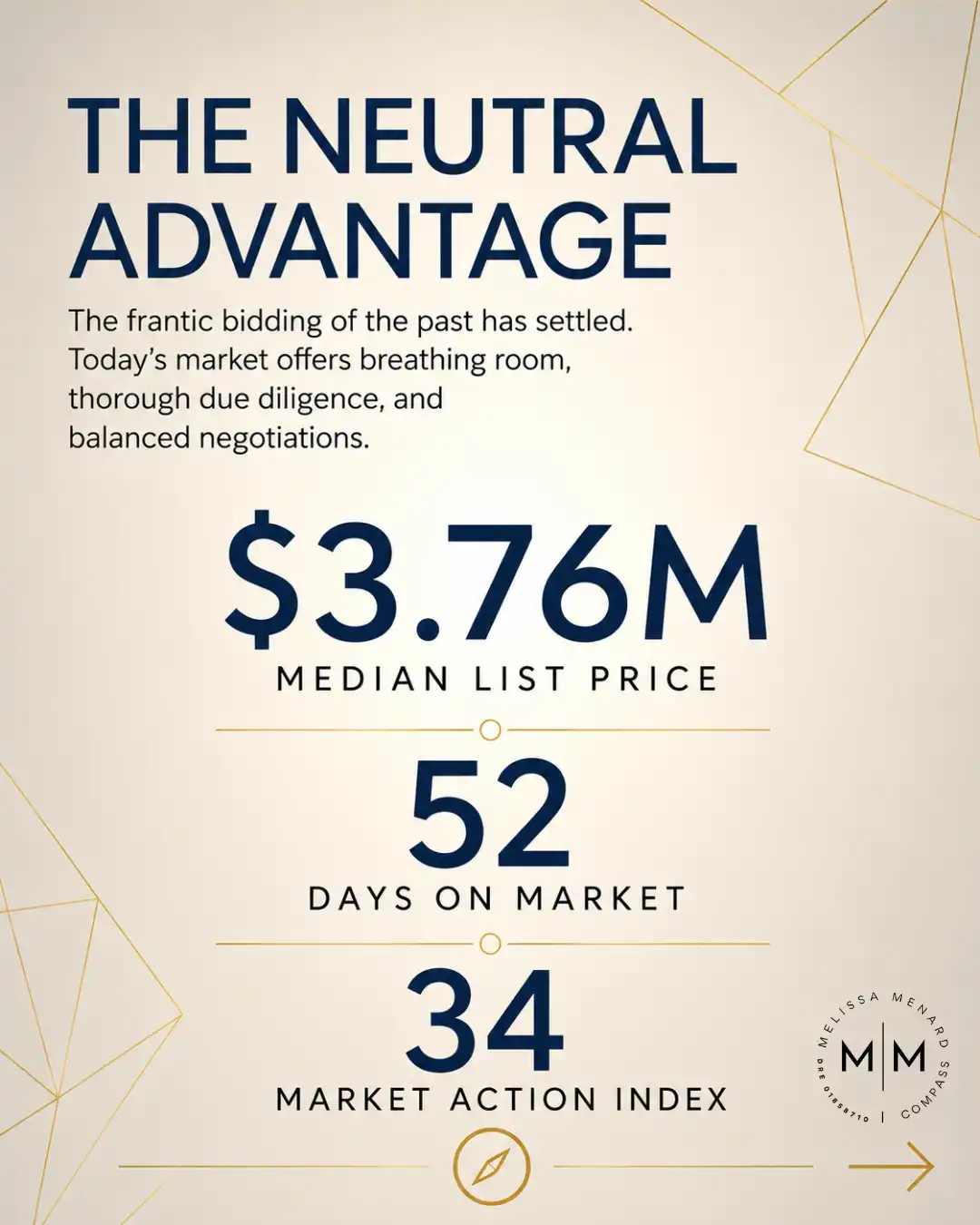
- Market Status: Officially a “Neutral Market” with a Market Action Index hovering around 34, and an overall median list price of $3.76M.
- Safety Tech Deployed: As of July 1, 2026, AI-mounted cameras on traffic vehicles are issuing $93 fines for vehicles illegally stopped in bike lanes.
- Downtown Revitalization: A $3 million economic package is waiving massive wastewater fees for new restaurants and expanding the city’s Entertainment Zones.
- Coastal Development: A historic Memorandum of Understanding (MOU) with the Coastal Commission begins this month (July 2026), aiming to drastically speed up local project approvals.
The July 2026 Market Equilibrium: A “Neutral Advantage”
Santa Monica is currently a fascinating study in balanced opportunity. After years of a pronounced seller’s advantage characterized by frantic bidding, the market is offering a fair environment. The current median list price sits at approximately $3,762,500 across the city, though this broad number hides enormous micro-market variations.
With inventory creeping up to around 82 active listings in July and the average days on market sitting comfortably at 52 days, buyers finally have the breathing room to conduct thorough due diligence, negotiate terms, and lock in their financing strategies.
The Micro-Market Breakdown
Real estate in Santa Monica is hyper-localized. Understanding the distinct pricing tiers is crucial for setting realistic expectations:

- North of Montana (90402): The crown jewel of Santa Monica real estate remains near historic highs. Single-family homes here easily command between $4M and $10M+. Inventory remains incredibly tight at roughly 1.8 months. Buyers in this ultra-luxury segment—often tech and entertainment executives—are willing to pay a heavy premium for turnkey, move-in-ready properties. If a home is priced right and styled impeccably, it can still go into escrow in under 3 weeks.
- Mid-City & Montana-Wilshire (90403): This premium corridor offers a mix of condos hovering around $1.3M and single-family residences pushing $2.5M to $3.5M. The proximity to the boutique retail along Montana Avenue adds a tangible value premium.
- Ocean Park (90405): Known for its walkable, village-like atmosphere along Main Street, Ocean Park draws younger professionals and creatives. Condos typically range from $1.2M to $2M, with detached homes on larger lots reaching $3M.
- Downtown Santa Monica (90401): This is the city’s primary value tier. The downtown condo market has seen a correction, creating a phenomenal entry point for buyers prioritizing a 15-minute city lifestyle. With median prices hovering just under $1M for entry-level units, buyers here have the strongest negotiation leverage in the entire city.
The Interest Rate & Inventory Reality
For buyers, the stabilization of interest rates in mid-2026 means predictability. You can comfortably analyze a property in Ocean Park or a condo in Downtown knowing that the ground won’t shift beneath your feet in a matter of days. For sellers, the data is equally clear: the market is punishing over-priced, aspirational listings. Accurate pricing and flawless presentation are the non-negotiable keys to a successful exit.
Safety First: The $93 Automated Bike Lane Fines Are Here
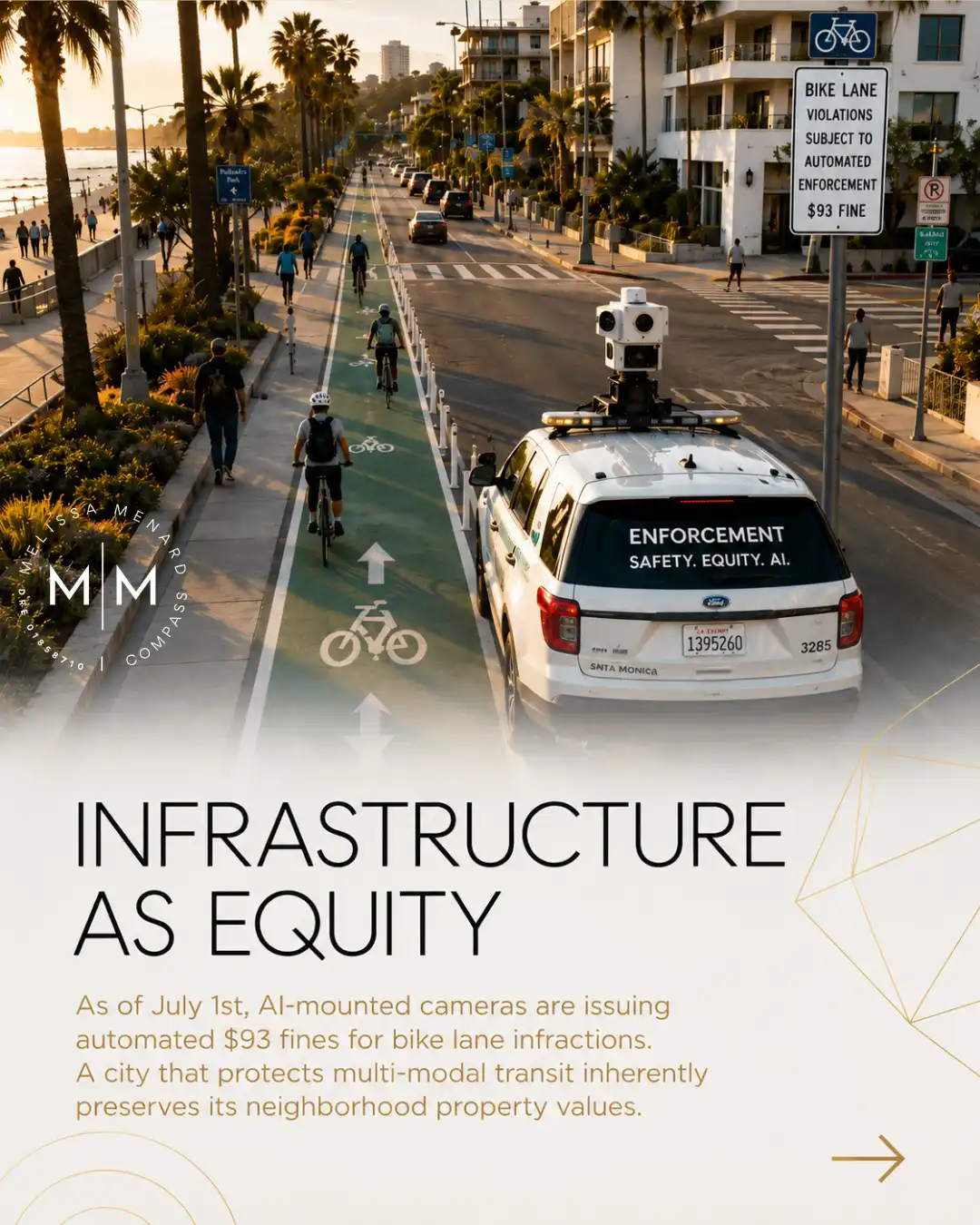
The spirit of Santa Monica in 2026 is defined by safe, multi-modal connectivity. Starting July 1, the city officially ended its two-month grace period and began issuing $93 citations to owners of vehicles parked or stopped illegally in bike lanes.
Santa Monica is the first city in California to use advanced camera technology, developed by Hayden AI, mounted directly on Parking Enforcement vehicles to protect cyclists. When an enforcement vehicle drives by, its forward-facing cameras automatically record vehicles blocking the bike lanes. An evidence package is generated and reviewed by an officer before the ticket is mailed out.
Why This Matters for Residents
This isn’t just about handing out tickets; it’s a fundamental shift in how the city prioritizes street safety. During the initial warning phase, cameras flagged nearly 1,700 violations in just six weeks. Vehicles stopped in bike lanes—even just for a quick food delivery drop-off—force cyclists into active traffic, dramatically increasing the risk of severe collisions.
For real estate, infrastructure dictates lifestyle. A city that successfully protects its cyclists and pedestrians inherently boosts the value of its walkable neighborhoods. Properties near protected transit corridors become more desirable for the growing demographic of buyers who prefer to leave their cars at home.
A Clearer Path: The Local Coastal Program (LCP) MOU
For decades, developing property or opening a business in Santa Monica’s coastal zone has been a bureaucratic marathon, often requiring dual approvals from both the city and the California Coastal Commission. That is finally changing.
In June 2026, the City Council authorized a monumental Memorandum of Understanding (MOU) with the Coastal Commission. This July, the official collaborative process begins to certify Santa Monica’s very first comprehensive Local Coastal Program (LCP), with a target completion date of late 2027.
Accelerating Economic Recovery
Once the LCP is certified, Santa Monica will gain far greater local approval authority over projects in the coastal zone—which encompasses much of Downtown and the Third Street Promenade. This means:
- Faster approvals for commercial tenant improvements.
- Easier permitting for outdoor dining and adaptive reuse.
- Streamlined processes for residential development and transportation upgrades.
Mayor Caroline Torosis noted that this structural change is designed to remove barriers for small businesses and accelerate investment. For commercial real estate investors and local entrepreneurs, this reduction in red tape is the loudest signal yet that Santa Monica is open for business.
The $3 Million Revitalization: Breathing New Life into the Promenade
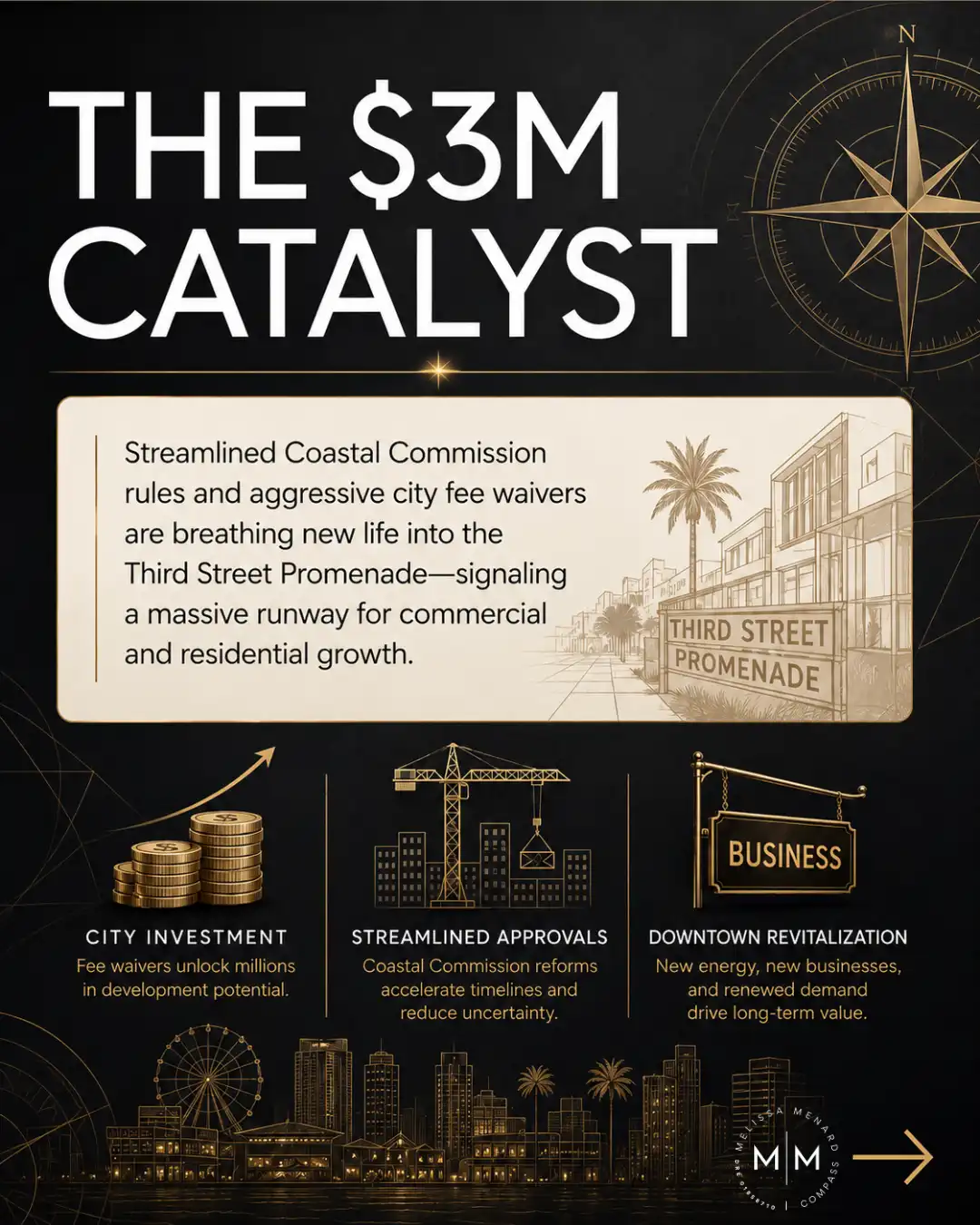
Recognizing the challenges faced by Downtown retail and dining, the city has launched an aggressive, comprehensive economic revitalization strategy. Approved earlier this spring and in full swing this summer, the $3 million plan is a direct injection of capital and regulatory relief designed to fill storefronts and activate the streets.
Key Revitalization Initiatives
- Wastewater Fee Waivers: To attract new dining concepts, the city is waiving its portion of the wastewater capacity fee. For a standard 50-seat restaurant, this instantly eliminates roughly $50,000 in city fees—a massive win for restaurateurs.
- Free Sidewalk Dining: Modeled after successful programs in other major cities, Santa Monica is eliminating permit fees for restaurants utilizing simple tables-and-chairs outdoor dining setups.
- Entertainment Zone Expansion: The wildly popular Entertainment Zone on the Third Street Promenade is expanding to cover the entire Downtown core, with event-based authority extending to the Pier, Main Street, and Montana Avenue.
The goal is clear: by the time the international crowds arrive for the 2027 Rose Parade, the 2028 Olympics, and the FIFA World Cup, Santa Monica’s commercial corridors will be vibrant, thriving, and fully activated.
Navigating the 2026 Landscape
Whether you are a buyer looking to capitalize on the neutral market conditions in Downtown, a seller preparing to list a premium property North of Montana, or an investor eyeing the newly streamlined commercial opportunities, the Santa Monica market demands a strategic, highly informed approach.
The city is actively solving its infrastructure challenges, modernizing its policies, and investing heavily in its future. It is a world-class destination that functions as a tight-knit village—and understanding the nuances of its neighborhoods has never been more valuable.
Community FAQ: Understanding the 2026 Shifts
1. What is the current median home price in Santa Monica as of July 2026?
The overall median list price for Santa Monica is roughly $3.76 million. However, this varies wildly by neighborhood, from entry-level downtown condos under $1M to ultra-luxury estates North of Montana exceeding $4M to $10M+.
2. Is Santa Monica currently a buyer’s or seller’s market?
It is officially a “Neutral Market.” With a Market Action Index of 34, an average of 52 days on the market, and increasing inventory, neither side holds absolute leverage, creating a balanced environment for negotiation.
3. What are the new $93 automated bike lane fines?
As of July 1, 2026, Santa Monica began issuing $93 citations to vehicle owners who stop or park in designated bike lanes, utilizing AI-powered cameras mounted on city Parking Enforcement vehicles.
4. How does the AI camera enforcement work for bike lanes?
Forward-facing cameras automatically detect vehicles blocking the bike lane. The system generates an evidence package, which is then reviewed by a human Parking Enforcement officer before a citation is officially mailed to the registered owner.
5. Can I park in a bike lane for just a minute for a delivery drop-off?
No. Stopping in a bike lane for any length of time forces cyclists into active vehicle traffic and constitutes a violation subject to the new $93 fine.
6. What is the Local Coastal Program (LCP) MOU?
It is a formal agreement between the City of Santa Monica and the California Coastal Commission. The MOU establishes a framework to finalize a certified Local Coastal Program, giving the city more local control over development.
7. When will the new LCP take full effect?
The collaborative process officially started in July 2026, with the city aiming to have the final LCP certified by the Coastal Commission by the end of 2027.
8. How will the new LCP affect real estate development?
Once certified, the city will have greater authority to approve residential, commercial, and transportation projects in the coastal zone without needing a secondary approval from the state, significantly speeding up development timelines.
9. What is the $3 million economic revitalization plan?
It is a comprehensive city initiative designed to attract restaurants, fill vacant storefronts, and expand entertainment options in the Downtown core and Third Street Promenade through financial incentives and fee waivers.
10. What specific incentives are there for new restaurants opening in Santa Monica?
The city is waiving its portion of the wastewater capacity fee—saving new restaurants roughly $1,000 per seat (up to $50,000 for a 50-seat venue)—and eliminating permit fees for basic sidewalk dining setups.
11. What is the status of the Third Street Promenade?
The Promenade is undergoing a massive revitalization. The city is expanding the “Entertainment Zone” concept across the Downtown core to encourage live music, events, and outdoor activations to draw foot traffic back to the area.
12. Where are the most affordable properties in Santa Monica?
Downtown Santa Monica (zip code 90401) currently offers the most accessible entry points, primarily consisting of condos with median prices hovering between $985K and $1.6M.
13. How much does a single-family home cost North of Montana?
The 90402 zip code is the most expensive in the city, with single-family homes typically starting around $4 million and frequently exceeding $10 million for premium lots and custom builds.
14. What makes the Ocean Park neighborhood so desirable?
Ocean Park offers a highly walkable, village-like atmosphere centered around Main Street. It attracts buyers looking for a creative, community-focused vibe close to the beach, with a mix of historic bungalows and modern condos.
15. How do interest rates impact Santa Monica buyers right now?
The stabilization of rates in 2026 has brought predictability back to the market. Buyers are no longer rushing out of fear of sudden rate hikes, allowing them to thoroughly inspect properties and negotiate effectively.
16. How long are homes staying on the market?
The city-wide average is currently 52 days. However, perfectly priced, turnkey properties in highly desired pockets like North of Montana can go into escrow in under 20 days.
17. What is the expanded Entertainment Zone?
Initially piloted on the Promenade, the Entertainment Zone allows for specialized event-based activations, outdoor dining, and live performances. The city is now expanding this authority to the Pier, Main Street, and Montana Avenue.
18. How do pre-1979 buildings affect property values?
Properties built before 1979 in Santa Monica are generally subject to Rent Control (RSO). Buyers must heavily factor existing tenant situations and controlled rent rates into their offer pricing when purchasing these multi-family or condo properties.
19. Should I sell my Santa Monica condo now or wait?
If you own a downtown condo, you are in a highly competitive value tier. Waiting will not necessarily yield a higher price in a neutral market; accurate pricing and flawless staging are required to sell today.
20. What is the long-term outlook for Santa Monica real estate?
With massive infrastructure investments, streamlined coastal development policies, and global events like the 2028 Olympics on the horizon, the long-term equity outlook for Santa Monica remains incredibly strong and historically resilient.
Ready to navigate the Santa Monica market with confidence?

Melissa Menard REALTOR® | Compass
Los Angeles & Surrounding Areas
📞 310.729.9726 | DRE# 01858710
📧 melissa@melissamenardhomes.com
🌐 www.MelissaMenardHomes.com
Disclaimer: The information provided in this post is for educational purposes only and does not constitute financial, legal, or investment advice. Market conditions are subject to change. Please consult with a qualified professional regarding your specific real estate needs and local Fair Housing regulations.