

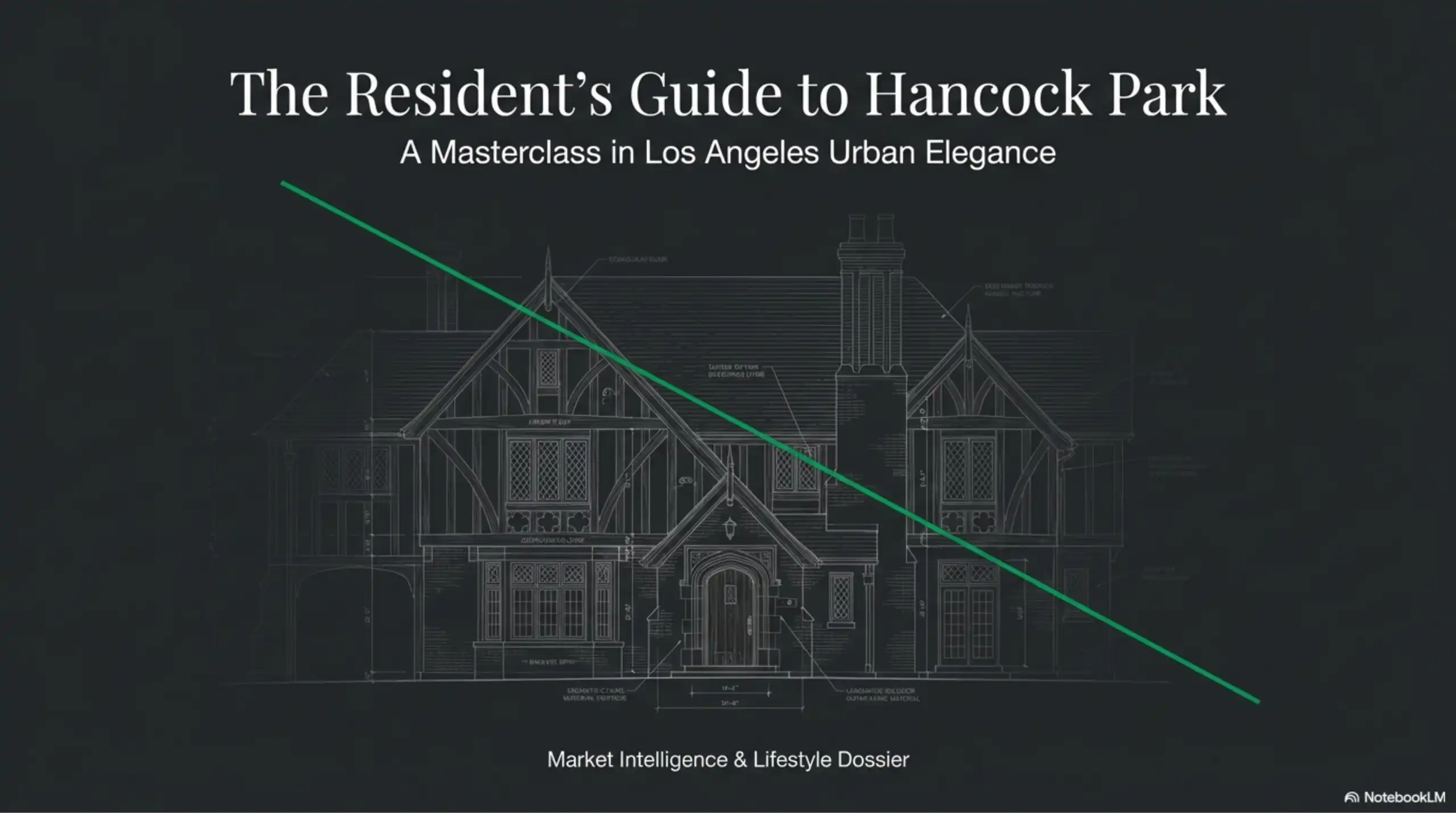
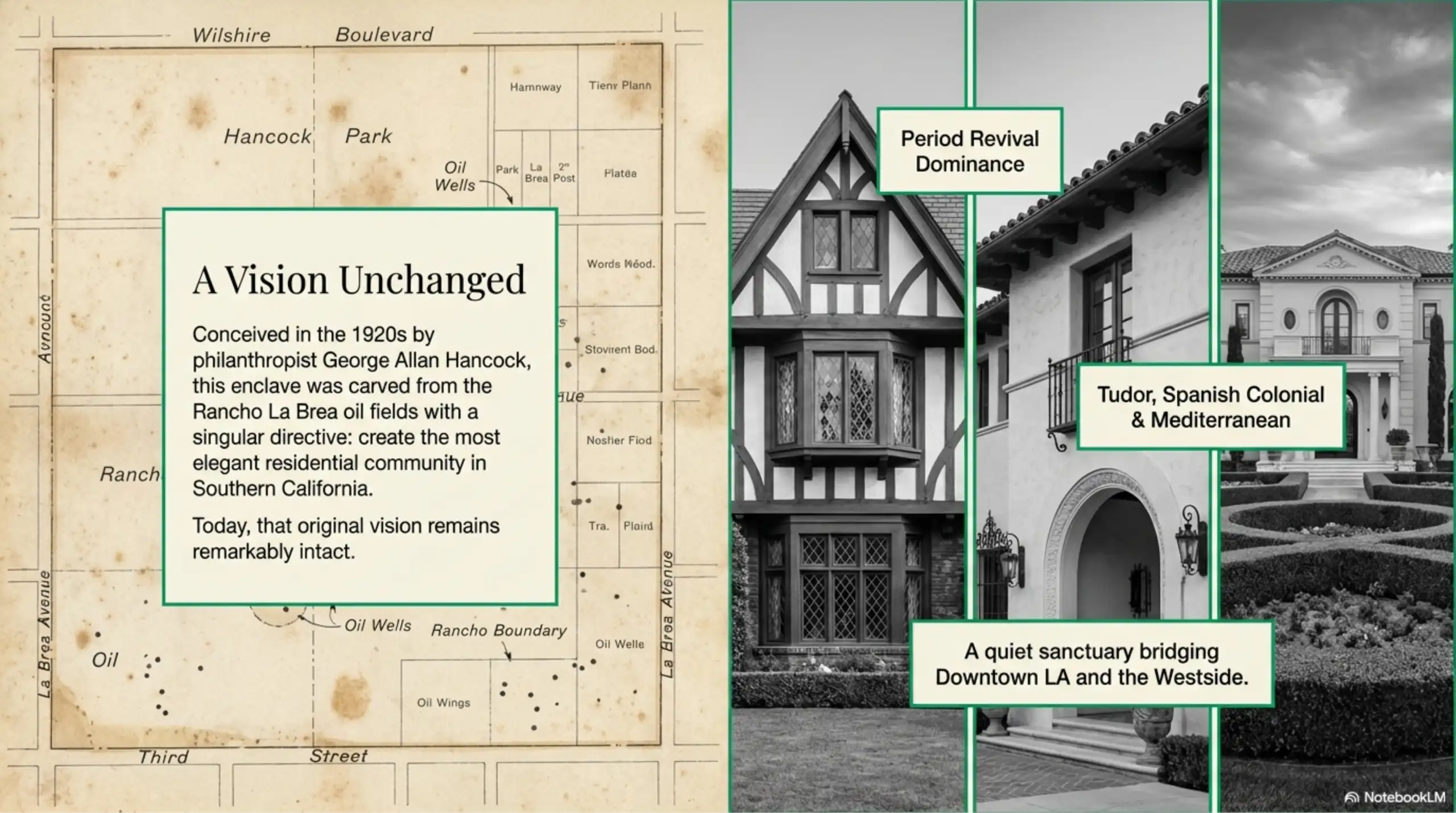
Hancock Park isn’t just a neighborhood; it is a testament to the enduring allure of “Old Hollywood” grandeur blended seamlessly with modern Los Angeles sophistication. Developed in the 1920s by philanthropist George Allan Hancock, this enclave was carved out of the former Rancho La Brea oil fields with a singular vision: to create the most elegant residential community in Southern California.
Today, that vision remains remarkably intact. From the mandatory 50-foot setbacks that create sprawling emerald lawns to the architectural diversity of Tudor, Spanish Colonial, and Mediterranean estates, Hancock Park offers a level of tranquility and prestige that is increasingly rare in our fast-paced city.
Primary Source & Data Reference: Hancock Park Historical Society & Neighborhood Resources
Hancock Park at a Glance
- Architectural Pedigree: One of the few LA neighborhoods where 1920s Period Revival styles are strictly preserved via HPOZ (Historic Preservation Overlay Zone) guidelines.
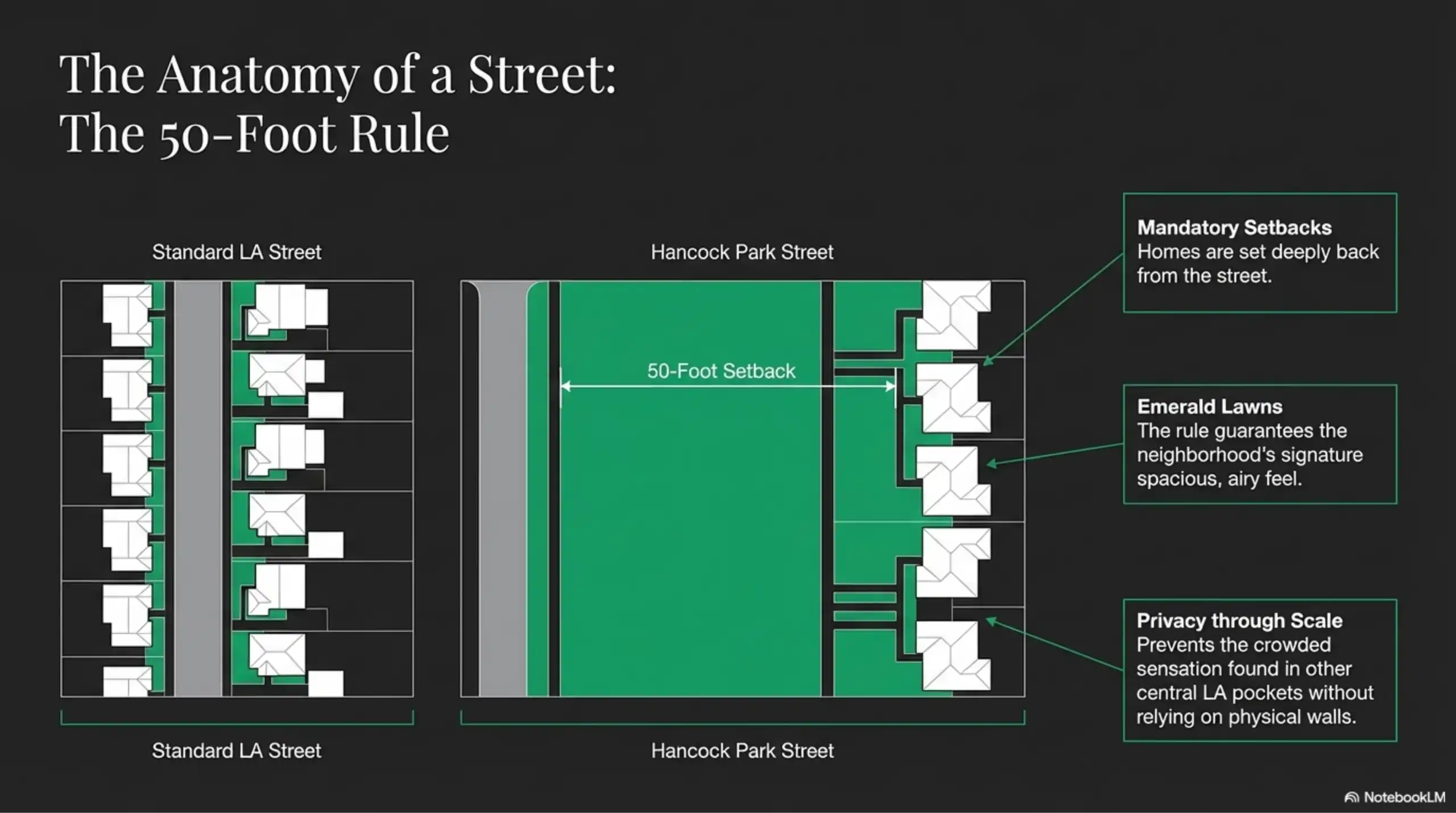
- The “50-Foot Rule”: Homes are set back significantly from the street, creating a grand, park-like atmosphere throughout the residential interior.
- Larchmont Village: The community’s “Main Street,” offering world-class walkability, artisan coffee, and boutique shopping.
- Centrality: Perfectly positioned between Downtown LA and the Westside, making it a premier choice for high-net-worth professionals.
- Inventory Trends: Extremely low turnover; homes here are often “legacy assets” held for decades.
The Story of the Street: A Model of Urban Elegance
Walking through Hancock Park feels like stepping back into a more intentional era of urban design. The neighborhood was envisioned as a model community, where the “Story of the Street” is told through stately scale and quiet luxury. Unlike the hills of Hollywood where privacy is found behind gates and winding roads, Hancock Park finds its prestige in openness—wide, tree-lined streets where the architecture is the star.
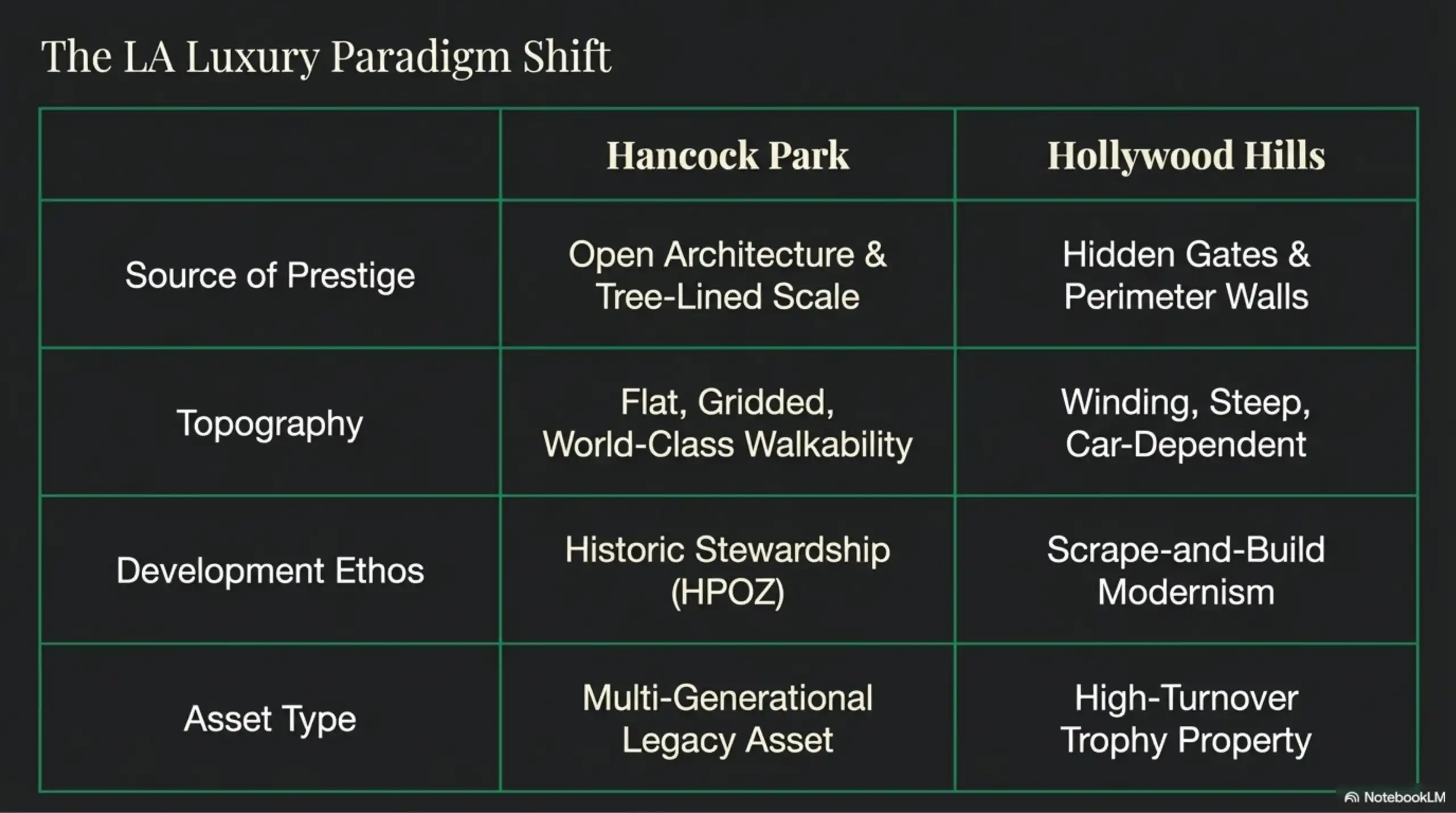
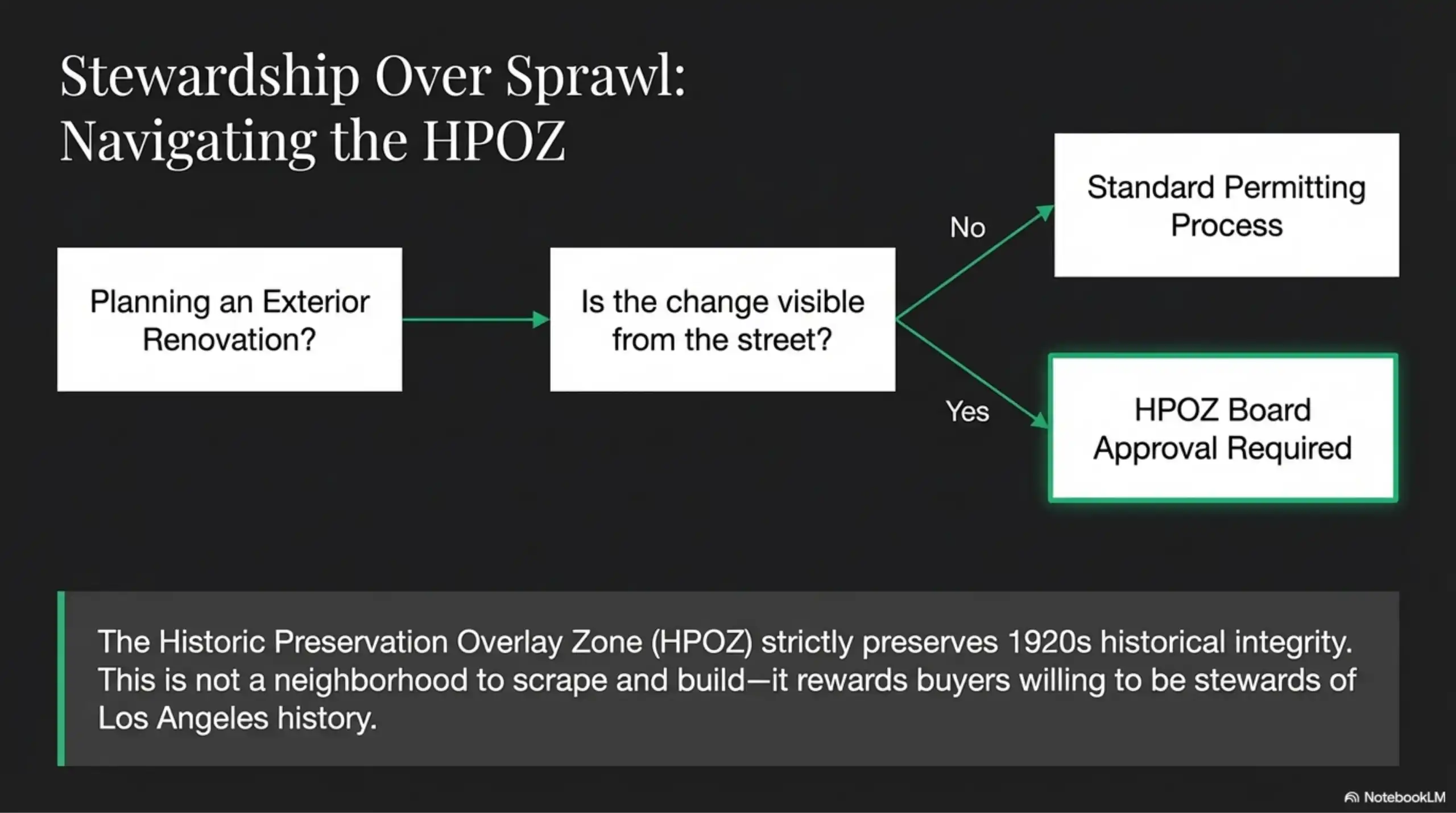
For buyers looking within a 0–12 month horizon, understanding the HPOZ (Historic Preservation Overlay Zone) is critical. This isn’t a neighborhood where you “scrape and build” a modern box. It is a neighborhood for those who appreciate the craftsmanship of a by-gone era and are willing to be stewards of Los Angeles history.
Market Analysis: Inventory, Rates, and the L.A. Impact
The Hancock Park real estate market operates on its own frequency. While the broader Los Angeles market fluctuates with interest rate volatility, Hancock Park remains a “low-velocity, high-value” environment.
1. Interest Rate Resilience: While 7%+ interest rates sidelined many first-time buyers in 2024 and 2025, the Hancock Park demographic—often consisting of high-equity sellers or all-cash buyers—is less sensitive to mortgage fluctuations. However, for those financing $3M–$10M+ estates, we are seeing a strategic shift toward ARMs (Adjustable Rate Mortgages) as buyers anticipate a more favorable refinancing window in the next 18-24 months.
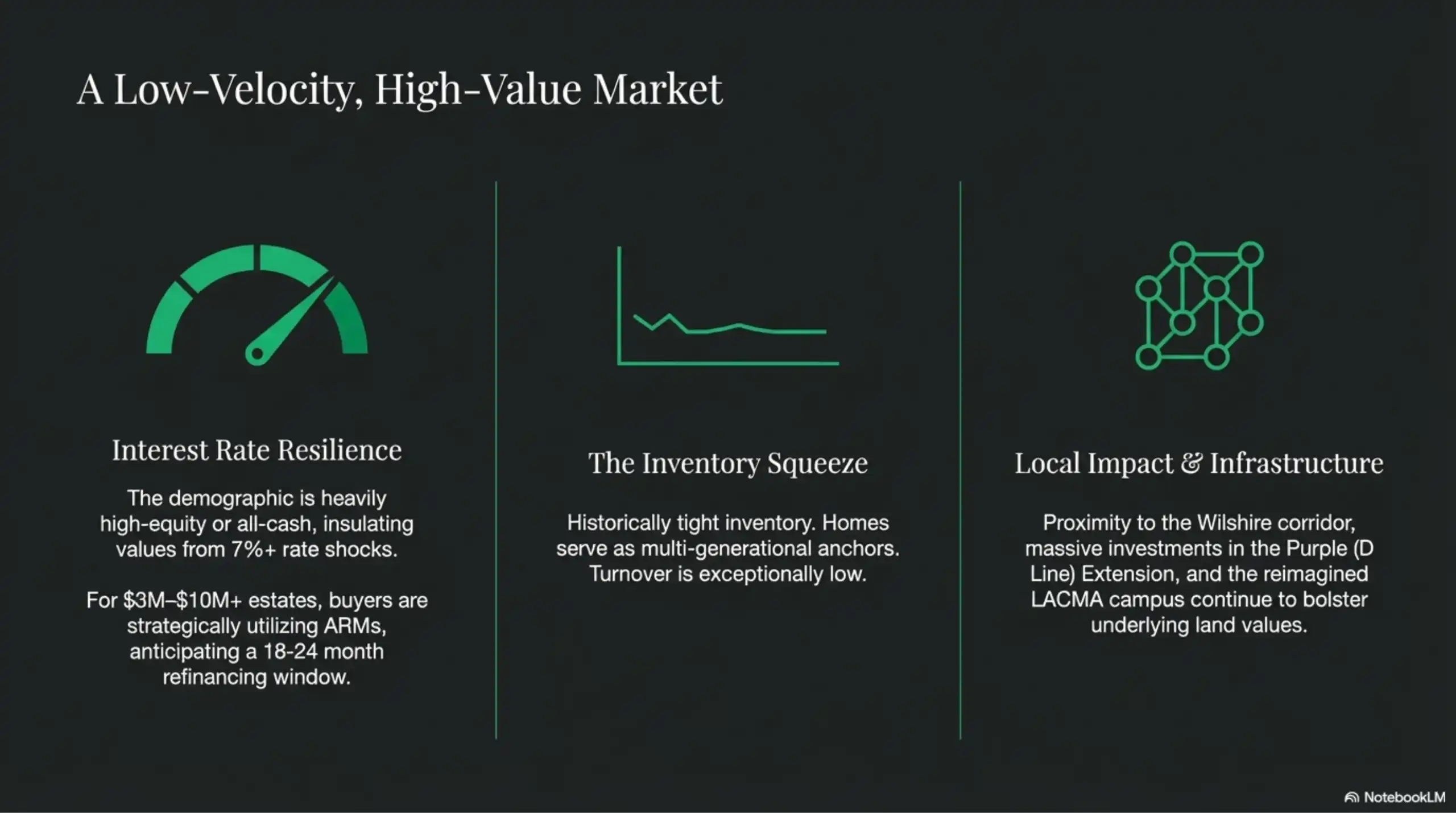
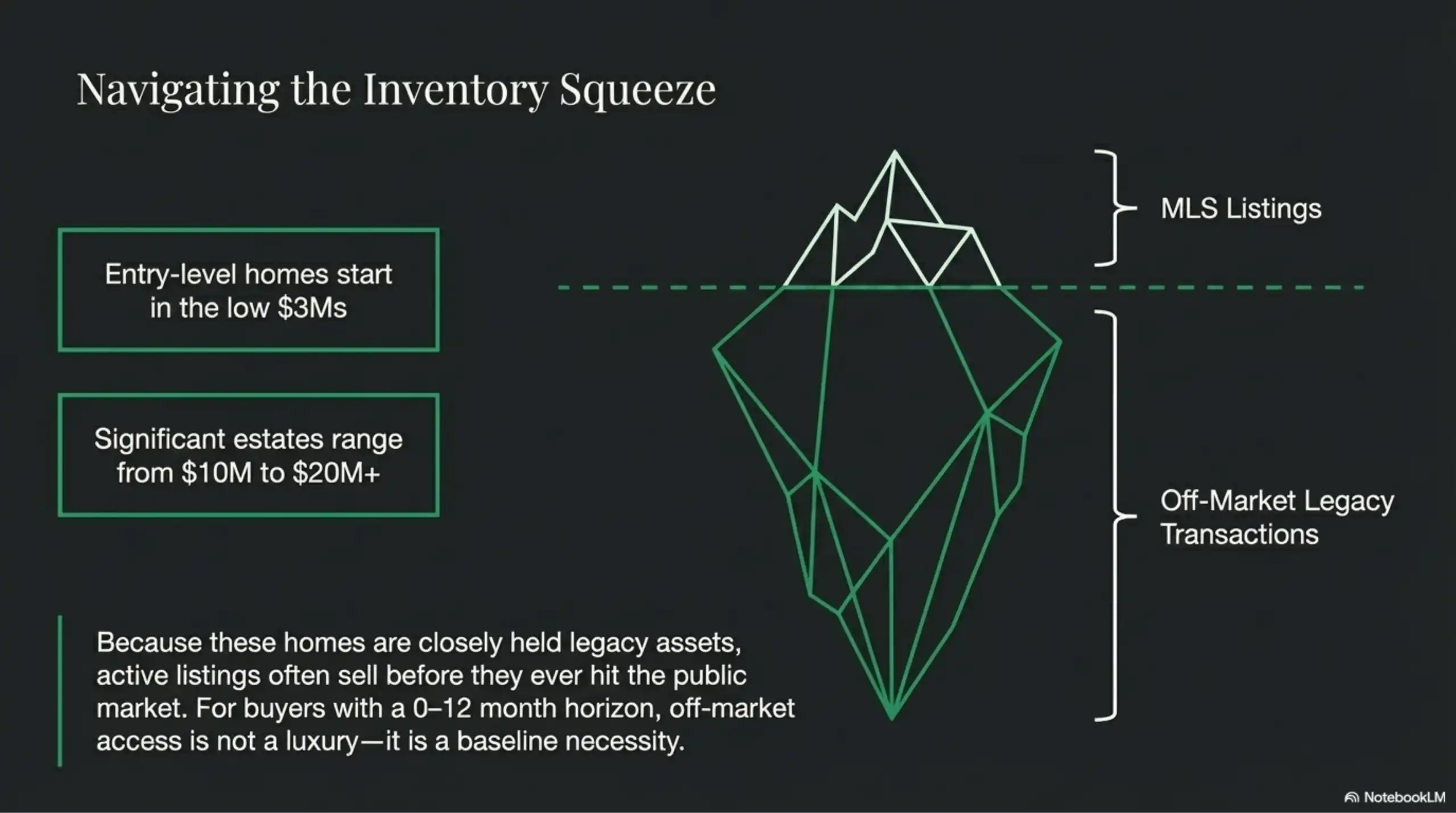
2. The Inventory Squeeze: Hancock Park inventory remains historically tight. Because these homes serve as multi-generational anchors, “active” listings often sell before they ever hit the MLS. If you are serious about moving here in the next year, “off-market” access isn’t just a luxury—it’s a necessity.
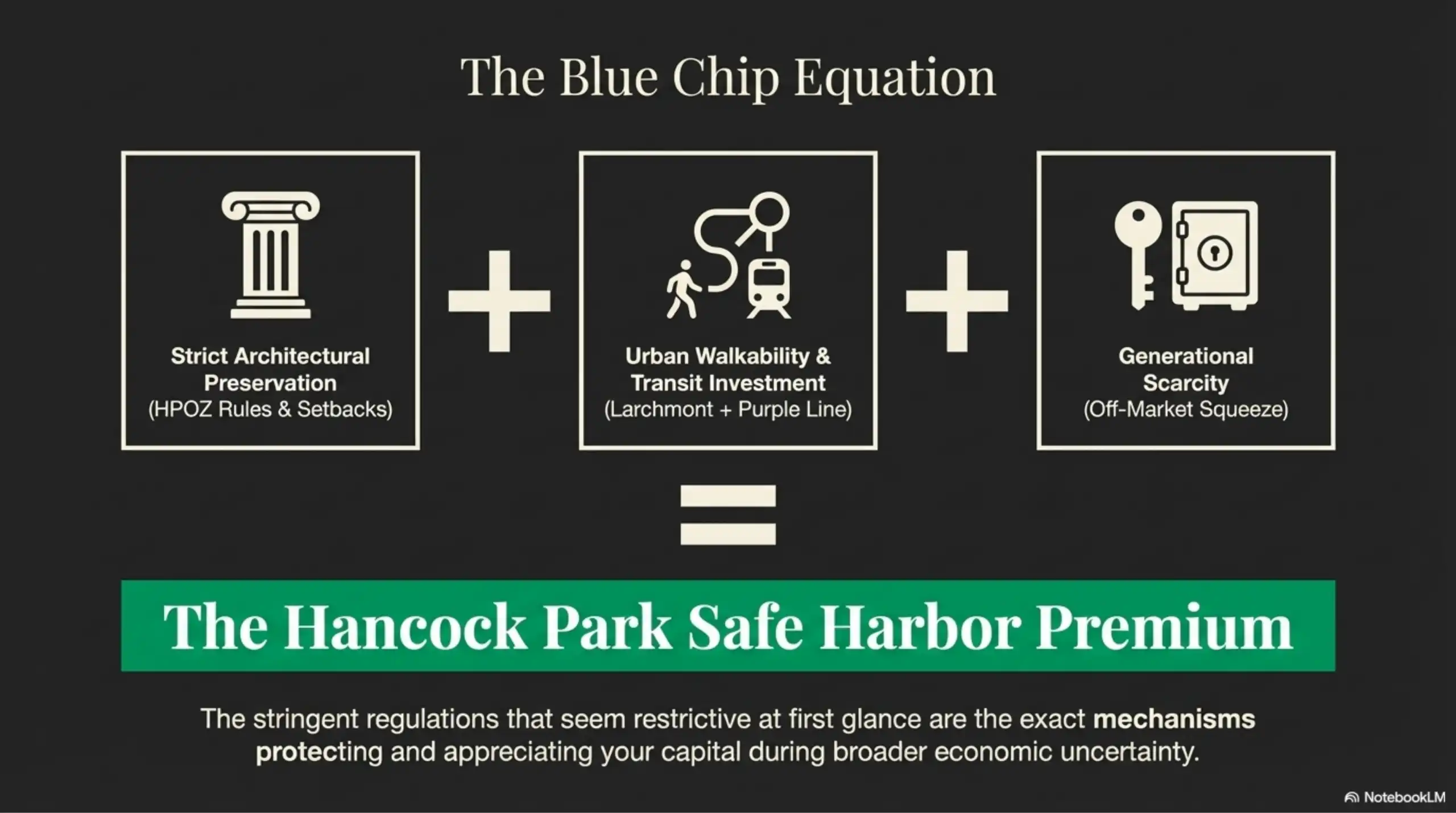
3. Local Impact: The proximity to the Wilshire corridor and the massive investments in the Purple (D Line) Extension and the reimagined LACMA campus continue to bolster land values. Hancock Park is increasingly seen as a “blue chip” investment—a safe harbor for capital during economic uncertainty.
Walkability & Lifestyle: The Larchmont Connection
The heartbeat of Hancock Park is Larchmont Village. In a city known for its car culture, the ability to walk to Clark Street Bakery for a morning baguette or grab a coffee at Go Get Em Tiger is the ultimate luxury.
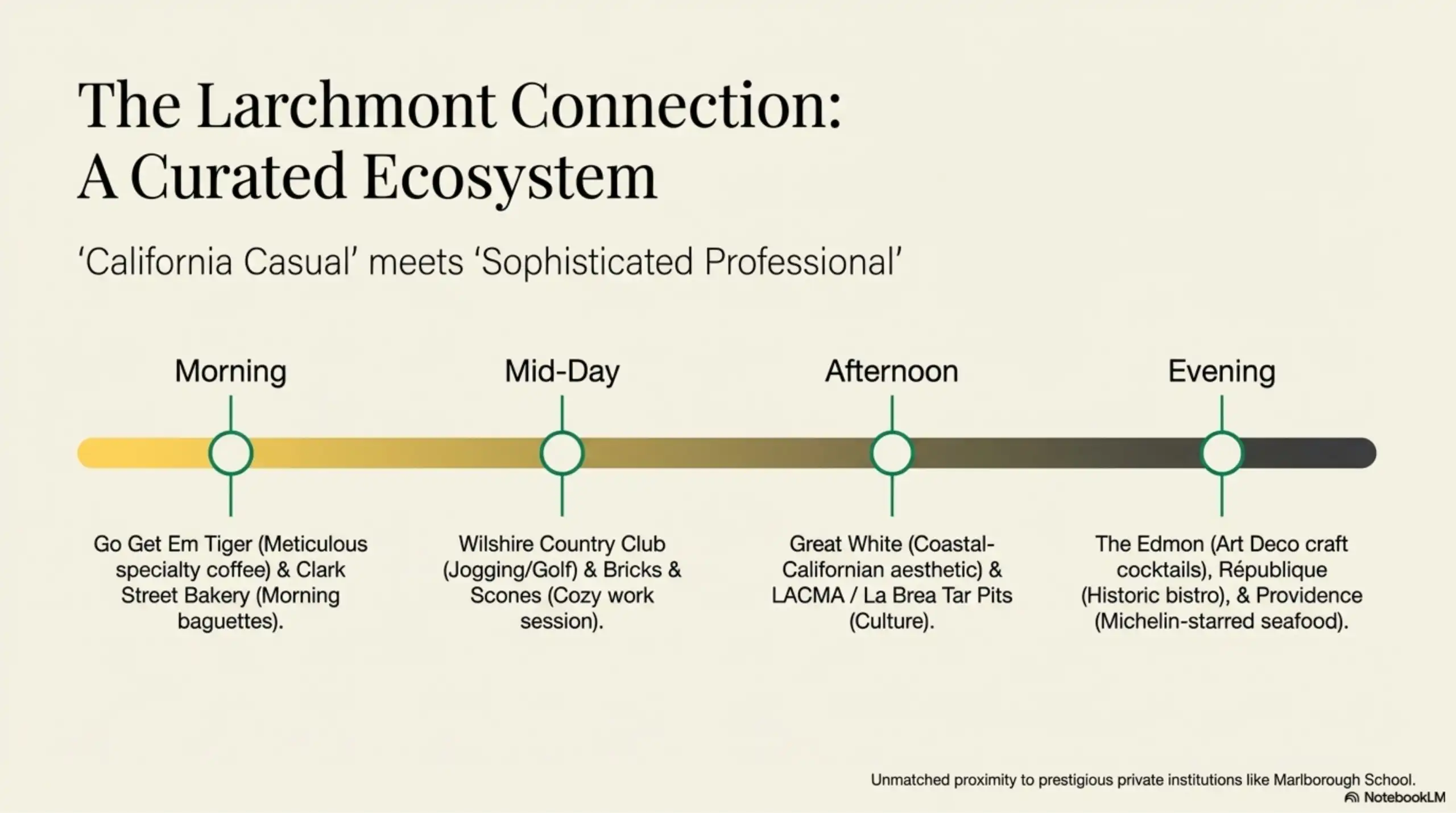
The lifestyle here is “California Casual” meets “Sophisticated Professional.” You’ll see neighbors jogging past the Wilshire Country Club in the morning and dining at Michelin-starred Providence or the historic République by evening. It is a neighborhood that rewards those who appreciate the finer details of life.
Local Picks: The Hancock Park Curated List
| Venue | Category | The Vibe |
| Go Get Em Tiger | Coffee Shop | Meticulous specialty coffee; the social hub of Larchmont. |
| Bricks & Scones | Coffee Shop | Cozy, community-focused; perfect for a quiet work session. |
| Great White | All-Day Cafe | Coastal-Californian; think avocado toast and bright aesthetics. |
| The Edmon | Happy Hour | Art Deco hidden gem; incredible craft cocktails. |
| Providence | Restaurant | Michelin-starred seafood; the “North Star” of LA dining. |
| République | Bakery/Bistro | A “cathedral to butter”; set in a breathtaking historic building. |
| Hancock Park (LA County) | Park/Culture | Home to LACMA and the La Brea Tar Pits; green space meets history. |
FAQ: Buying & Selling in Hancock Park
1. What is an HPOZ and how does it affect my home?
The Historic Preservation Overlay Zone (HPOZ) ensures that the exterior of homes in Hancock Park maintains their historical integrity. If you plan on renovating, you will need approval from the local board for any changes visible from the street.
2. Are there private schools nearby?
Yes, Hancock Park is centrally located to some of the most prestigious private schools in Los Angeles, including Marlborough School and various options in nearby Hollywood and Mid-Wilshire.
3. Is Hancock Park gated?
No, it is an open residential neighborhood. However, many residents utilize private security patrols, which are a common and accepted part of the community fabric.
4. How does the “50-foot setback” rule impact property use?
It means you have a massive front yard! While it limits how far forward you can build, it guarantees the neighborhood’s signature spacious, airy feel that prevents the “crowded” sensation found in other central LA pockets.
5. What is the average price point for a move-in ready home?
While prices vary, entry-level for a smaller, well-maintained home typically starts in the low $3Ms, with significant estates easily reaching $10M to $20M+.
Whether you are looking to sell a legacy estate or find your forever home in this historic pocket, the key is preparation. In a market this competitive and nuanced, having a strategy that accounts for historic regulations and off-market opportunities is paramount.
Ready to explore your options?
Closing Thoughts & Strategy
Schedule a Strategy Call to discuss the current Hancock Park inventory or request a Custom Equity Audit if you are considering selling your Hancock Park property this year.
Melissa Menard REALTOR® | Compass
Los Angeles & Surrounding Areas
📞 310.729.9726 | DRE# 01858710
📧 melissa@melissamenardhomes.com
🌐 www.MelissaMenardHomes.com
Disclaimer: The information provided in this post is for educational purposes only and does not constitute financial, legal, or investment advice. Market conditions are subject to change. Please consult with a qualified professional regarding your specific real estate needs and local Fair Housing regulations.