


The most profound hesitation I observe in homeowners isn’t whether they want to move—it’s the logistical paralysis of how to sequence the transition. You’ve built a life in your current home, and you can vividly imagine the life waiting for you in the next. Yet, suspended between these two realities is a delicate, high-stakes choreography: Do you sell first, or do you buy first?
It’s the Chicken or the Egg dilemma; the classic real estate paradox. However, looking closely at the current rhythm of the Los Angeles market, we can see that this isn’t merely a question of logistics, but a question of leverage and positioning.
(Reference context: This discussion expands upon recent real estate strategy insights emphasizing that while every move is unique, selling first often establishes a foundation of financial strength and negotiating power.)

FAST FACTS
- Contingency Risks: In highly desirable Los Angeles neighborhoods, offers contingent upon the sale of a buyer’s current home are rarely accepted against non-contingent competing bids.
- The Power of Selling First: Liquidating your current asset first crystallizes your exact buying power, removing the guesswork from your subsequent purchase.
- Strategic Buffers: Seller-in-possession (SIP) agreements—often called “rent-backs”—allow you to close on your sale, secure your funds, and remain in your home while you shop for your next property.
- Financial Alternatives: Bridge loans, cross-collateralization, and HELOCs serve as vital tools for those who absolutely must secure their next home before listing their current one.
The Real Estate Catch-22
If you buy before you sell, you risk the heavy financial burden of carrying two mortgages simultaneously. You may also find your capital temporarily trapped, making the down payment on the new property a stressful scramble. Conversely, if you sell before you buy, you face the looming anxiety of homelessness—the fear that your current home will close before you have successfully secured the keys to your next. That could mean weeks or months with AirBnB or long hotel stays.
In an ideal world, the closing dates align perfectly on the calendar. In reality, a successful dual transaction requires meticulous planning, a deep understanding of local market temperament, and an experienced advisor to guide the execution.

The Strategic Advantage of Selling First
In today’s Los Angeles market—whether you’re looking at the coastal enclaves of the Westside or the historic architecture of Pasadena—selling first often puts you in the most commanding position possible.
Absolute Financial Clarity Until escrow closes, your home’s equity is an estimate, not a liquid asset. By selling first, you convert hypothetical equity into actual cash. You step into the buyer’s arena knowing down to the dollar what you can afford, allowing you to search with confidence rather than caution.
The Competitive Edge Los Angeles real estate is notoriously competitive where multiple offers are the norm. If you find your dream home but must make your offer contingent upon the sale of your current residence, you are asking the seller to take on your risk. In a multiple-offer scenario, a contingent offer is almost always moved to the bottom of the pile. By selling first, you shed this contingency, presenting yourself as a strong, highly qualified buyer who can close on the seller’s preferred timeline.
Avoiding the “Desperation Discount” If you purchase a new home before selling your old one, the clock starts ticking. The financial pressure of carrying two properties can force you to accept a lower offer on your listing simply to stop the financial bleeding. Selling first allows you to wait for the right buyer and the right terms for your current property.

Elegant Solutions for the Interim
The fear of having nowhere to go is valid, but it is also entirely solvable. We employ several strategies to bridge the gap seamlessly:
The Seller Rent-Back (SIP) This is perhaps the most elegant tool in our arsenal. We negotiate for you to remain in your current home for up to 59 days after the sale closes. You have your equity in the bank, the sale is final, and you can shop for your next home from the comfort of your current living room.
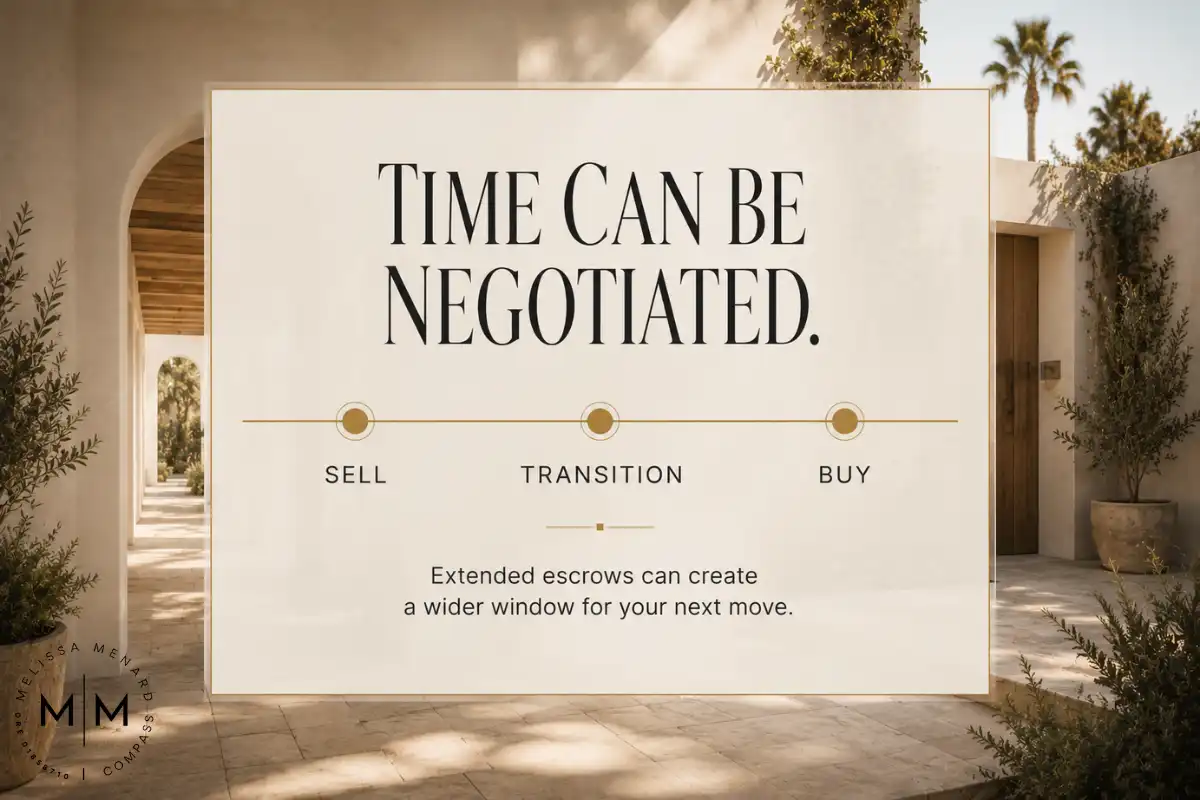
Extended Escrows If a rent-back isn’t viable, we can negotiate an extended escrow period on the sale of your home (e.g., 30 – 60 days). This gives you a generous window to identify and enter escrow on your replacement property, allowing us to align the closing dates concurrently.

Buyer & Seller Considerations
For the Seller (Your Current Home):
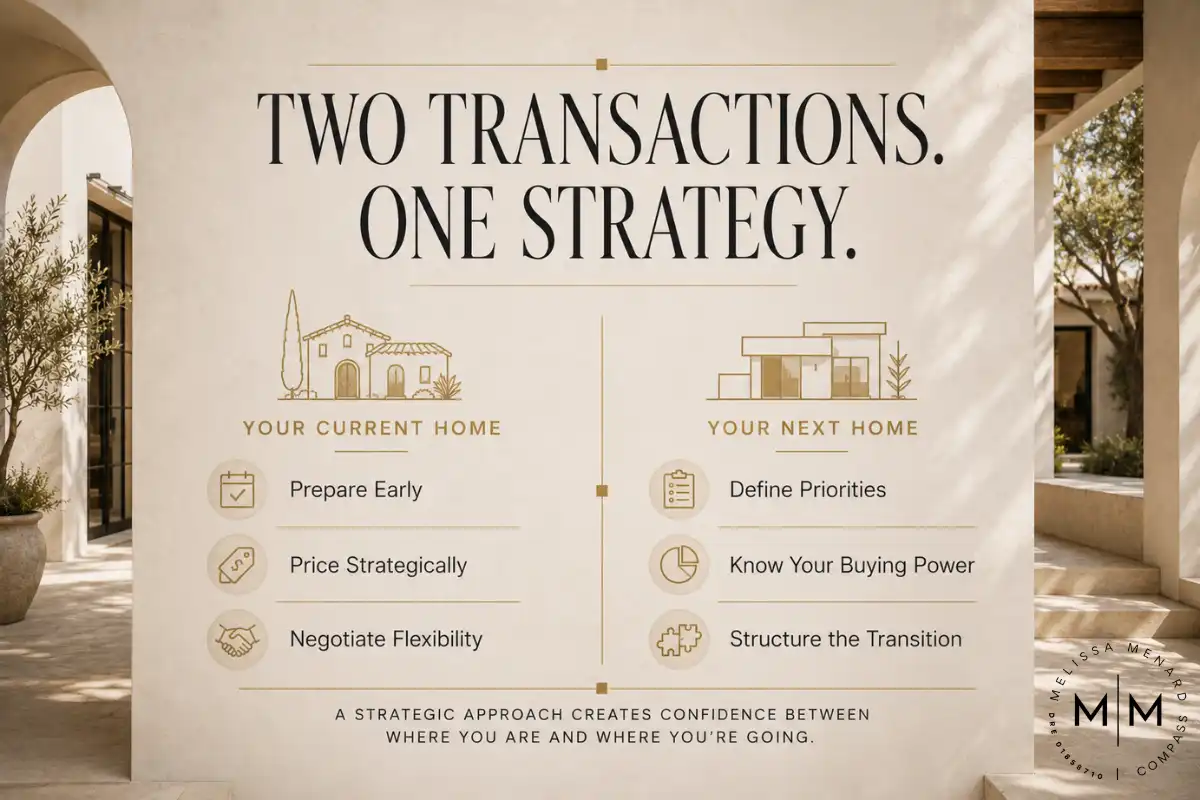
- Preparation is Paramount: Do not wait until you find your next home to prepare your current one. Begin the process of decluttering, staging, and completing minor repairs now. When the moment strikes, your home must be ready to launch immaculately.
- Price Strategically: Overpricing in an attempt to pad your next purchase can lead to stagnation. Price accurately for the market to generate multiple offers, giving you the leverage to dictate terms like rent-backs and extended escrows.
For the Buyer (Your Next Home):
- Define Your Non-Negotiables: Because your transition window may be tight, you must have acute clarity on what you’re looking for in your next property. This prevents analysis paralysis when the right home hits the market.
- Explore Bridge Financing: If you absolutely cannot stomach the idea of selling first, speak with a wealth manager or lender about a bridge loan. This short-term financing tool uses the equity in your current home to fund the down payment on the next, though it comes with higher costs and strict qualification standards. We’re happy to provide trusted recommendations if this is the avenue you’d like to pursue.
Frequently Asked Questions (FAQ’s)
1. What is a home sale contingency?
A clause in a purchase offer stating the buyer will only complete the purchase if they successfully sell their current home.
2. Why do Los Angeles sellers dislike contingent offers?
Because it introduces a variable outside of their control. If your home fails to sell, their transaction collapses. In a competitive market, sellers prefer certainty.
3. What is a rent-back agreement?
A legally binding arrangement where the buyer of your home allows you to remain in the property for a specified period after closing, usually paying a daily rate based on their mortgage costs.
4. How long can a rent-back last?
Typically, traditional lenders will only allow a buyer to rent back to a seller for up to 59 days. Anything beyond that may classify the property as an investment rather than a primary residence.
5. What is a bridge loan?
A short-term, high-interest loan designed to “bridge” the gap, allowing you to access the equity in your current home to buy a new one before the current one sells.
6. Are bridge loans hard to get?
They require substantial equity and a low debt-to-income ratio, as you must temporarily qualify to carry the debt of both properties.
7. Can I use a Home Equity Line of Credit (HELOC) instead?
Yes, if you secure the HELOC well before you list your home. Once a home is actively on the market, lenders generally will not approve a new HELOC.
8. What does “concurrent closing” mean?
When the sale of your current home and the purchase of your new home are coordinated to close on the exact same day, or within a day of each other.
9. What happens if my buyer backs out at the last minute?
This is the inherent risk of a concurrent closing. If your buyer breaches the contract, it jeopardizes your purchase. This is why thorough vetting of the buyer’s financing is critical. In some cases, you as the seller get to keep the buyer’s deposit.
10. How do I time the market for both buying and selling?
You don’t. You time your life. The market will dictate the current financial metrics, but your personal timeline should drive the decision.
11. Should I use the same agent for both transactions?
Yes, highly recommended. Having one advisor orchestrating both sides of the chessboard ensures seamless communication and strategic alignment.
12. What if I can’t find a home I like during my rent-back period?
This is a risk. Your backup plan should be a short-term luxury rental or an Airbnb. It involves moving twice, but it protects your equity and prevents a rushed, compromised purchase.
13. Do I pay property taxes during a rent-back?
No. Once the property closes, the new owner is responsible for property taxes and homeowners insurance. You will need a renter’s policy for your belongings.
14. Does selling first mean I have to compromise on my next home?
The opposite is true. Selling first gives you the financial power to be a non-contingent buyer, actually expanding your options and negotiating power.
15. How early should I start planning a dual move?
Ideally, 3 to 6 months before you intend to move. This allows time for property preparation, financial structuring, and market analysis.
Closing Perspective
Navigating a dual transaction requires a steady hand, clear foresight, and a refusal to be rushed into a decision out of fear. Whether you choose to sell first to command the strongest purchasing position, or utilize financing tools to buy first for absolute comfort, the key is intentionality. You are not just moving assets; you are migrating your life.
With the right strategy, the space between the home you have outgrown and the home you are meant to be in doesn’t have to be a chasm—it can be a bridge.

Schedule a Strategy Consultation If you are weighing the logistics of an upcoming move, let’s sit down and map out a bespoke strategy that protects your wealth and peace of mind.
Melissa Menard REALTOR® | Compass
Los Angeles & Surrounding Areas
📞 310.729.9726 | DRE# 01858710
📧 melissa@melissamenardhomes.com
🌐 www.MelissaMenardHomes.com
Disclaimer: The information provided in this post is intended for educational purposes only and should not be considered financial, legal, tax, or investment advice. Real estate laws, market conditions, and regulations change over time. Please consult the appropriate licensed professionals regarding your specific situation. All content should comply with applicable Fair Housing laws and regulations.