

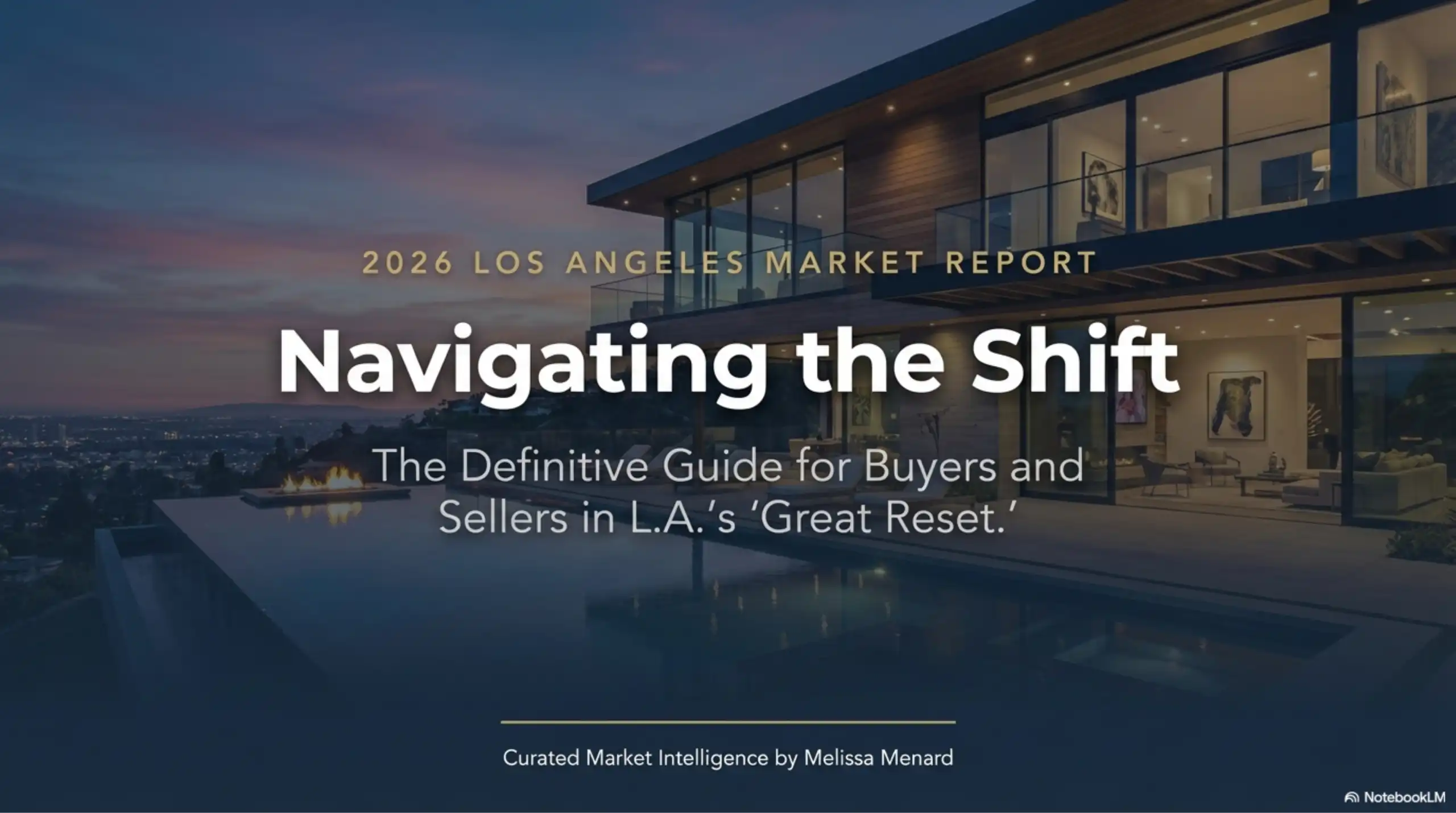
The Los Angeles real estate landscape is famously dynamic, often shifting neighborhood by neighborhood. As we move through March 2026, the market is currently caught in a fascinating tug-of-war between rising inventory and stabilizing interest rates, creating an environment that feels markedly different from the frenzy of recent years. Whether you are eyeing a coastal estate in Santa Monica or a modern retreat in the Hollywood Hills, understanding the “temperature” of the market is the first step toward a successful transaction.
According to recent data from the California Association of REALTORS® (C.A.R.) and local MLS reports, Los Angeles is currently trending toward a Neutral Market, though specific luxury enclaves still lean toward seller-favored conditions.
The 2026 L.A. Market at a Glance
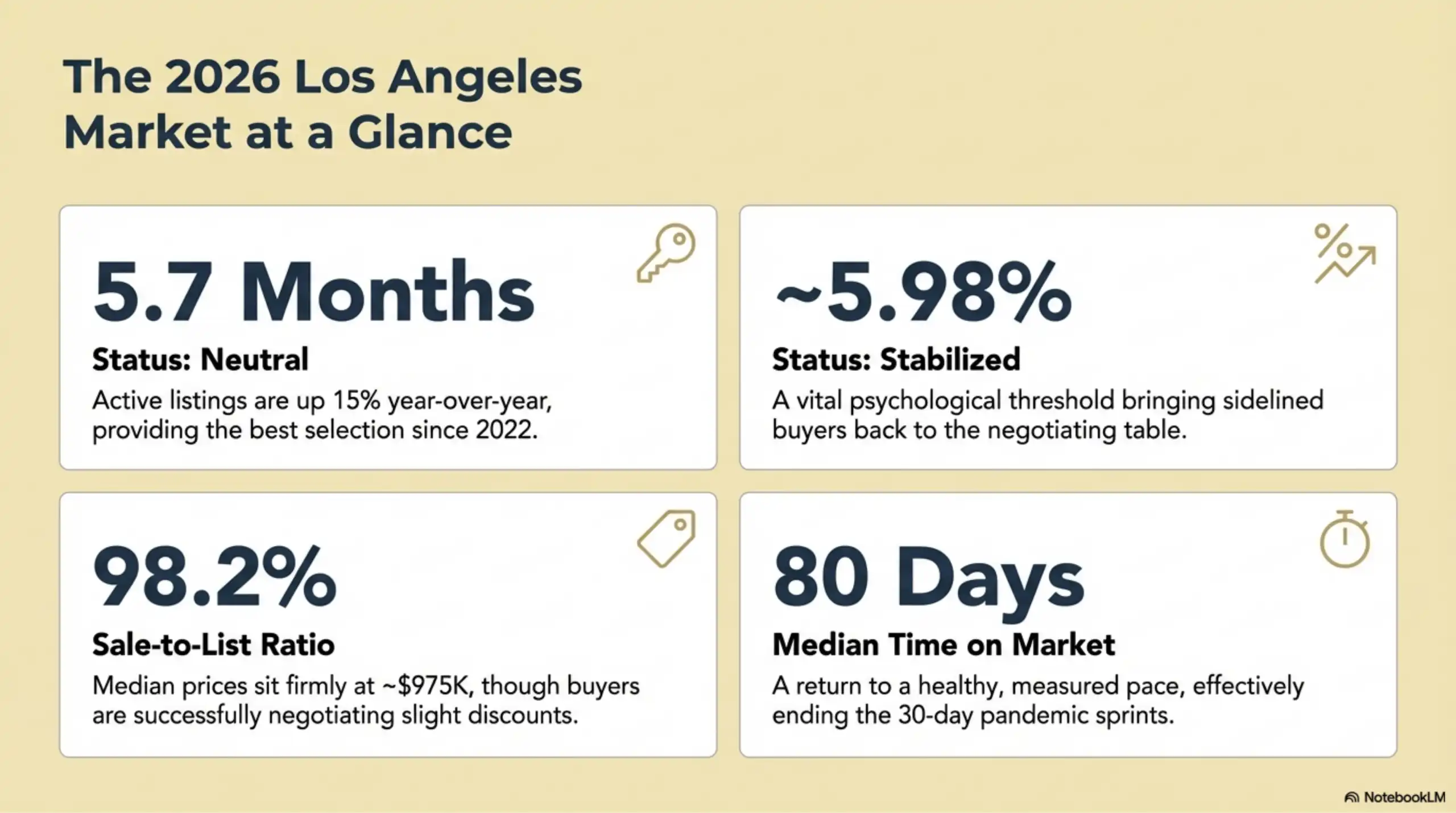
- Current Status: Generally Neutral to Slightly Balanced, with an average of 5.7 months of inventory across L.A. County.
- Interest Rate Impact: The 30-year fixed rate has stabilized near 5.98%, re-energizing buyer confidence after years of “rate lock” hesitation.
- Inventory Trends: Active listings in L.A. are up approximately 15% year-over-year, providing buyers with the most selection they’ve seen since 2022.
- Pricing Power: While median prices in L.A. remain high at approximately $975,000, homes are selling for roughly 98.2% of list price, indicating more room for negotiation.
- Time on Market: Median days on market have increased to 80 days, a significant shift from the 30-day “sprints” of the pandemic era.
The Three Types of Markets: A Deep Dive
1. The Seller’s Market: When Demand Outpaces Supply
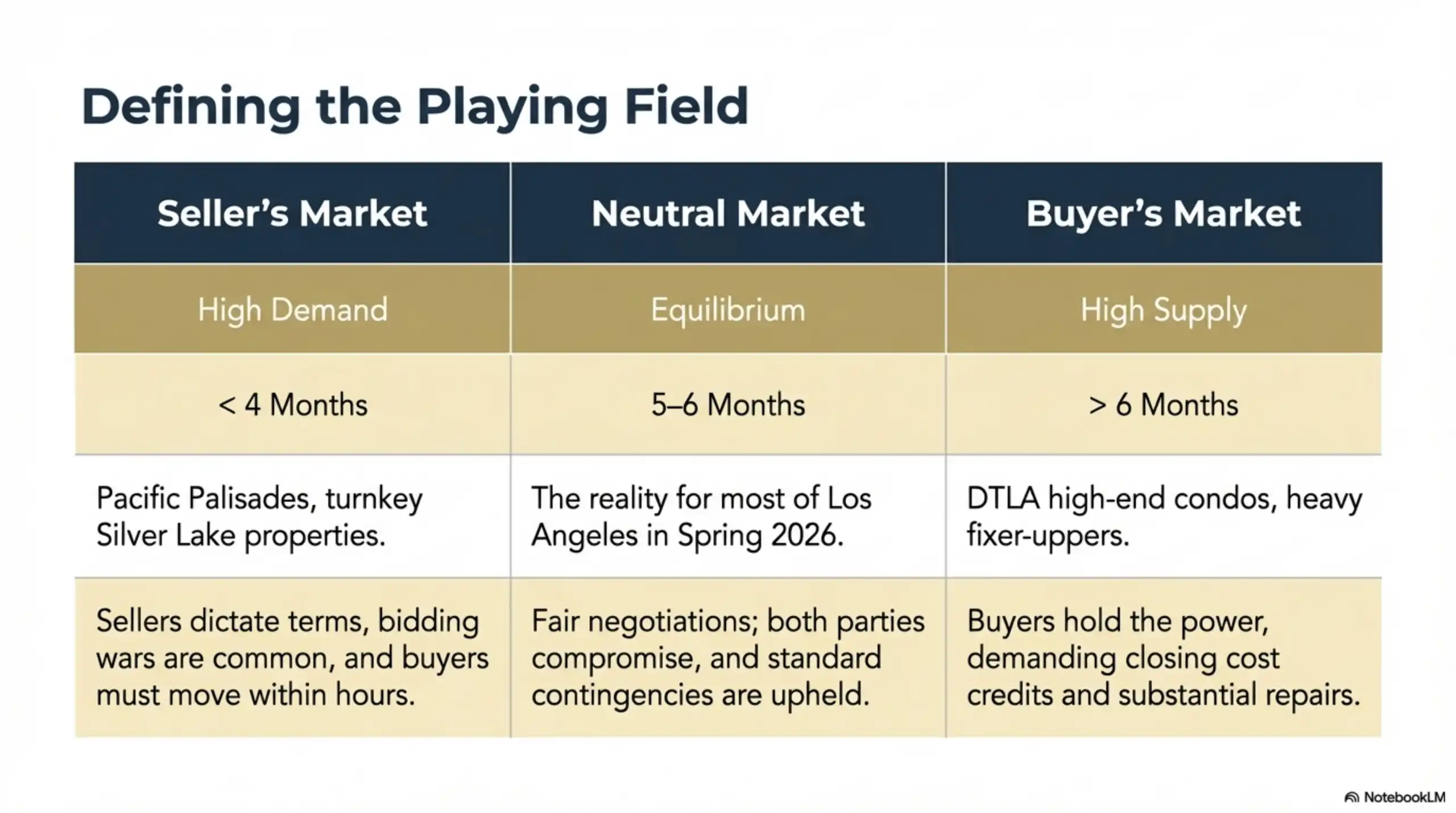
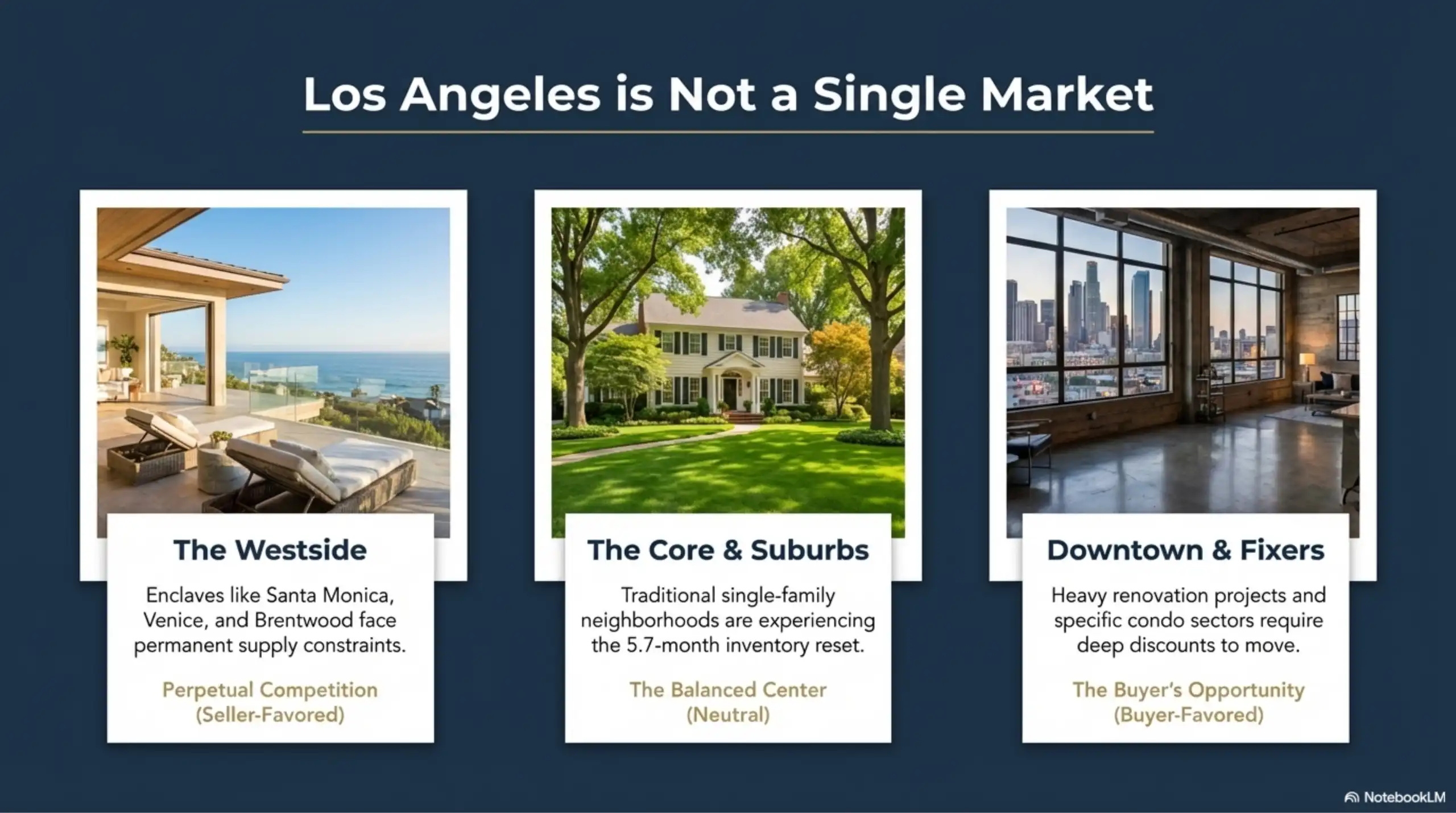
In a Seller’s Market, inventory is low (typically less than 4 months of supply) and buyer demand is high. This has been the “norm” for much of the Westside for the last decade.
- The L.A. Context: Even in 2026, specific micro-markets like Pacific Palisades or turnkey properties in Silver Lake often remain in “Seller’s” territory due to extreme scarcity and the “lock-in” effect—where owners with 3% mortgage rates refuse to sell.
- Impact on Buyers: Expect bidding wars, “as-is” sales, and minimal contingencies. You must be pre-approved and ready to move within hours of a listing hitting the MLS.
- Impact on Sellers: You hold the leverage. You can often dictate the closing timeline and expect offers at or above asking price. However, in 2026, L.A. buyers are more price-sensitive than before; “aspirational pricing” will still cause a home to sit.
2. The Buyer’s Market: When Supply Exceeds Demand
A Buyer’s Market occurs when inventory exceeds 6–7 months of supply. This is rarer in Los Angeles but can happen during significant economic shifts or interest rate spikes.
- The L.A. Context: We see “pockets” of a Buyer’s Market in specific sectors, such as high-end condos in Downtown LA or properties that require significant renovation.
- Impact on Buyers: You have the luxury of time. You can ask for repair credits, closing cost assistance, and price reductions.
- Impact on Sellers: Marketing and presentation (staging) are non-negotiable. To stand out among the competition, your home must be the “best in show.” Expect to negotiate and potentially wait several months for the right offer.
3. The Neutral Market: The “Great Reset” of 2026
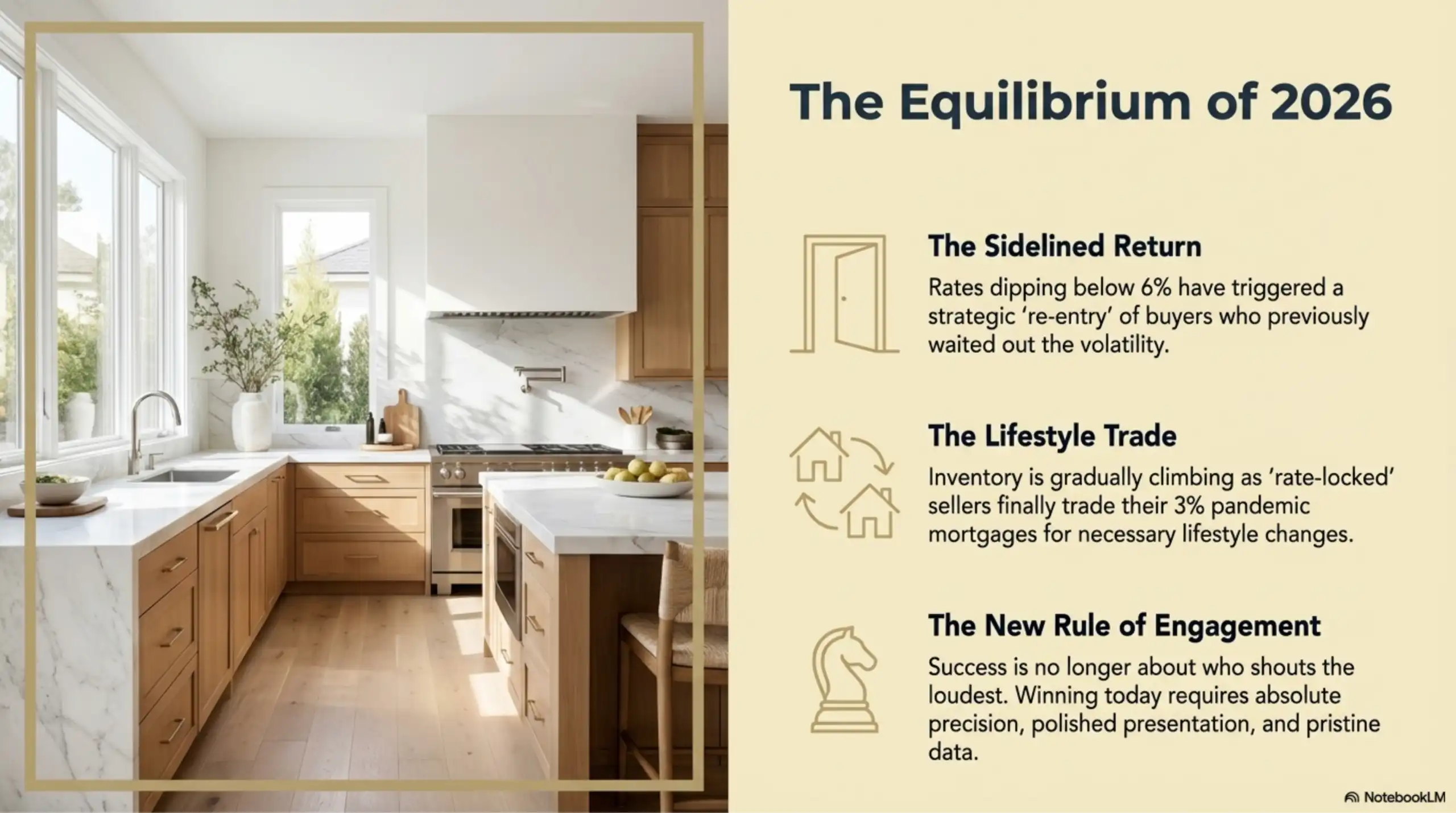
A Neutral Market (roughly 5–6 months of supply) is characterized by equilibrium. Prices are stable, and neither party has a clear upper hand. This is where much of Los Angeles sits in Spring 2026.
- The L.A. Context: With 30-year rates dipping below 6%, we are seeing a “re-entry” of buyers who were sidelined. Simultaneously, inventory is creeping up as more sellers finally decide to trade in their low rates for lifestyle changes.
- Impact on Both Parties: Negotiations are “fair.” Buyers can typically keep their inspection and appraisal contingencies, while sellers still receive solid values for well-maintained homes.
- The Strategy: Success in a neutral market is about precision. It’s not about who can shout the loudest, but who has the best data and the most polished presentation.
Strategy: How to Win in Today’s Neutral L.A. Market
For Buyers: The “Monthly Payment” Mindset
In a neutral market, don’t just chase the lowest price—focus on the long-term cost.
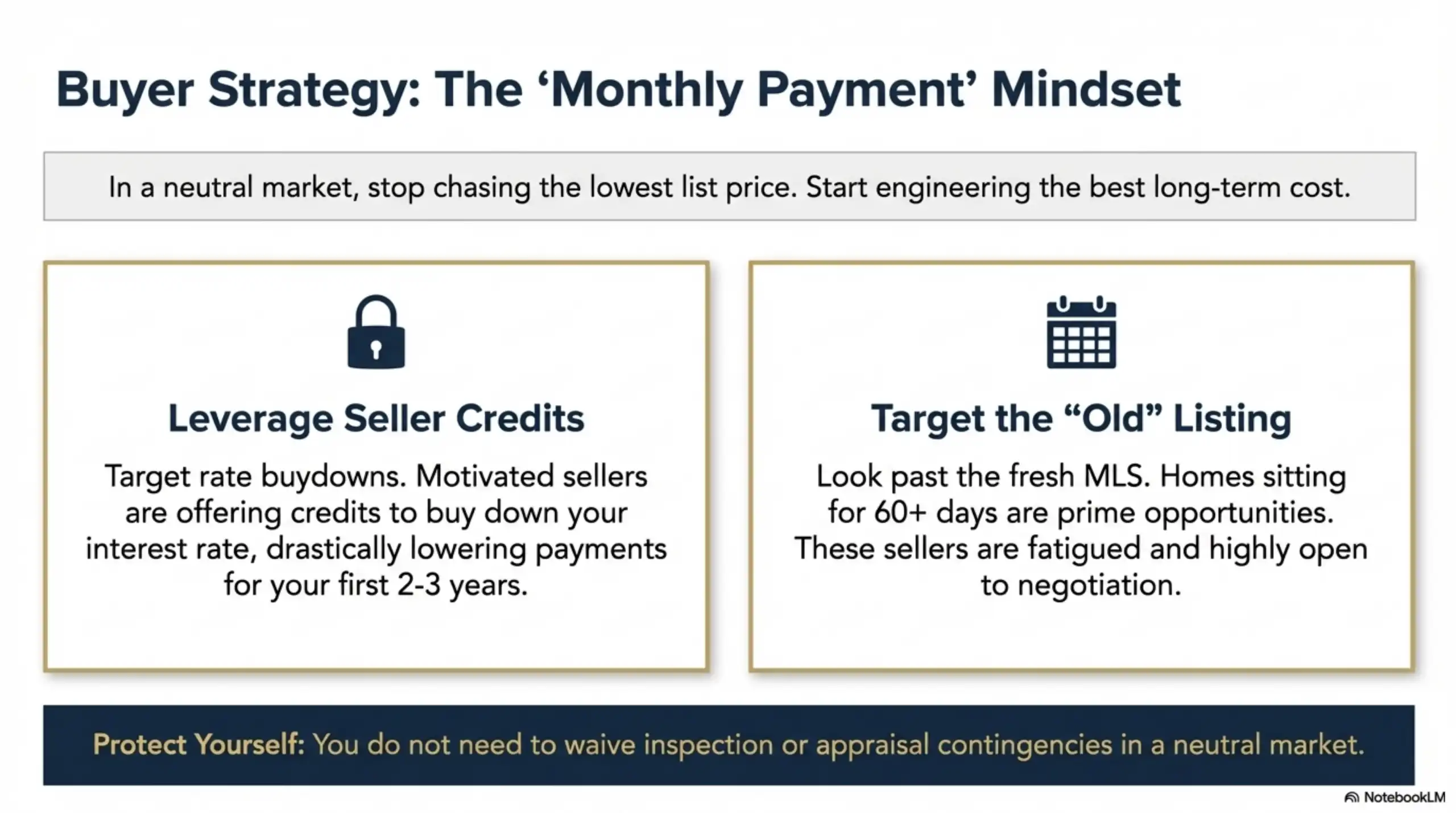
- Leverage Seller Credits: In 2026, we are seeing more sellers willing to provide credits for “rate buydowns.” This can lower your effective interest rate significantly for the first 2-3 years.
- Don’t Fear the “Old” Listing: Homes that have been on the market for 60+ days are your biggest opportunity. In a neutral market, these sellers are often highly motivated to negotiate.
For Sellers: The “Turnkey” Requirement
In 2026, L.A. buyers are “fatigued” by high prices and are less willing to take on a “fixer-upper” unless it’s priced at a steep discount.
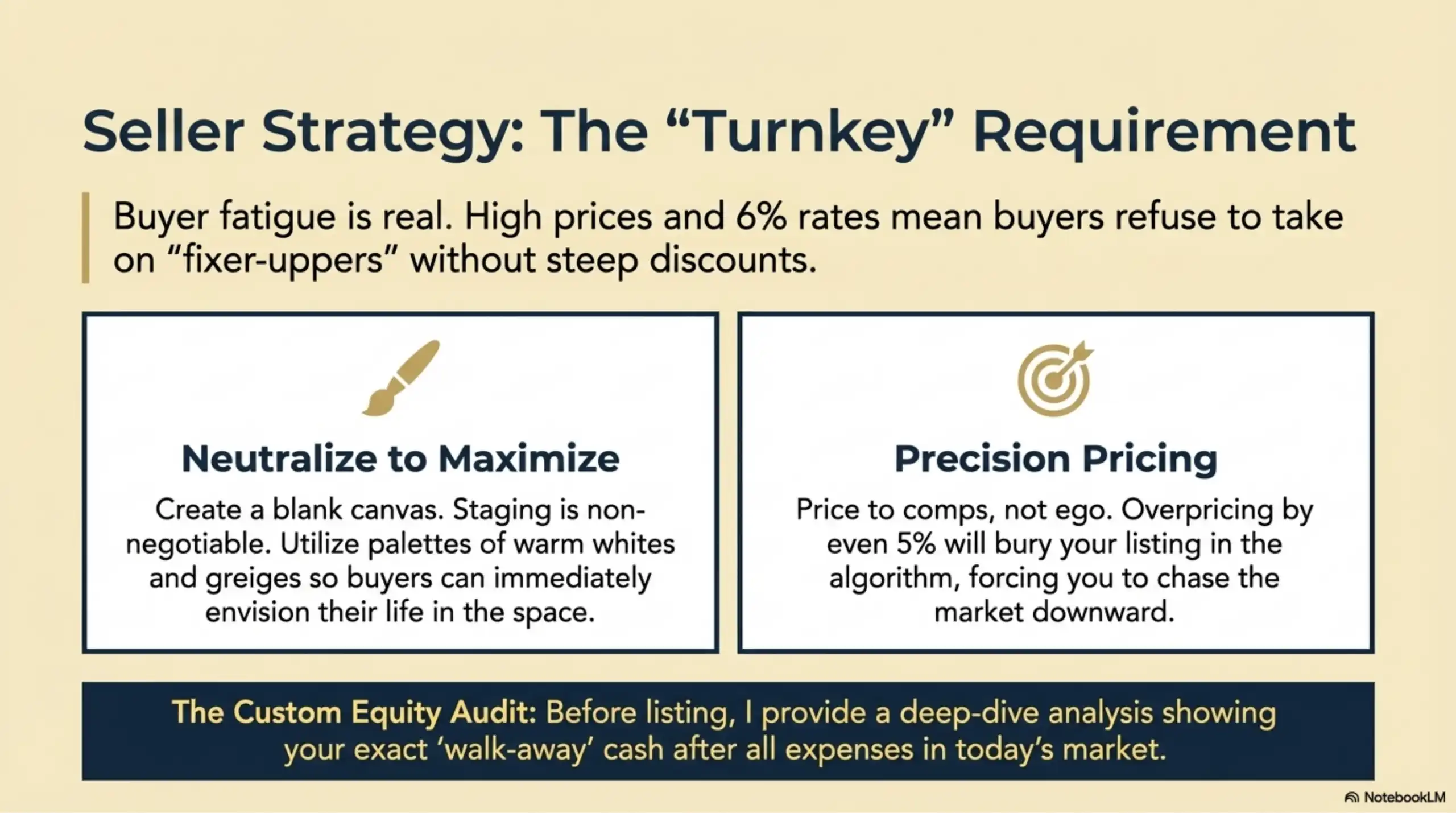
- Neutralize to Maximize: Staging with a palette of warm whites and greiges is essential. Buyers need to see a “blank canvas” where their life fits perfectly.
- Price to the Comps, Not the Ego: In a neutral market, the first two weeks are critical. If you overprice by even 5%, the “algorithm” will bury your listing, and you’ll end up chasing the market downward.
FAQ: High-Intent Market Questions for 2026
Is it a good time to buy in Los Angeles right now?
Yes, because the current neutral market offers a rare window of “predictable” competition. You aren’t fighting 20 other offers, but rates are low enough to keep monthly payments manageable.
Are home prices in L.A. dropping in 2026?
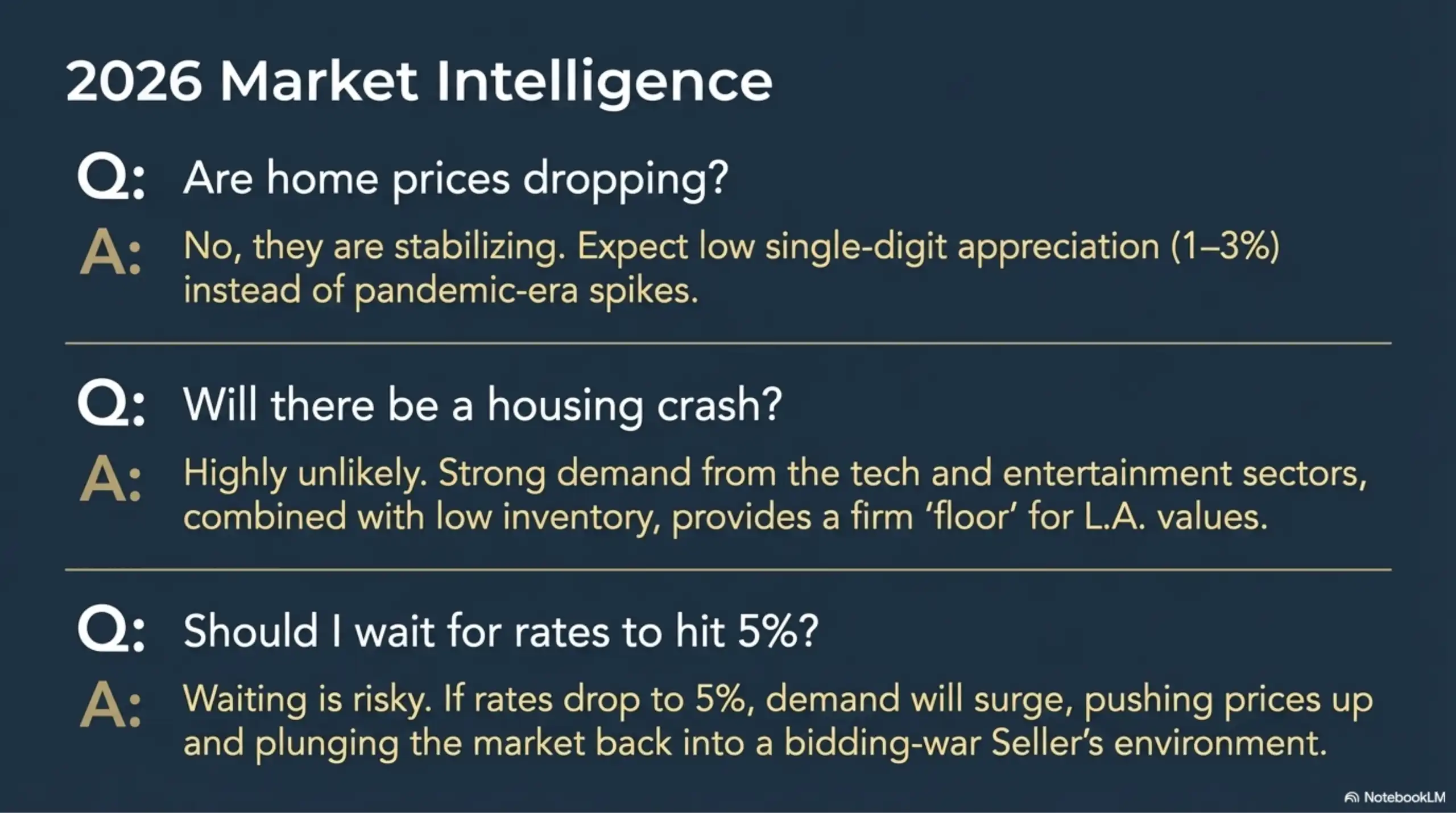
They aren’t “dropping” so much as “stabilizing.” We are seeing low single-digit appreciation (1–3%) rather than the 15% spikes of the past.
What is a “Neutral Market” exactly?
It is a market where the supply of homes roughly matches the number of active buyers, usually indicated by 5–6 months of inventory.
How do interest rates affect the L.A. luxury market?
While many luxury buyers in areas like Beverly Hills pay cash, rates still affect “move-up” buyers who provide the liquidity for the rest of the market.
What is the “Rate Lock” effect?
It’s when homeowners stay in their current homes because their current mortgage rate (e.g., 3%) is significantly lower than current market rates, making it expensive to move.
Will there be a housing crash in Los Angeles?
Most experts say no. Low inventory and high demand from the entertainment and tech sectors provide a strong “floor” for L.A. home values.
How much inventory does L.A. have right now?
As of March 2026, we have approximately a 5.7-month supply, which is the definition of a balanced or neutral market.
Can I still get a home for under list price?
Yes. Currently, the sale-to-list ratio is around 98.2%, meaning many buyers are successfully negotiating small discounts.
Should I wait for rates to hit 5% before buying?
Waiting can be risky. If rates hit 5%, demand will likely surge, pushing prices up and returning us to a Seller’s Market with bidding wars.
What neighborhoods in L.A. are currently the most competitive?
Westside enclaves like Santa Monica, Venice, and Brentwood remain highly competitive due to permanent supply constraints.
Do I need to waive my inspection contingency in 2026?
In a neutral market, absolutely not. You should always protect yourself with a full physical inspection.
What is a “Custom Equity Audit”?
It’s a deep-dive analysis I provide to sellers to show exactly how much “walk-away” cash they have after all expenses, based on today’s specific market data.
How long does it take to sell a home in L.A. right now?
The average is about 80 days from listing to closing, though turnkey homes move much faster.
Is the “Mansion Tax” (ULA) still affecting the market?
Yes, it continues to impact the $5M+ segment, often leading to more creative negotiations and “all-cash” deal structures.
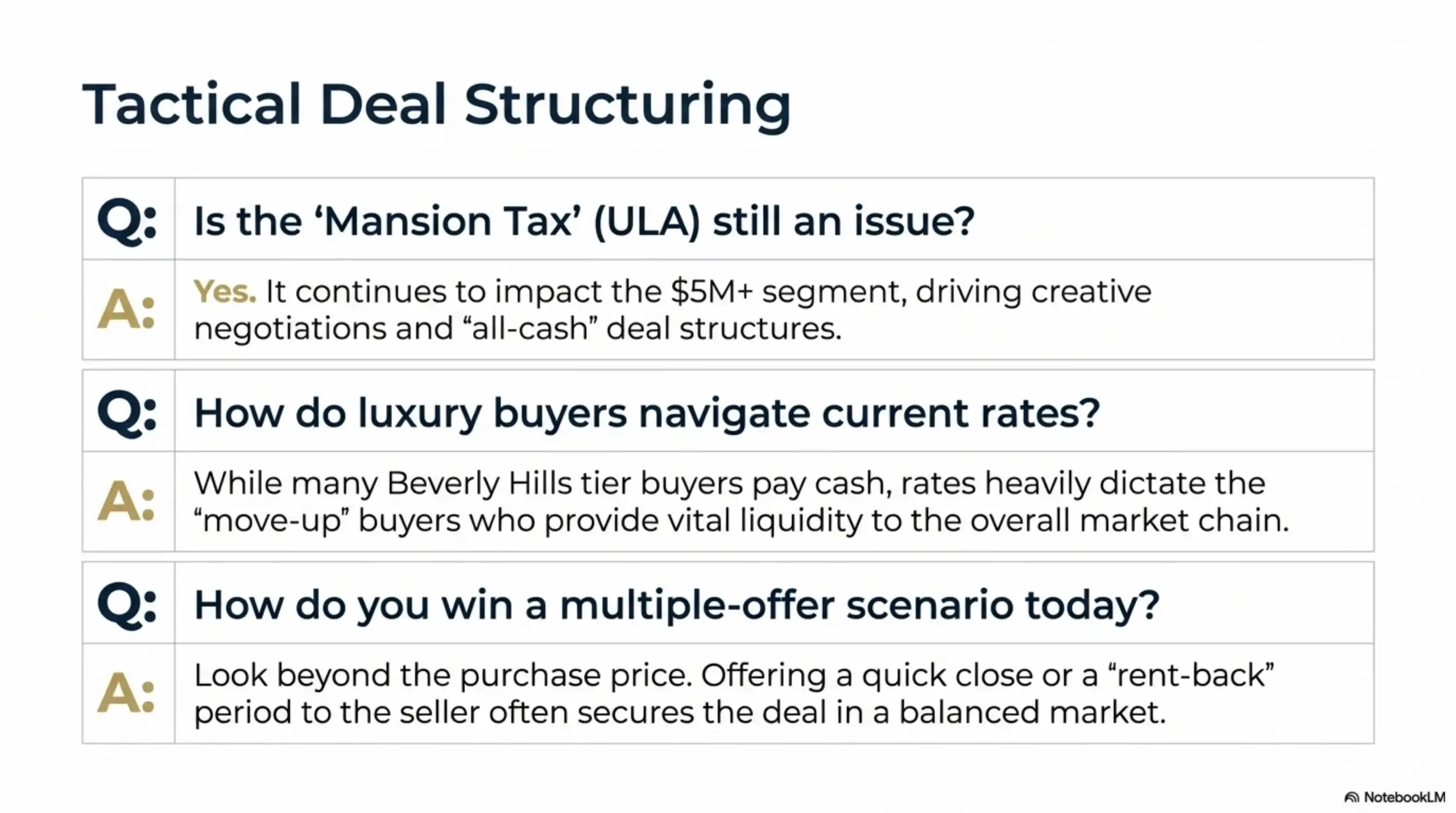
What is the best way to win a multiple-offer situation today?
Beyond price, offering a quick close or a “rent-back” period to the seller can often win the deal in a balanced market.
Whether you are navigating a buyer’s, seller’s, or neutral market, the “win” is always found in the data. If you’re curious about how your specific neighborhood is performing—or if you want to know what your current home is truly worth in this “Great Reset” of 2026—I am here to guide you.
Want to know more? Let’s talk.
Melissa Menard REALTOR® | Compass
Los Angeles & Surrounding Areas
📞 310.729.9726 | DRE# 01858710
📧 melissa@melissamenardhomes.com
🌐 www.MelissaMenardHomes.com
Disclaimer: The information provided in this post is for educational purposes only and does not constitute financial, legal, or investment advice. Market conditions are subject to change. Please consult with a qualified professional regarding your specific real estate needs and local Fair Housing regulations.